Everyday dinners
A four-ingredient gluten-free loaf
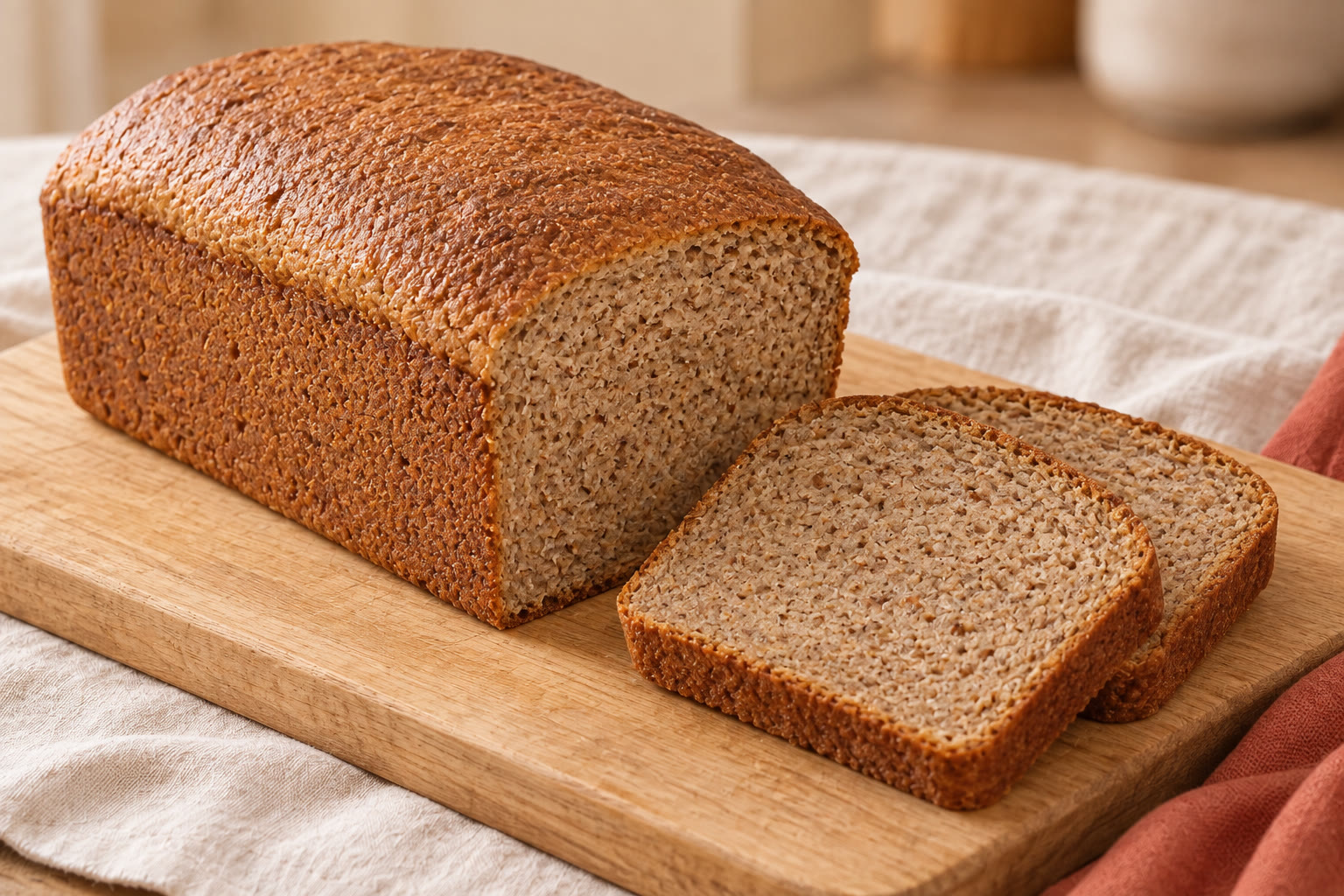
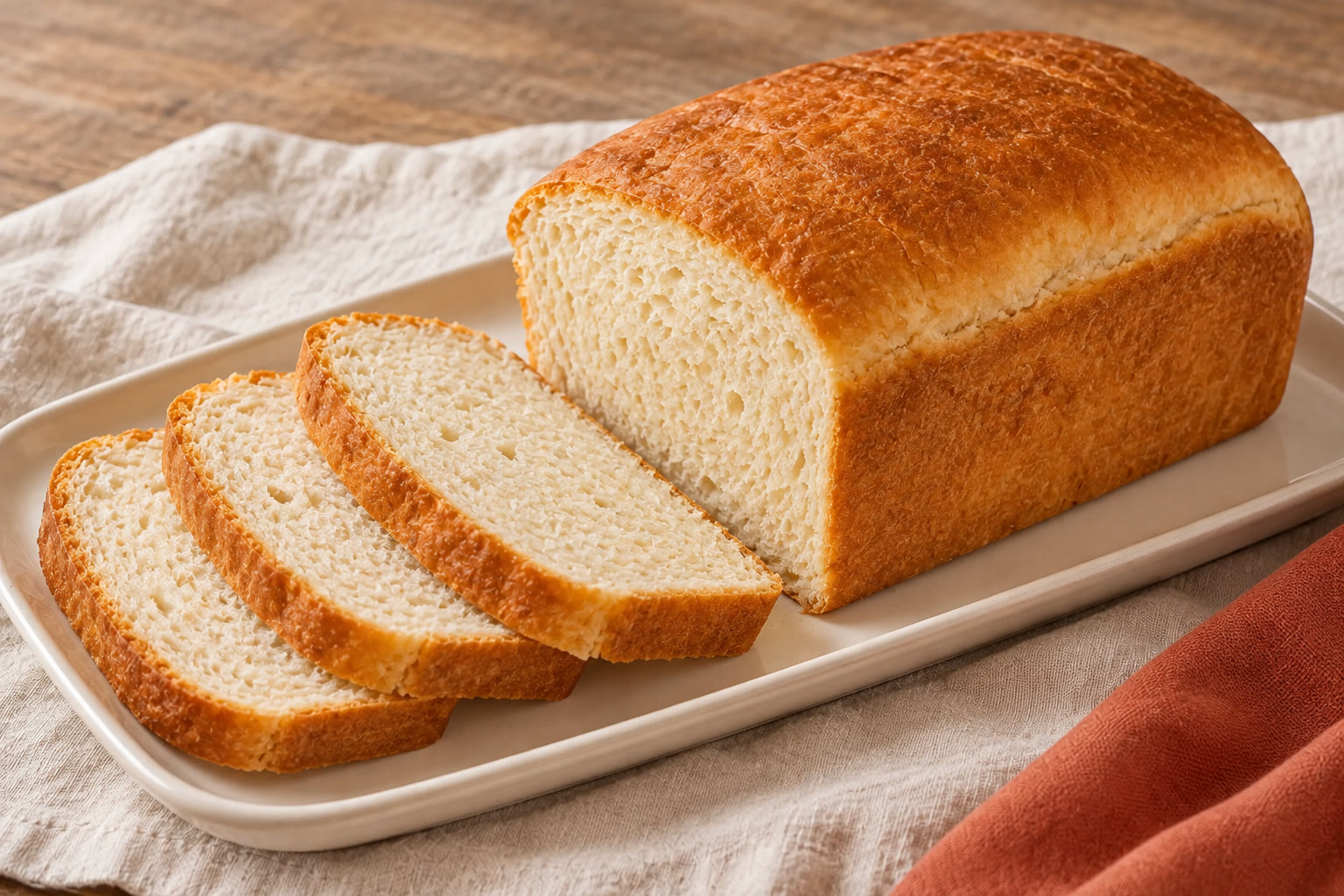
A simple yoghurt loaf with four ingredients, no kneading and no proving.
Free guide: thirty gluten-free dinners, with the shopping lists
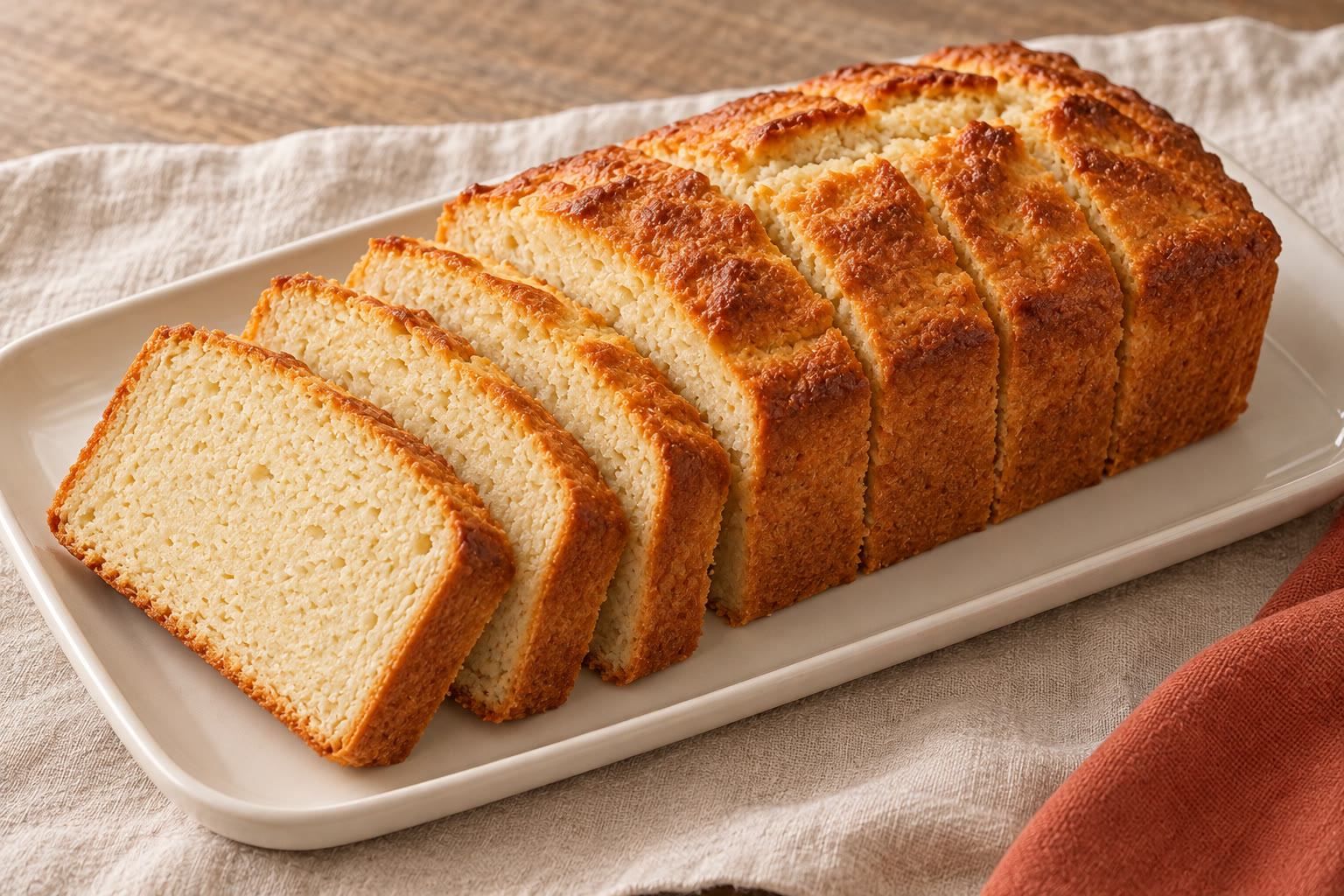
This four-ingredient loaf uses gluten-free self-raising flour, natural yoghurt, eggs and salt. The flour must already contain raising agents and xanthan gum: a single flour such as rice flour will not work in its place.
It is a savoury quick bread intended for thick slices alongside dinner. Four ingredients means four measured products; the flour blend itself contains several components. This recipe is in development and has not been kitchen-tested.
The recipe
A four-ingredient gluten-free loaf
- Prep
- 15 min
- Cook
- 55 min
- Total*
- 70 min
- Makes
- 8 servings
*Estimated development timings. Allow 10 minutes standing in the tin and about 80 minutes cooling on a rack, beyond the 70 minutes of preparation and cooking; allow about 160 minutes overall, with extra baking time if needed.
Ingredients
Tick things off as you go.
For the loaf
Equipment
- Use a 900 g loaf tin, approximately 21 × 11 × 7 cm internally.
- Use baking paper to line the tin without greasing it.
- Have kitchen scales, two mixing bowls, a whisk and a sturdy spatula ready.
- Use a skewer, oven gloves and kitchen foil for checking and handling the loaf.
- A clean digital food thermometer is useful for checking the centre.
- Use a wire cooling rack and a serrated bread knife.
Let’s make it.
- 01
Prepare the tin
Heat the oven to 190°C / 170°C fan. Line the base and all four sides of the loaf tin with baking paper, leaving enough above the long sides to lift the loaf out. Check that the inside is covered and the oven has reached its set temperature before mixing.
- 02
Mix the ingredients
Stir the flour and salt together in one bowl. In the other, beat the eggs, weigh out 100 g without shells, then whisk this with the yoghurt until no streaks of egg white remain. Fold the wet ingredients into the flour with a sturdy spatula, scraping the bottom until no dry pockets remain. Aim for a thick, sticky mixture that holds its shape on the spatula rather than pouring. Do not taste the uncooked mixture.
- 03
Fill the tin
Scrape the mixture into the lined tin and press it gently into the corners with the spatula. Smooth the top and check that the mixture sits evenly across the tin, with at least 2 cm of space below the rim. Put it straight into the hot oven; no kneading or proving is needed.
- 04
Bake the loaf
Allow about 55 minutes on the middle shelf. Check after 40 minutes and loosely cover with foil if the top is already well browned. Start checking the centre after 45 minutes: the top should look set and a skewer pushed into the middle should come out without wet dough. Continue baking in 5-minute intervals if needed. A clean food thermometer can also confirm that the centre has reached at least 75°C for 30 seconds, but keep baking if the skewer still carries raw mixture; that safety temperature alone does not mean the crumb has set.
- 05
Cool and slice
Leave the loaf in its tin for 10 minutes, then lift it out, peel away the paper and put it on a wire rack. Allow about 80 minutes more for cooling. Check that the base and sides feel cool before cutting into 8 thick slices with a serrated knife. If the middle is still warm, spread the slices on the rack to finish cooling. Refrigerate any portions being kept for later within 2 hours of the loaf leaving the oven.
Ingredient checks
Choose a flour explicitly labelled gluten-free and check that its ingredient list includes raising agents and xanthan gum. Use plain, unstrained yoghurt and check all packaged ingredients for gluten-free suitability and the 14 UK allergens. Weigh the beaten egg without shells so the liquid quantity stays consistent. For someone with coeliac disease, protect the mixture and loaf from ordinary flour, crumbs and shared utensils; use clean bowls, equipment, work surfaces and storage containers.
Allergens: Contains eggs and milk.; Check the flour blend and yoghurt labels for additional allergens and cross-contact warnings, which vary by product.; The specified ingredients do not intentionally include celery, cereals containing gluten, crustaceans, fish, lupin, molluscs, mustard, tree nuts, peanuts, sesame, soya or sulphites..
Make it work for you
Plain full-fat lactose-free natural yoghurt may be used at the same weight and consistency, but it still contains milk and this substitution has not been tested.
Another gluten-free self-raising white flour blend may be used only if it contains both raising agents and xanthan gum; absorption and baking time may change.
Do not replace the blend with plain gluten-free flour, bread flour or a single flour at the same weight.
Egg replacements and plant-based yoghurts need a separately developed version because they change the structure and moisture.
For another day
Cool promptly and refrigerate in a sealed container within 2 hours of baking; keep the fridge at 0–5°C and eat within 48 hours or freeze.
Freeze cooled slices with baking paper between them in a sealed freezer container; aim to use within one month for quality, although this loaf’s freezer quality has not been tested.
Defrost covered in the fridge and use within 24 hours of fully defrosting.
The fully cooked loaf can be eaten cold; if reheating, heat until steaming hot throughout and reheat only once.
Exploding food
What goes in.
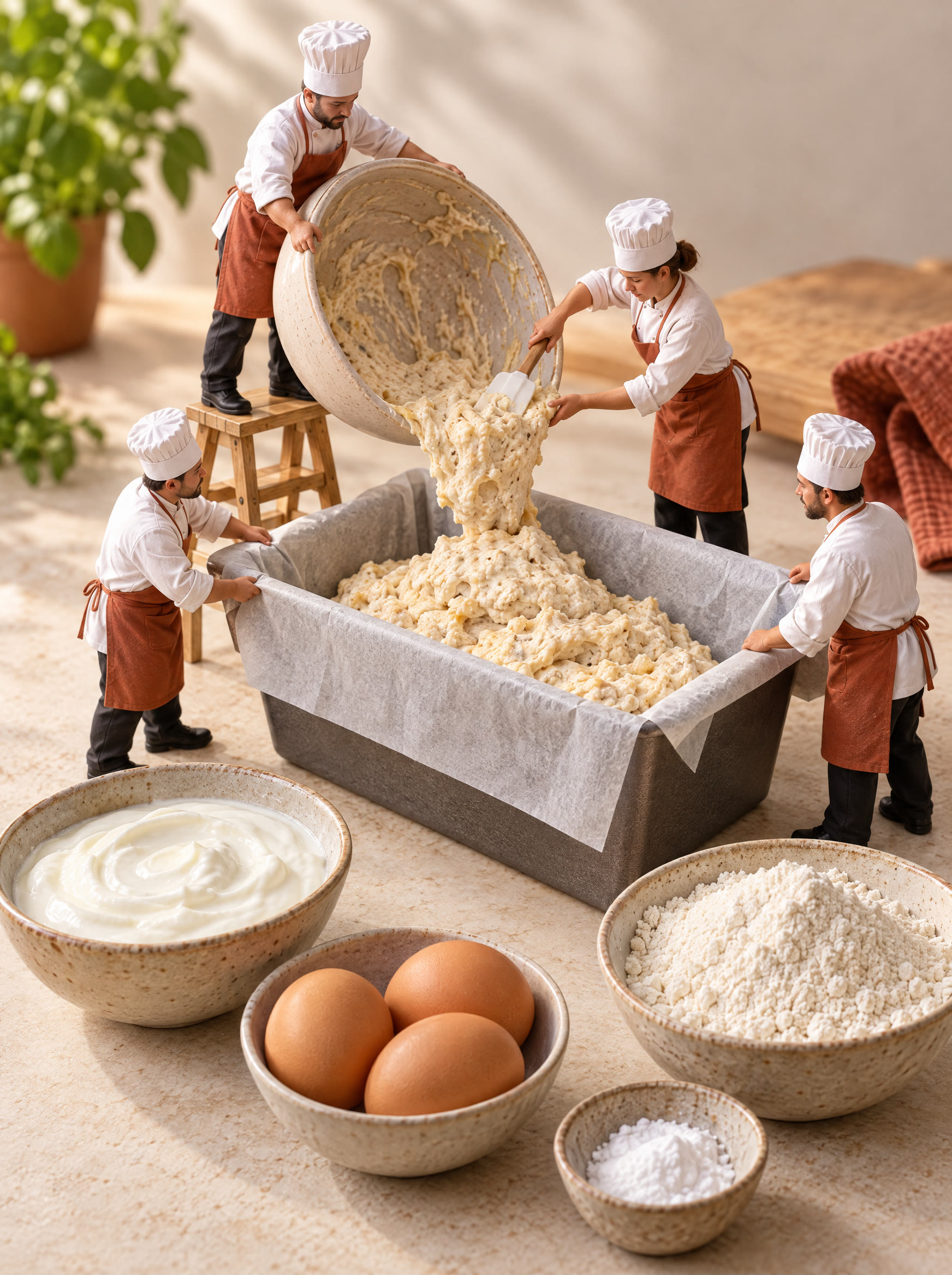
The ingredients, seen a little differently. This image is an illustration of the main ingredients; use the written recipe for the full list and quantities.
See the collection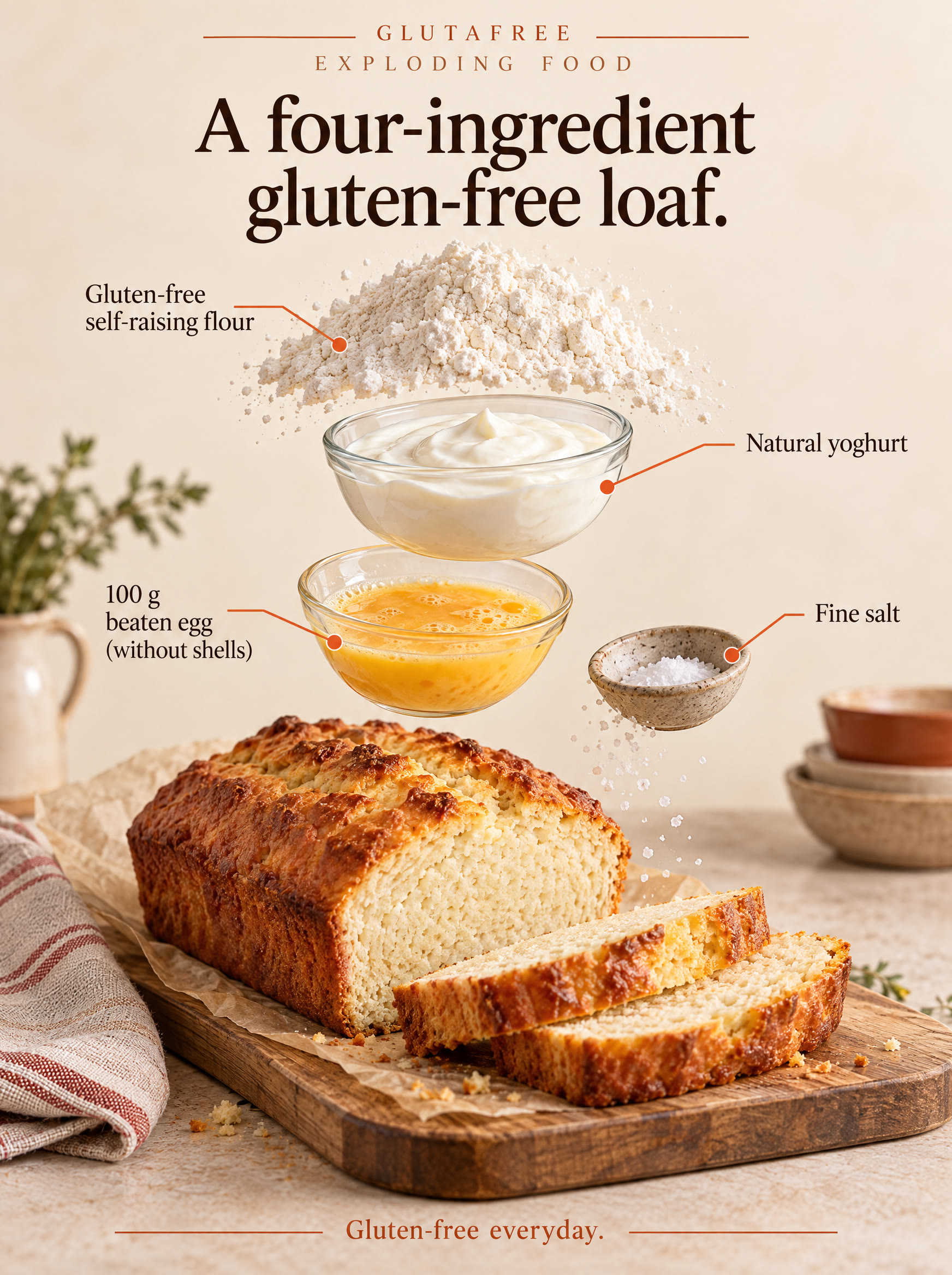
The miniature kitchen
Tiny chefs.
Big ideas.
A playful look at the same familiar favourite. Meet the little team behind our food illustrations.
Explore the tiny kitchen