Baking
A white gluten-free loaf
An oven-baked white loaf made with egg whites and a soft batter, with a golden crust and a pale crumb.
Free guide: thirty gluten-free dinners, with the shopping lists
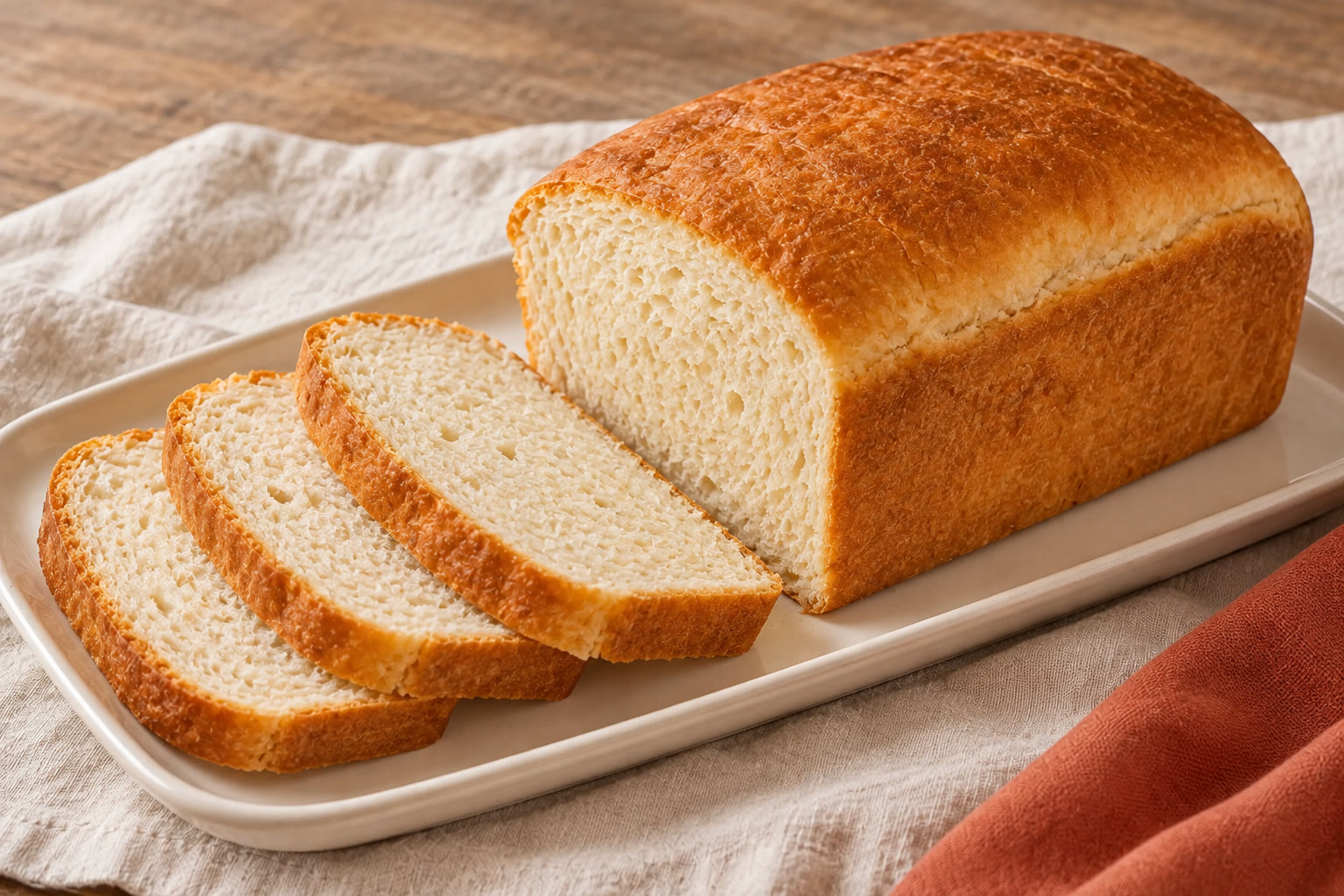
This white loaf uses egg whites and a gluten-free white bread flour blend. The mixture goes into the tin as a thick, sticky batter, so there is no kneading or shaping.
Let the loaf cool completely before cutting it: the crumb needs time to settle. This recipe is in development and has not been kitchen-tested.
The recipe
A white gluten-free loaf
- Prep
- 20 min
- Cook
- 60 min
- Total*
- 80 min
- Makes
- 12 servings, each one slice from a single loaf
*Estimated development timings. In addition to preparation and baking, allow approximately 60–90 minutes to rise, 10 minutes in the tin and at least two hours to cool fully. Rise and cooling times vary.
Ingredients
Tick things off as you go.
For the loaf
Equipment
- Use digital scales, measuring spoons and a measuring jug.
- Use a large mixing bowl, a whisk and a sturdy spoon or an electric mixer with a paddle attachment.
- Use a metal 1 kg / 2 lb loaf tin; nominal loaf weight is not a measured litre capacity.
- Have baking paper, a spatula, a clean cover and kitchen foil ready.
- Use a cooling rack, a digital food thermometer and a serrated bread knife.
Let’s make it.
- 01
Prepare the tin
Wash your hands and use clean equipment and a worktop free from ordinary flour and bread crumbs. Line the base and sides of a 1 kg / 2 lb loaf tin with baking paper, leaving a small overhang on the long sides. Check that the paper fits into the corners.
- 02
Combine the ingredients
Whisk the egg whites, sugar, salt, vinegar, water and 45 ml of the oil together. Stir the yeast into the flour, then combine with the liquid.
- 03
Beat the batter
Beat until the batter is smooth with no dry pockets. Add the remaining 45 ml oil and fold it through a few times with a spatula. Keep the mixture soft; do not add flour for kneading. Do not taste raw batter. Wash hands and clean equipment after handling raw flour and egg.
- 04
Fill and let rise
Transfer to the prepared tin and smooth the surface. Cover without touching the mixture and allow roughly 60–90 minutes to rise, until the top sits about 7 mm below the rim. Preheat the oven to 220°C / 200°C fan towards the end of proving.
- 05
Bake the loaf
Remove the cover and place the tin on the lower-middle oven shelf. Bake for approximately 60 minutes at a constant 220°C / 200°C fan. Check the colour after 30 minutes and cover loosely with foil if the top is already deeply golden, leaving the oven temperature unchanged. The finished crust should be golden and firm, the sides set, and a thermometer inserted into the centre should read approximately 96–98°C. This temperature is a bread texture check, not a food-safety threshold. If the centre is below this range or still appears wet, continue baking in 5-minute intervals.
- 06
Cool before slicing
Stand the loaf in its tin for 10 minutes, then lift it out, remove the paper and place it on a rack. Leave for at least 2 hours, longer if the centre still feels warm. Slice only when completely cool: the crumb should hold together without leaving a wet paste on the knife. If you find raw batter inside, do not eat it. Cut the cooled loaf into approximately 12 slices.
Ingredient checks
Use the specified gluten-free white bread flour and check its current ingredients for included binders; do not add extra xanthan gum. Check that the yeast and vinegar are gluten-free and that the yeast is an instant variety. For someone with coeliac disease, protect ingredients, equipment, cooling racks, knives and toasters from gluten cross-contamination. Do not use ordinary wheat bread flour or malt vinegar.
Allergens: Contains eggs.; Check the flour, yeast and vinegar labels for any additional allergens among the 14 UK allergens: celery, cereals containing gluten, crustaceans, fish, lupin, milk, molluscs, mustard, tree nuts, peanuts, sesame, soya and sulphites.; Check substitutions and precautionary allergen warnings before serving, and use only ingredients suitable for a gluten-free diet..
Make it work for you
Sunflower oil can replace the rapeseed oil in the same quantity.
Gluten-free apple cider vinegar can replace the distilled white vinegar in the same quantity; check its label for sulphites.
Do not replace the specified bread flour with plain gluten-free flour, a single flour or a complete bread mix, because their binders and water requirements differ.
An egg-free version needs its own formulation and testing; simply omitting the egg whites is not a supported substitution.
For another day
Let the loaf cool completely before wrapping so that condensation does not collect against the crust.
Keep the wrapped loaf in a cool, dry place and use within 2 days; this is a provisional quality recommendation for an untested recipe.
For longer storage, freeze the cooled slices in a sealed freezer bag with baking paper between them and use within 1 month for best quality.
Defrost only the slices needed, keeping them covered, or toast from frozen until hot through in a clean toaster or suitable toaster bag protected from gluten-containing crumbs.
If mould appears, discard the whole loaf rather than cutting away the affected patch.
Exploding food
What goes in.
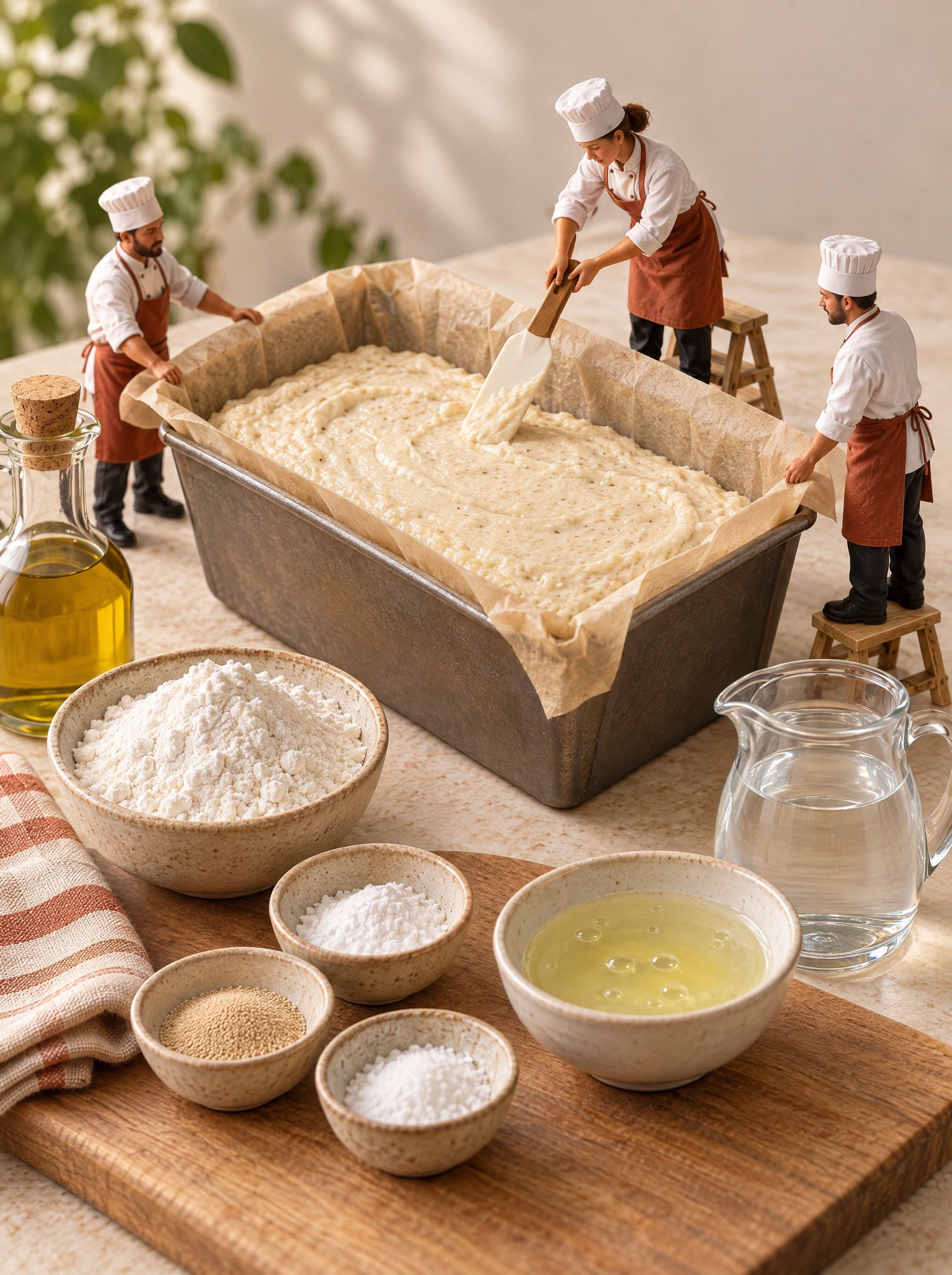
The ingredients, seen a little differently. This image is an illustration of the main ingredients; use the written recipe for the full list and quantities.
See the collection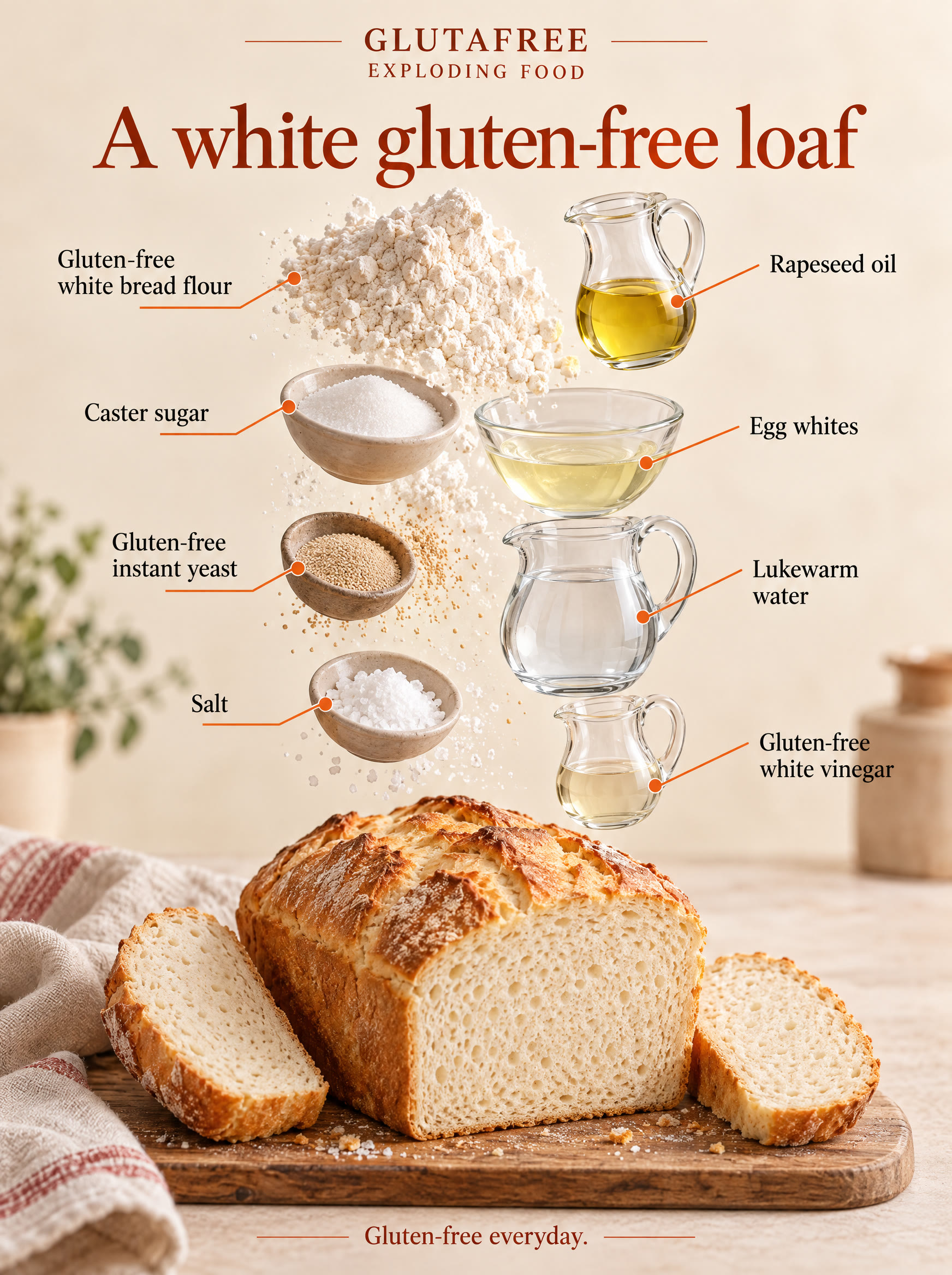
The miniature kitchen
Tiny chefs.
Big ideas.
A playful look at the same familiar favourite. Meet the little team behind our food illustrations.
Explore the tiny kitchen