Everyday dinners
An everyday gluten-free loaf
A rustic buttermilk soda loaf with a little buckwheat flour, made without yeast and cooled before slicing alongside dinner.
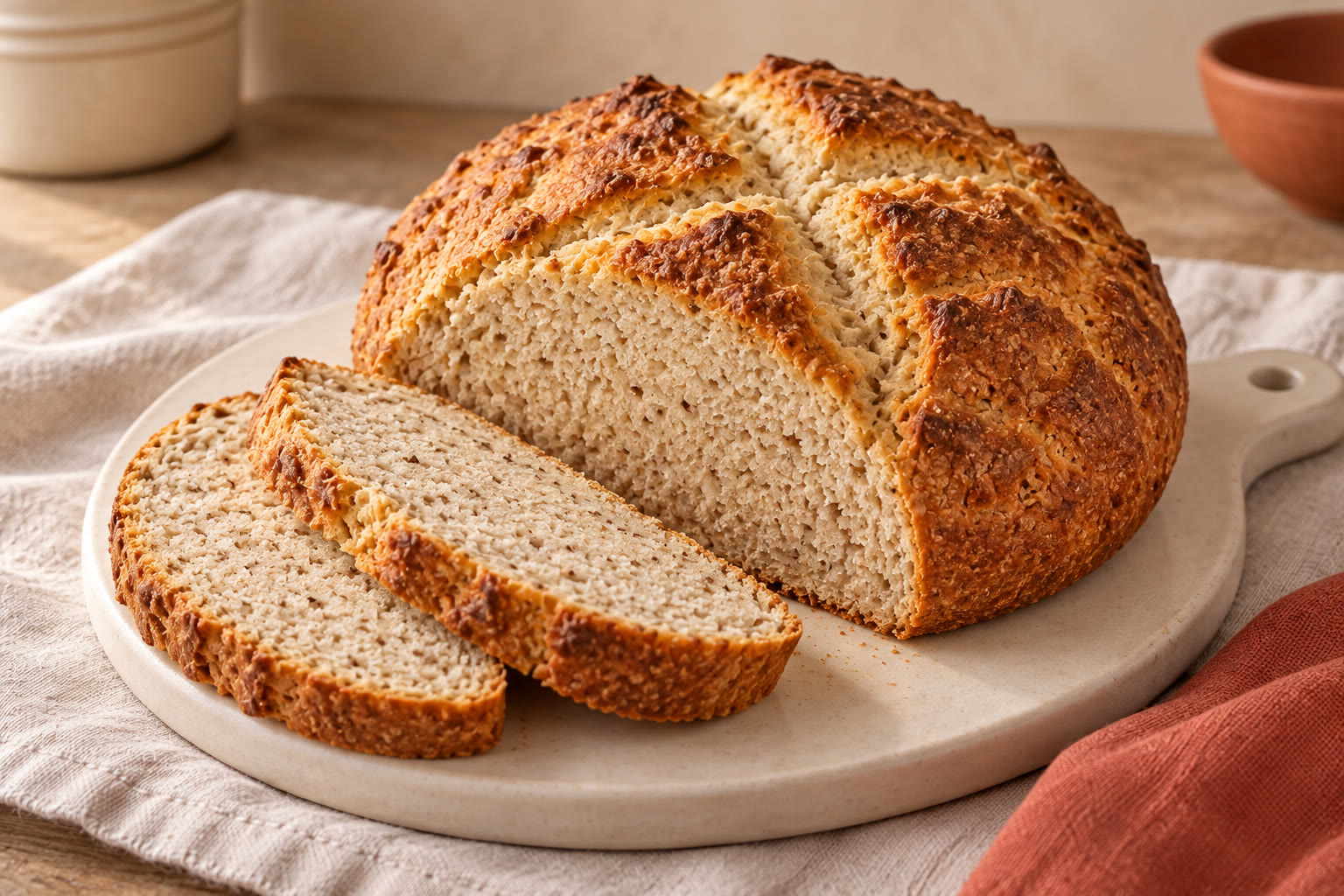
This everyday loaf takes the soda-bread route: mix, shape and bake, with no proving. A little buckwheat flour gives it an earthy flavour, while buttermilk adds a gentle tang.
Expect a modest rise and a close crumb suited to thick slices alongside dinner. Allow about 1 hour 45 minutes, including at least an hour to cool before slicing. Makes one round loaf, serving eight. This recipe is in development and has not been kitchen-tested.
The recipe
An everyday gluten-free loaf
- Prep
- 75 min
- Cook
- 30 min
- Total*
- 105 min
- Makes
- 8 servings
*Estimated development timings. Allow 15 minutes of hands-on preparation, 25–30 minutes baking and at least 60 minutes cooling: about 1 hour 45 minutes before slicing. The preparation allowance includes the cooling time. Allow longer if the loaf needs extra baking or is still warm after an hour.
Ingredients
Tick things off as you go.
For the loaf
Equipment
- Use digital scales capable of measuring small quantities accurately.
- Use a large mixing bowl, a measuring jug, a whisk and a sturdy spoon.
- Use a flat baking tray lined with baking paper.
- Have a sharp knife, a skewer, oven gloves and a wire cooling rack ready.
Let’s make it.
- 01
Prepare the oven
Heat the oven to 200°C / 180°C fan / gas 6. Line the tray with baking paper. Start mixing only once the oven has reached temperature and the tray is ready.
- 02
Combine the dry ingredients
Whisk both flours, xanthan gum, baking powder, bicarbonate of soda, salt and sugar together, breaking up any lumps. The mixture should look evenly coloured, with no pockets of raising agent.
- 03
Mix the dough
Beat the buttermilk and egg together, then stir into the flour mixture. Scrape the bowl until no dry flour remains. The dough should be soft and slightly sticky but hold a mound. If crumbly, work in the measured water 5 ml at a time, stopping as soon as it holds together; you may not need any. Do not taste raw dough. After handling raw flour or uncooked dough, wash your hands and clean the utensils and work surfaces.
- 04
Shape the loaf
Transfer to the lined tray. Use the back of the spoon to form a round about 18 cm wide and 4 cm high. Cut a deep cross through the dough, stopping just short of the tray so a thin layer at the bottom keeps the four quarters joined. Check that both cuts reach close to the bottom and the quarters are roughly equal, then bake straight away.
- 05
Bake until set
Bake for 25–30 minutes, checking at 25 minutes. The crust should be browned, the base firm and a skewer inserted into the centre free of sticky dough. If the centre is still sticky, bake for another 5 minutes and check again; loosely cover with foil if the crust is getting too dark. Use these checks as well as the timer, as flour blends and ovens vary.
- 06
Cool before slicing
Move the loaf to a wire rack and remove the paper. Leave for at least 60 minutes and until completely cool before slicing; the base should no longer feel warm. Cooling helps the crumb firm up for cutting. Once sliced, the crumb should hold together without a wet, gummy line.
Ingredient checks
Choose explicitly gluten-free flour blends, buckwheat flour, xanthan gum, baking powder and bicarbonate of soda. Buckwheat is not wheat, but its flour still needs a gluten-free label. Use the specified gum-free plain blend so the xanthan quantity remains appropriate. Check all packaged ingredients, including bicarbonate of soda and any substitutes, for gluten suitability and against the 14 UK allergens: celery, cereals containing gluten, crustaceans, eggs, fish, lupin, milk, molluscs, mustard, tree nuts, peanuts, sesame, soya and sulphites. For someone with coeliac disease, use clean equipment, baking paper and a clean preparation area, and prevent contact with ordinary flour or bread crumbs.
Allergens: Contains milk from the buttermilk and eggs from the medium egg.; No other UK-regulated allergens are intentionally included with the specified ingredients; check every packet for additional allergens and cross-contact warnings..
Make it work for you
Replace the 50 g buckwheat flour with 50 g gluten-free sorghum flour if preferred; water absorption may change, so use the stated dough consistency check.
Replace the buttermilk with 260 ml semi-skimmed milk mixed with 20 ml lemon juice, left for 5 minutes before use; this still contains milk.
Do not replace the flour blend with a single flour or self-raising flour, or swap baking powder for bicarbonate of soda.
These substitutions have not been kitchen-tested in this recipe.
For another day
Once completely cool, wrap the plain loaf and keep in a cool, dry place for up to 2 days; it is best on the day it is baked.
For longer storage, freeze cooled slices promptly in a labelled airtight bag for up to 1 month as a provisional quality limit.
Defrost the slices you need in the fridge and use within 24 hours of fully thawing; toast using equipment protected from gluten crumbs if preferred.
Discard the whole loaf if mould appears.
Exploding food
What goes in.
The ingredients, seen a little differently. This image is an illustration of the main ingredients; use the written recipe for the full list and quantities.
See the collection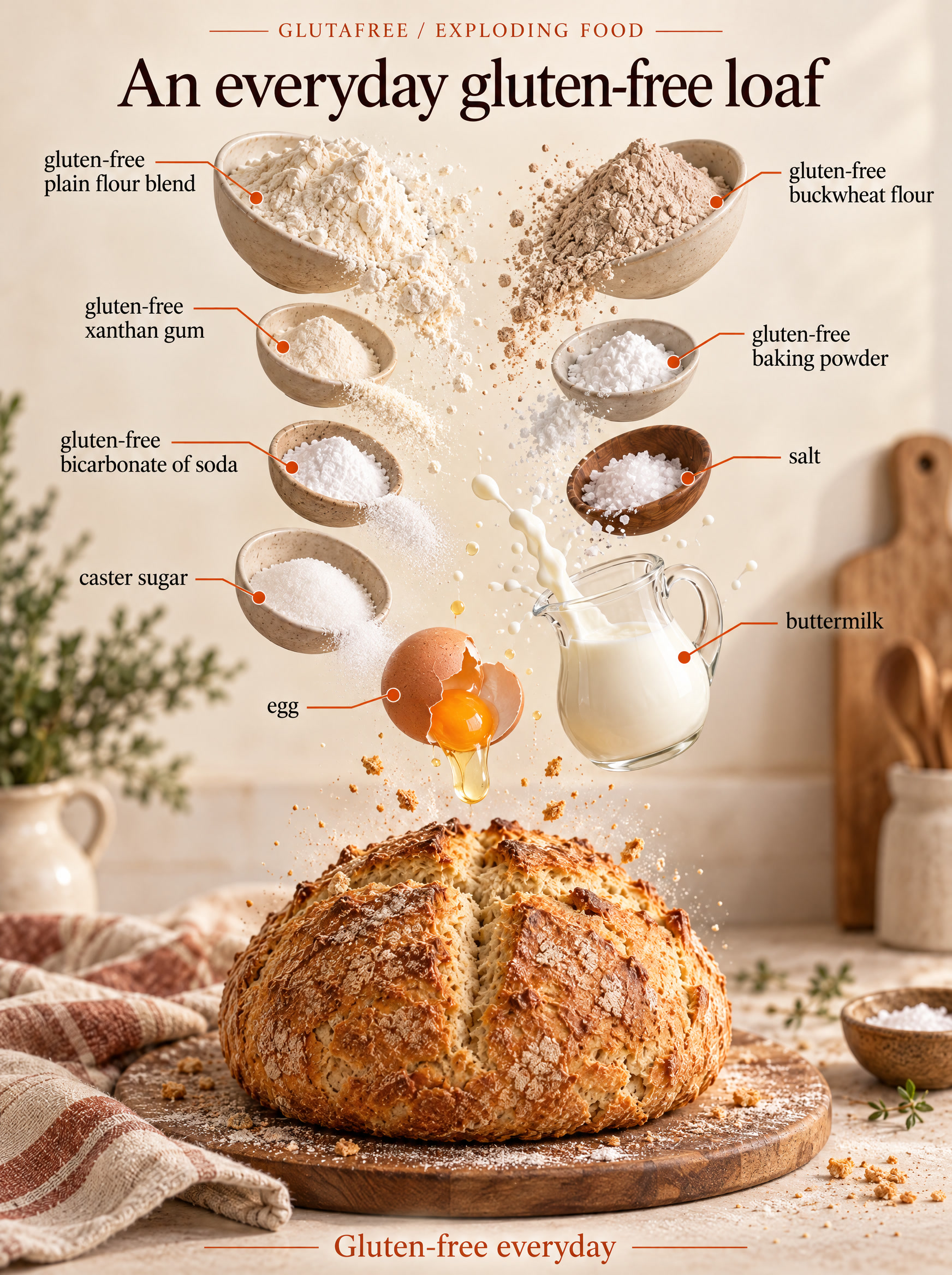
The miniature kitchen
Tiny chefs.
Big ideas.
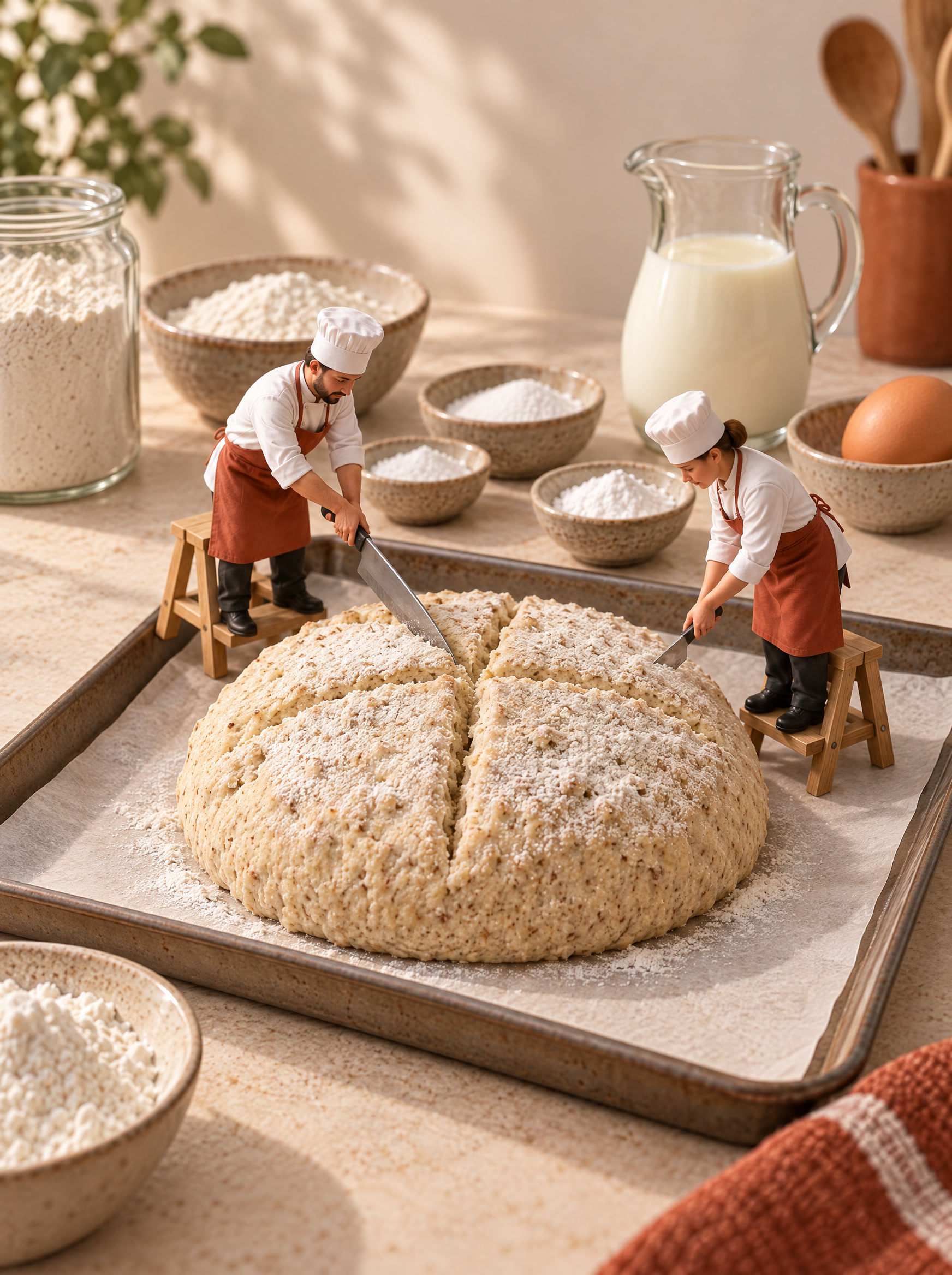
A playful look at the same familiar favourite. Meet the little team behind our food illustrations.
Explore the tiny kitchen