Everyday dinner
Aubergine and butter-bean bake with polenta
Roasted aubergine and butter beans baked in a garlic and tomato sauce, spooned over soft olive-oil polenta.
Free guide: thirty gluten-free dinners, with the shopping lists
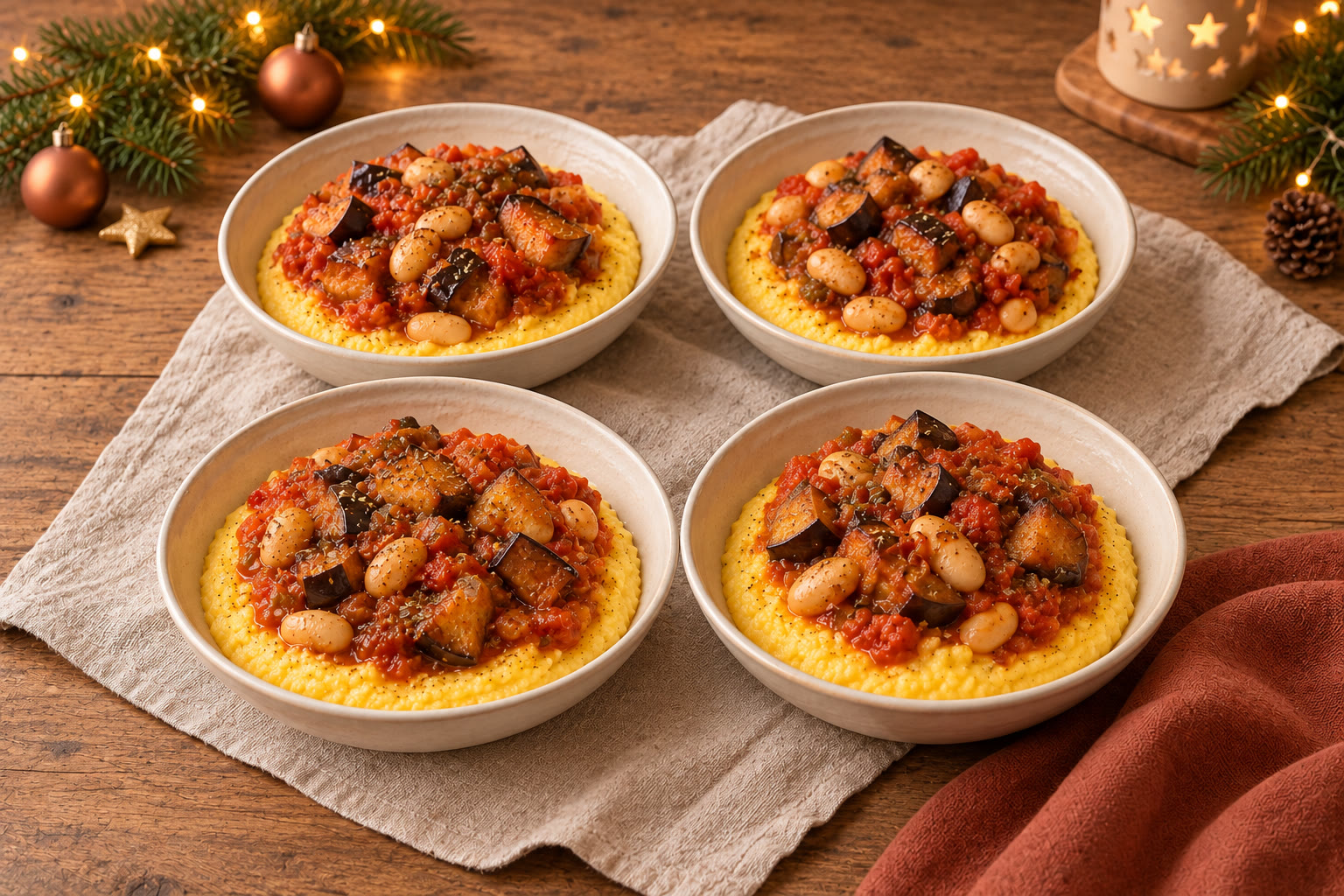
Roasting the aubergine first gives it browned edges and a soft centre before it goes into the tomato sauce. Butter beans make the bake substantial, and soft polenta catches the sauce.
This plant-based dinner serves four, with the vegetables and polenta included. You can make the bake ahead and cook the polenta just before serving. The recipe is in development and has not been kitchen-tested.
The ingredient list covers the whole meal, with shared ingredients listed once. Before shopping, subtract only the amounts you already have and have checked for gluten-free suitability.
The recipe
Aubergine and butter-bean bake with polenta
- Prep
- 20 min
- Cook
- 60 min
- Total*
- 80 min
- Makes
- 4 servings
*Estimated development timings. Allow 5 minutes standing after baking, making about 85 minutes to serving. The cooking estimate includes overlapping jobs and assembly; allow longer if the aubergine or your polenta needs it.
Ingredients
Tick things off as you go.
For the aubergine and butter-bean bake
For the polenta
Shared ingredients for the whole meal
Equipment
- Use two shallow roasting trays, approximately 30 × 40 cm, that fit on separate oven shelves with space for air to circulate.
- Use a 3-litre ovenproof baking dish.
- Use a large saucepan for the tomato sauce and a deep saucepan of at least 3 litres for the polenta.
- Have a chopping board, knife, colander, measuring jug, kitchen scales, whisk and wooden spoon ready.
- The overlapping cooking schedule needs one oven with two shelves and two hob rings.
Let’s make it.
- 01
Prepare the kitchen
Check packaged ingredients for gluten-free suitability and clean the worktop, trays, pans, colander and utensils to remove any crumbs or flour. Wash the aubergines before cutting them. Heat the oven to 220°C / 200°C fan. Position two shelves so the roasting trays fit with air space around them. Measure out the shared ingredients into their stated allocations; everything should be ready before cooking starts.
- 02
Roast the aubergine
Divide the aubergine between the trays and toss with 30 ml olive oil and 1 g salt. Spread into a single layer. Roast for 25–30 minutes, turning the pieces and swapping the trays halfway through. The pieces should have browned edges and yield easily when pressed with a fork; roast longer if the centres are still firm.
- 03
Cook the tomato sauce
While the aubergine roasts, heat 15 ml olive oil in the large saucepan over a medium heat. Add the onion and cook for 8–10 minutes, stirring, until soft and translucent. Stir in the garlic and tomato purée for 2 minutes, until fragrant. Add the tomatoes, oregano, 100 ml water, 1 g salt and ¼ tsp pepper. Simmer uncovered for 12–15 minutes, stirring occasionally, until the sauce thickens enough to coat a spoon. Fold in the drained butter beans and heat for 3 minutes, until the sauce bubbles again.
- 04
Bake the beans and aubergine
Reduce the oven to 200°C / 180°C fan. Fold the roasted aubergine into the hot bean sauce and transfer to the baking dish, leaving at least 2 cm below the rim. Bake uncovered for 20–25 minutes. The sauce should bubble at the edges, the aubergine should be completely soft and a spoonful lifted from the centre should release steam. Continue baking if the middle is not steaming hot.
- 05
Make the polenta
Start heating 1 litre water in the deep saucepan as you assemble the bake. When boiling, add 1 g salt and gradually whisk in the polenta. Reduce to a low heat and cook for the packet's full stated time, usually 25–30 minutes for the specified variety, stirring frequently along the base and sides. If using quick-cook polenta, delay starting so it finishes after the bake. Heat the reserved 250 ml water separately and add it in small amounts only if needed. The finished polenta should have tender grains with no gritty bite and fall slowly from the spoon; packet liquid requirements take priority.
- 06
Finish and serve
Let the finished bake stand for 5 minutes. Stir the remaining 15 ml olive oil and ¼ tsp pepper into the cooked polenta. If it has stiffened, loosen it with a little of the reserved hot water until it is soft and spoonable. Divide all the polenta between four bowls, then add a quarter of the aubergine and bean bake to each. Serve while both components are hot.
Ingredient checks
Use plain tinned beans, tomatoes and tomato purée whose labels confirm gluten-free suitability, and check the oregano and pepper for added ingredients or gluten warnings. Choose dry polenta labelled gluten-free; a ready-cooked block is not interchangeable. No stock, cheese, breadcrumbs or bottled sauce is needed. Product brands have not been supplied, so individual packs remain to be checked. Keep ingredients away from wheat flour and crumbs and use thoroughly cleaned equipment, including the colander. The shopping quantities are combined: 60 ml oil, 3 g salt and ½ tsp pepper cover both components, and water totals 1.35 litres including the adjustment allowance. Pantry holdings are unknown, so no deductions have been assumed.
Allergens: The specified plain ingredients do not intentionally include any of the 14 UK regulated allergens: celery, cereals containing gluten, crustaceans, eggs, fish, lupin, milk, molluscs, mustard, tree nuts, peanuts, sesame, soya or sulphites.; This is not a guarantee that every brand or substitution is suitable for every allergy; check ingredient lists and precautionary allergen statements on each pack.; Choose polenta labelled gluten-free and prevent gluten cross-contact during storage, preparation and serving..
Make it work for you
Replace the butter beans with the same drained weight of tinned cannellini beans, checked for gluten-free suitability.
Replace the oregano with 2 tsp dried thyme, checked for gluten-free suitability.
Quick-cook polenta can replace the standard polenta by dry weight; follow its packet liquid ratio and cooking time, and cook it near the end of the bake.
Keep the olive oil finish for a plant-based meal; dairy butter, cheese and packaged plant-based alternatives change the allergen checks and have not been tested here.
For another day
For making ahead, cook the bake fully and prepare fresh polenta when serving; the main method uses fresh vegetables and newly opened tinned beans, not previously cooked leftovers.
Divide leftover bake and polenta into separate shallow containers, cool promptly and refrigerate within 1–2 hours at 0–5°C; eat within 48 hours or freeze promptly once cooled.
Reheat only the portions needed, and only once, until steaming hot throughout; stir during reheating and check the centre rather than relying on bubbling edges.
Polenta firms as it cools; reheat it gently in a saucepan with a little water, stirring and breaking up lumps until hot throughout.
Defrost frozen portions fully in the fridge and use within 24 hours of complete thawing; freezing and reheating texture have not been kitchen-tested.
Exploding food
What goes in.
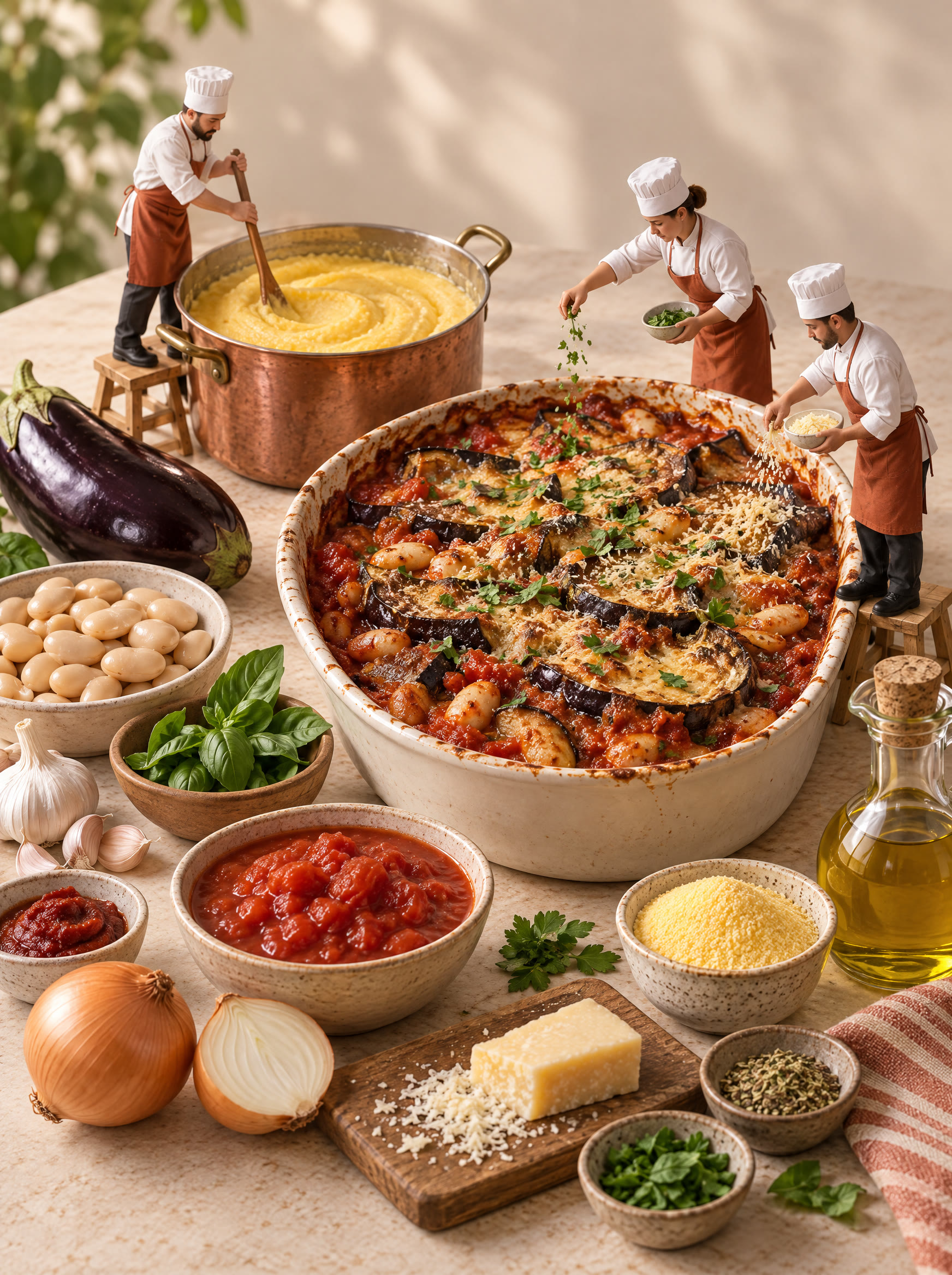
The ingredients, seen a little differently. This image is an illustration of the main ingredients; use the written recipe for the full list and quantities.
See the collection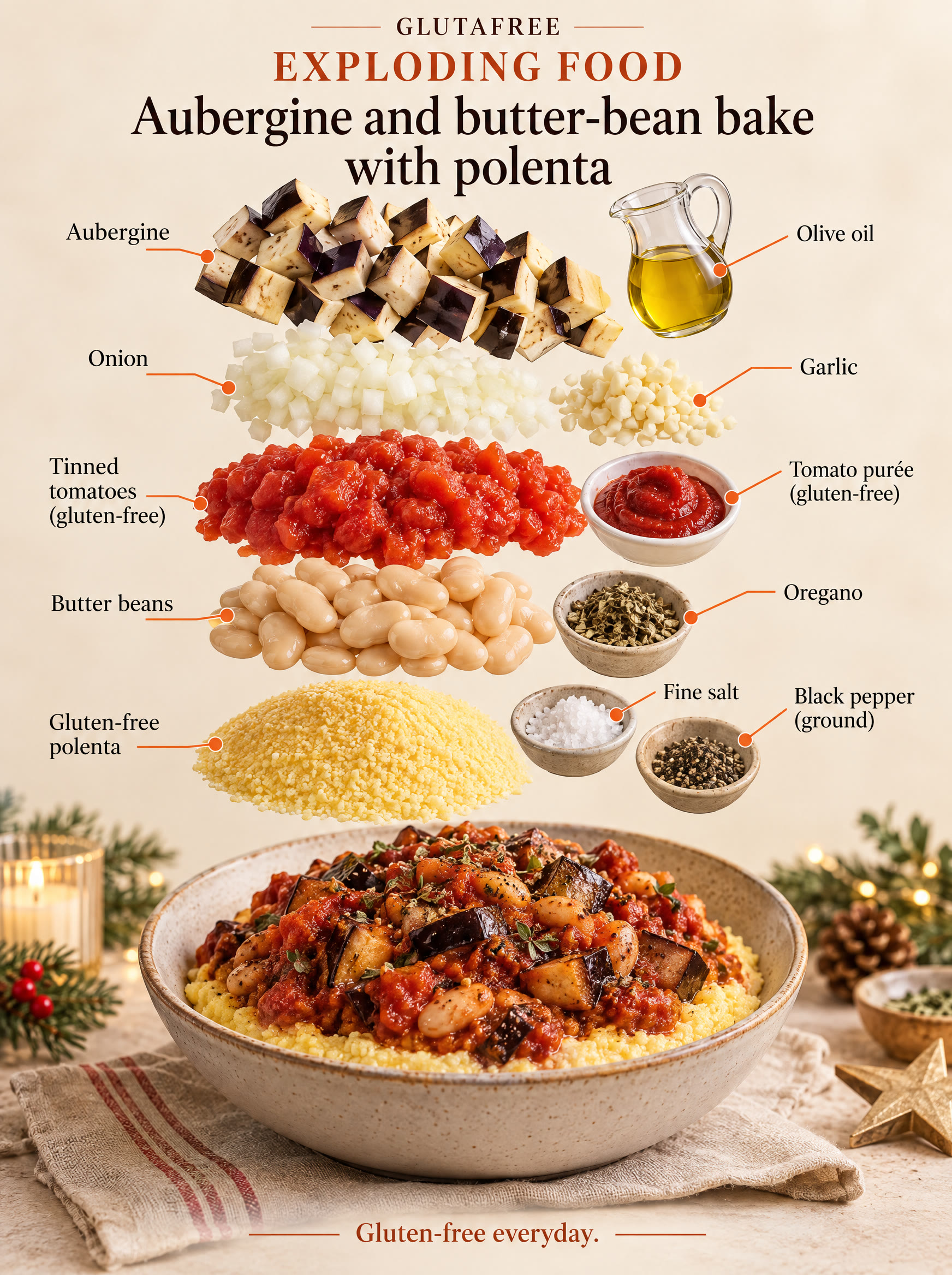
The miniature kitchen
Tiny chefs.
Big ideas.
A playful look at the same familiar favourite. Meet the little team behind our food illustrations.
Explore the tiny kitchen