Everyday dinner
Beef and root-vegetable stew with mash
Tender beef and root vegetables in a rich gluten-free gravy, served with buttery mashed potato.
Free guide: thirty gluten-free dinners, with the shopping lists
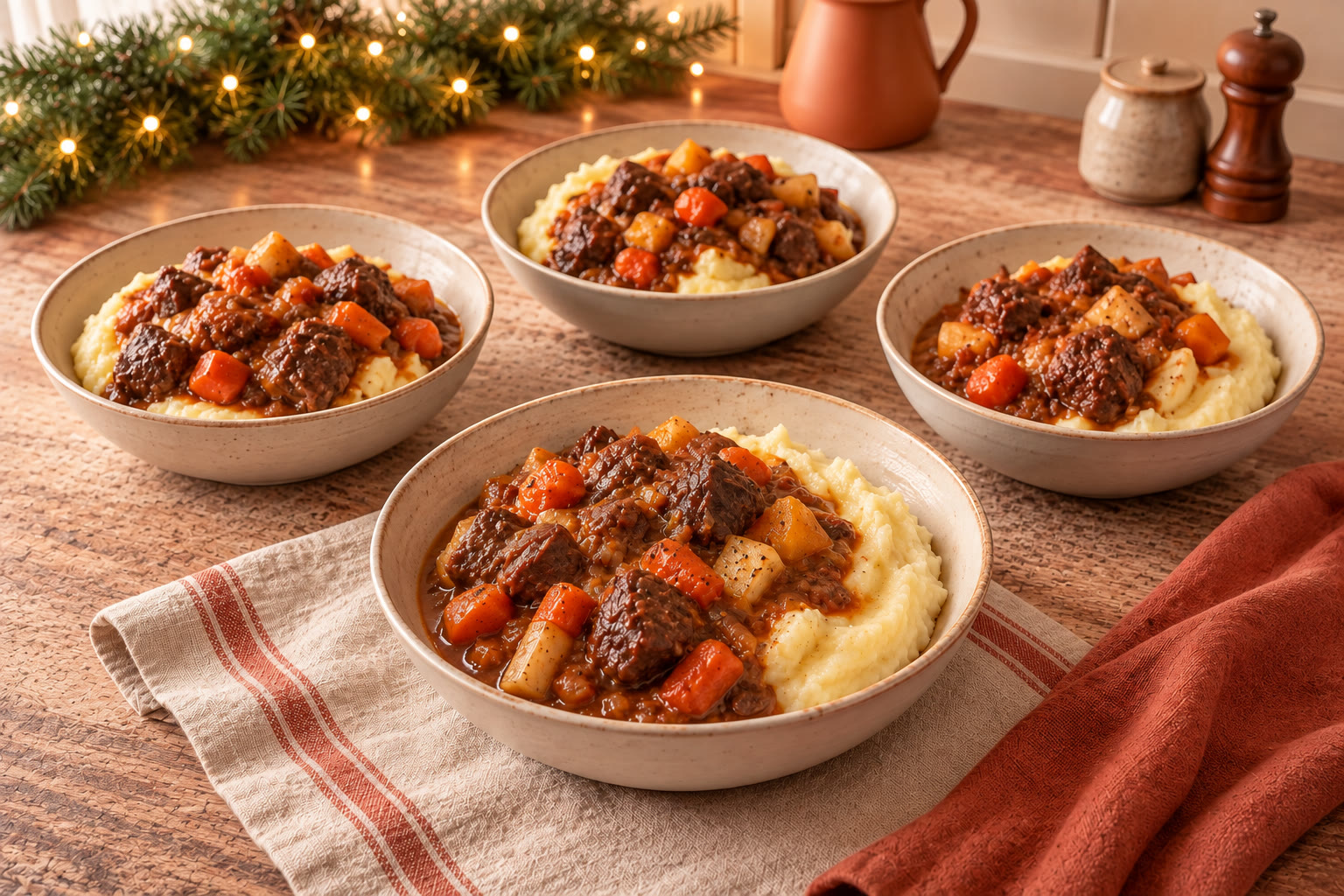
This complete family dinner pairs slowly simmered beef, carrots, parsnips and swede with creamy mashed potato. Cornflour thickens the gluten-free gravy.
Prepare the vegetables before starting, then make the mash while the stew finishes. Check the stock, cornflour and every other packaged ingredient for gluten-free suitability.
The recipe
Beef and root-vegetable stew with mash
- Prep
- 25 min
- Cook
- 185 min
- Total*
- 210 min
- Makes
- 4 servings
*Estimated development timings. Allow the finished stew to stand for 5 minutes before serving; this is included in the 185-minute cooking allowance and 210-minute total. Tougher beef may need longer.
Ingredients
Tick things off as you go.
For the beef and root-vegetable stew
For the mash
For seasoning
Equipment
- Use a large, heavy-based casserole or lidded saucepan.
- Use a large saucepan and a colander for the potatoes.
- Use a chopping board and sharp knife.
- Use a potato masher.
- Use a small bowl for the cornflour mixture.
- Use a measuring jug, kitchen scales, measuring spoons and a stirring spoon.
- Use a plate for the browned beef.
- Use a clean food thermometer if checking the beef by temperature.
Let’s make it.
- 01
Brown the beef
Heat half the rapeseed oil in the casserole over a medium-high heat. Add half the beef in a single layer and brown it for 4–5 minutes, turning until coloured on several sides. Transfer it to a plate, add the remaining oil and brown the rest. The beef should have a deep brown surface rather than looking grey.
- 02
Soften the onion
Reduce the heat to medium. Add the onion to the casserole and cook for 8 minutes, stirring regularly, until softened and translucent.
- 03
Start the stew
Stir in the tomato purée and cook for 1 minute. Return the beef and any juices to the casserole, then add the gluten-free beef stock, thyme and bay leaves. Season lightly with salt and black pepper. Bring to a steady simmer, scraping the base until the browned pieces have loosened into the liquid.
- 04
Simmer gently
Cover the casserole and reduce the heat to low. Simmer gently for 1 hour 45 minutes, stirring occasionally, then add the carrots, parsnips and swede. Cover and simmer for another 45 minutes. If the stew starts catching or looks dry, add a little of the optional simmering water. Keep the 30 ml cold water for the cornflour mixture separate. At the end, a fork should slide easily into the beef and the vegetables. If either is still firm, continue simmering and check every 15 minutes; this will extend the cooking time.
- 05
Cook the potatoes
When the stew has about 30 minutes left, put the potatoes in a large saucepan and add enough cold water to cover them. Add a small pinch of salt, bring to the boil and simmer for 15–20 minutes. They are ready when a table knife slides easily through the centre of the largest piece.
- 06
Finish the gravy
Mix the cornflour with the measured 30 ml cold water in a small bowl until completely smooth. Remove the bay leaves from the stew, stir in the cornflour mixture and simmer uncovered for 3–5 minutes. The gravy is ready when it lightly coats the back of a spoon. Check that the beef is steaming hot in the centre when cut open. If using a clean food thermometer, the centre of the largest pieces should reach 75°C for 30 seconds. Clean the probe after use.
- 07
Mash the potatoes
Drain the tender potatoes thoroughly and leave them in the hot pan for 1 minute so excess moisture can evaporate. Add the butter and milk, then mash until no firm lumps remain. Season with salt and black pepper; the mash should be smooth, hot and soft enough to spoon.
- 08
Rest and serve
Taste the stew and adjust the salt and black pepper if needed. Remove it from the heat and leave it to stand for 5 minutes, until the bubbling settles but the stew remains steaming hot. Divide the mash between four warmed bowls and spoon over the beef, vegetables and gravy.
Ingredient checks
Check every packaged ingredient for gluten-free suitability and other allergens, particularly the beef stock, cornflour, dried thyme, butter and milk. For someone with coeliac disease, use clean utensils, preparation surfaces and cookware, and keep ingredients away from gluten-containing foods to reduce cross-contact. Wash hands and clean utensils and surfaces after handling raw beef.
Allergens: This recipe contains milk in the butter and milk.; Check every packaged ingredient against all 14 UK allergens: celery, cereals containing gluten, crustaceans, eggs, fish, lupin, milk, molluscs, mustard, tree nuts, peanuts, sesame, soya and sulphites.; Stock may contain additional allergens, including celery, soya or mustard; check its label and the tomato purée label for all declared allergens, including sulphites.; Choose gluten-free stock and cornflour, check other packaged ingredients for gluten-free suitability, and assess precautionary allergen statements for anyone eating the meal..
Make it work for you
Replace the parsnips or swede with the same prepared weight of carrots if preferred; keep the vegetable pieces about 2 cm so they cook evenly.
For a milk-free mash, use the same quantities of suitable dairy-free spread and unsweetened dairy-free drink, checking both for gluten-free suitability and any replacement allergens such as soya or tree nuts.
If using fresh thyme, replace the dried thyme with 1 tablespoon of leaves and add them with the stock.
For another day
Divide leftover stew and mash into separate small, shallow containers to cool quickly, then cover and refrigerate within 1–2 hours of cooking.
Keep the fridge between 0°C and 5°C and eat refrigerated leftovers within 48 hours.
Alternatively, freeze cooled portions promptly in sealed containers and use within 3 months for best quality.
Defrost frozen portions fully in the fridge and use within 24 hours of complete defrosting.
Reheat leftovers only once, until steaming hot throughout, stirring the stew and mash during reheating so there are no cold spots.
Exploding food
What goes in.
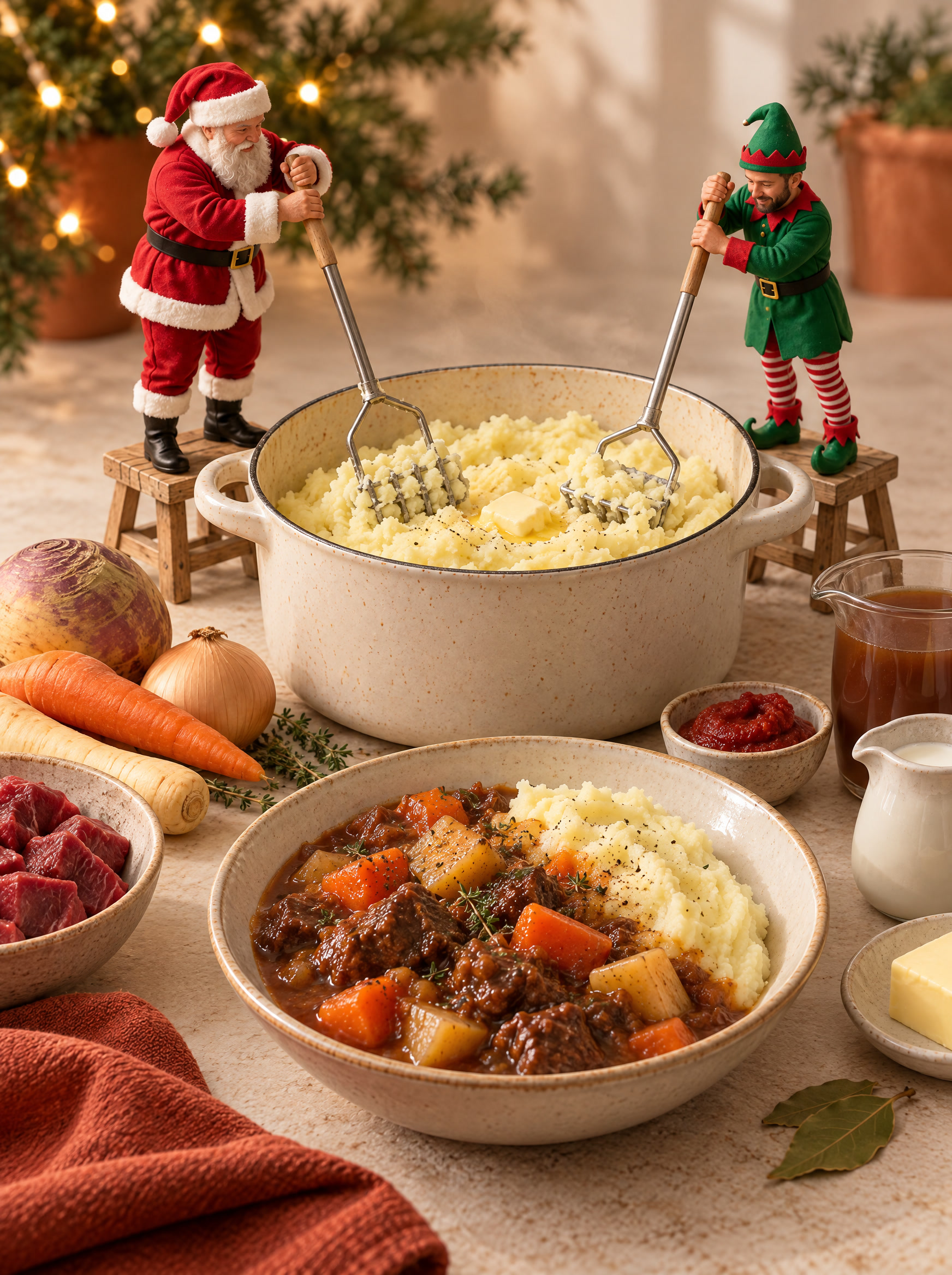
The ingredients, seen a little differently. This image is an illustration of the main ingredients; use the written recipe for the full list and quantities.
See the collection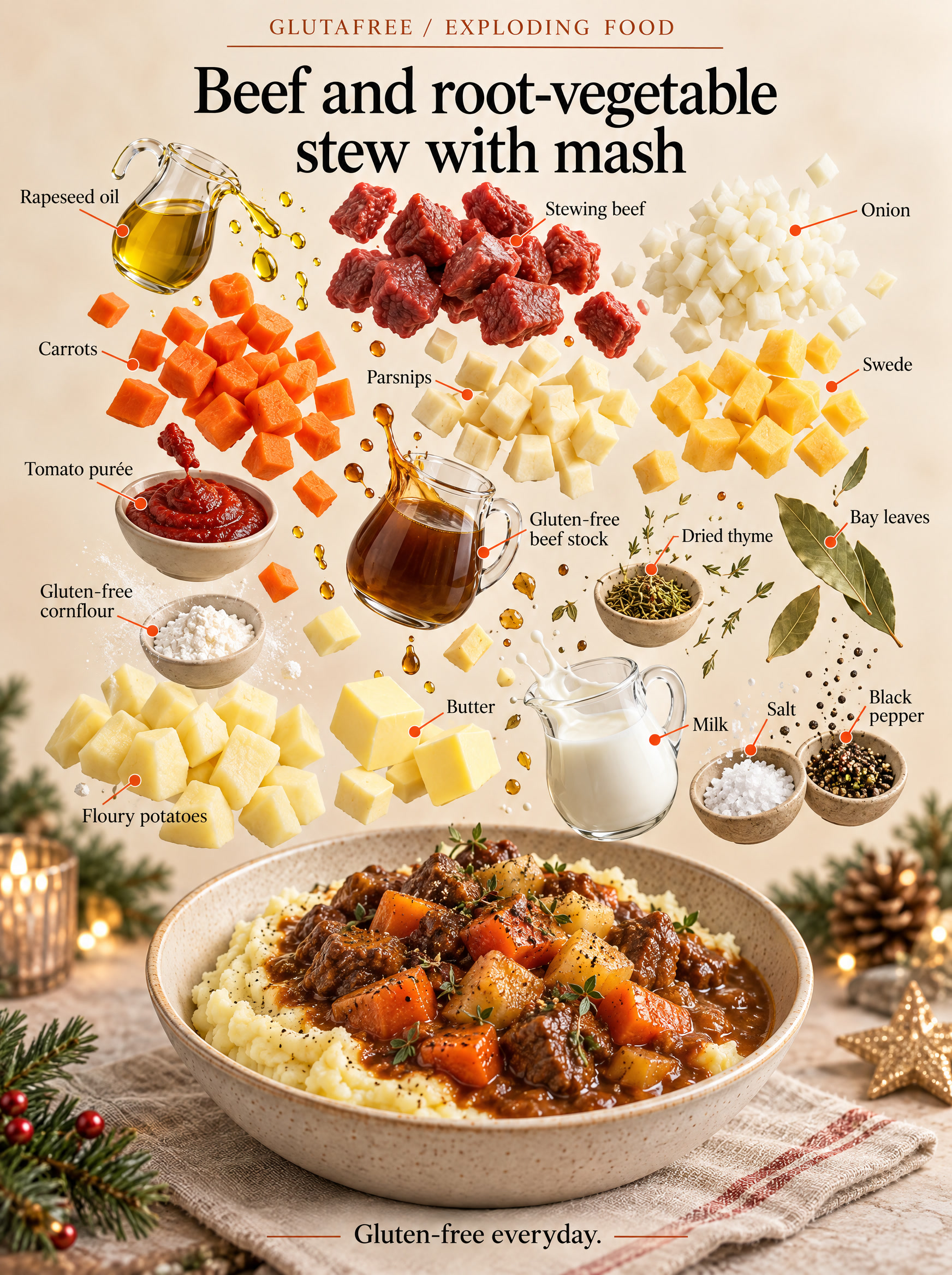
The miniature kitchen
Tiny chefs.
Big ideas.
A playful look at the same familiar favourite. Meet the little team behind our food illustrations.
Explore the tiny kitchen