Bread
Everyday sandwich loaf
A gluten-free tin loaf in development, with a soft crumb as the goal.
Free guide: thirty gluten-free dinners, with the shopping lists
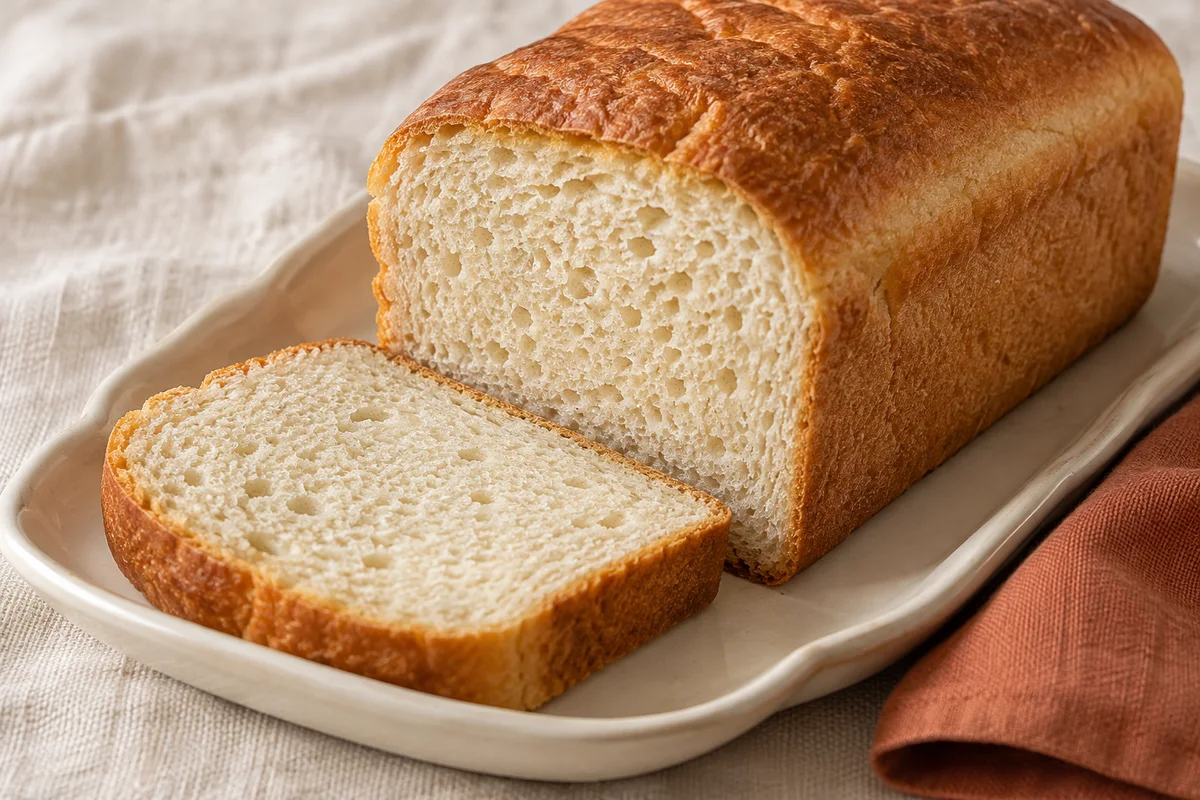
Bread is one of the reasons this project exists. This first formula needs a named flour blend and careful testing before it can earn a place in the finished collection.
This recipe is in development. Record your ingredient brands and equipment during testing, and use the cooking checks alongside the suggested timings.
The recipe
Everyday sandwich loaf
- Prep
- 20 min
- Cook
- 55 min
- Total*
- 75 min
- Makes
- 12 slices
*Estimated development timings. Add 45–60 minutes proving and at least 2 hours cooling to the time shown.
Ingredients
Tick things off as you go.
What you need
Equipment
- 900 g / 2 lb loaf tin
- Baking paper
- Large bowl
- Electric mixer
- Wire rack
Let’s make it.
- 01
Prepare
Lightly oil and line a 900 g / 2 lb loaf tin. Check the flour is a bread blend containing xanthan gum; this formula is not a direct substitution for plain flour. Check yeast instructions allow direct mixing.
- 02
Mix
Combine flour, yeast, sugar and salt in a large bowl. Beat water, eggs and oil together, then beat into the flour for 3–4 minutes until a thick sticky batter forms. Do not add extra flour to turn it into wheat-style dough.
- 03
Prove
Scrape into the tin and smooth with a wet spatula. Cover loosely and leave in a warm draught-free place for 45–60 minutes until noticeably risen, around half its original height again. Do not let it overflow. Heat oven to 200°C / 180°C fan.
- 04
Bake
Bake for 45–55 minutes until browned and firmly set. If it colours too quickly, cover loosely with foil. Lift out and check the sides are firm; if very soft, return without the tin for a further 5–10 minutes.
- 05
Cool completely
Cool on a wire rack for at least 2 hours before slicing. Record flour brand, batter consistency, rise and cooled crumb in the test log. This formula is not yet kitchen-tested; a soft sandwich texture is a development aim, not a proven result.
Ingredient checks
Check every packaged ingredient for gluten-free suitability and other allergens, including stock, sauces, spices and seasoning blends. Use clean equipment and protect food from gluten cross-contamination.
Allergens: Eggs; check flour and yeast.
Make it work for you
Keep the stated ingredient quantities for the first test. Substitutions need separate testing.
For another day
Shelf-life and freezing trials are required before adding storage claims.
Exploding food
What goes in.
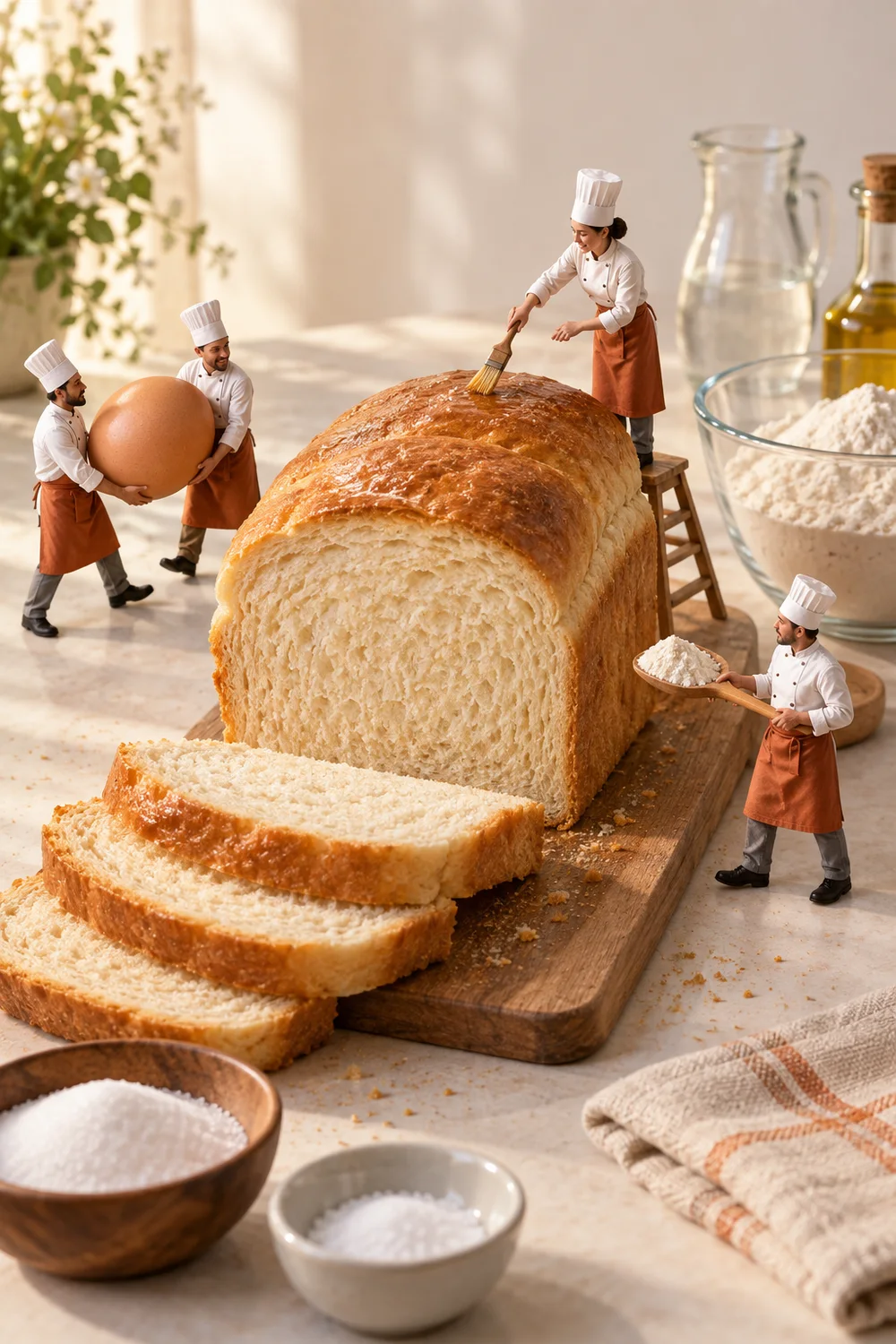
The ingredients, seen a little differently. This image is an illustration of the main ingredients; use the written recipe for the full list and quantities.
See the collection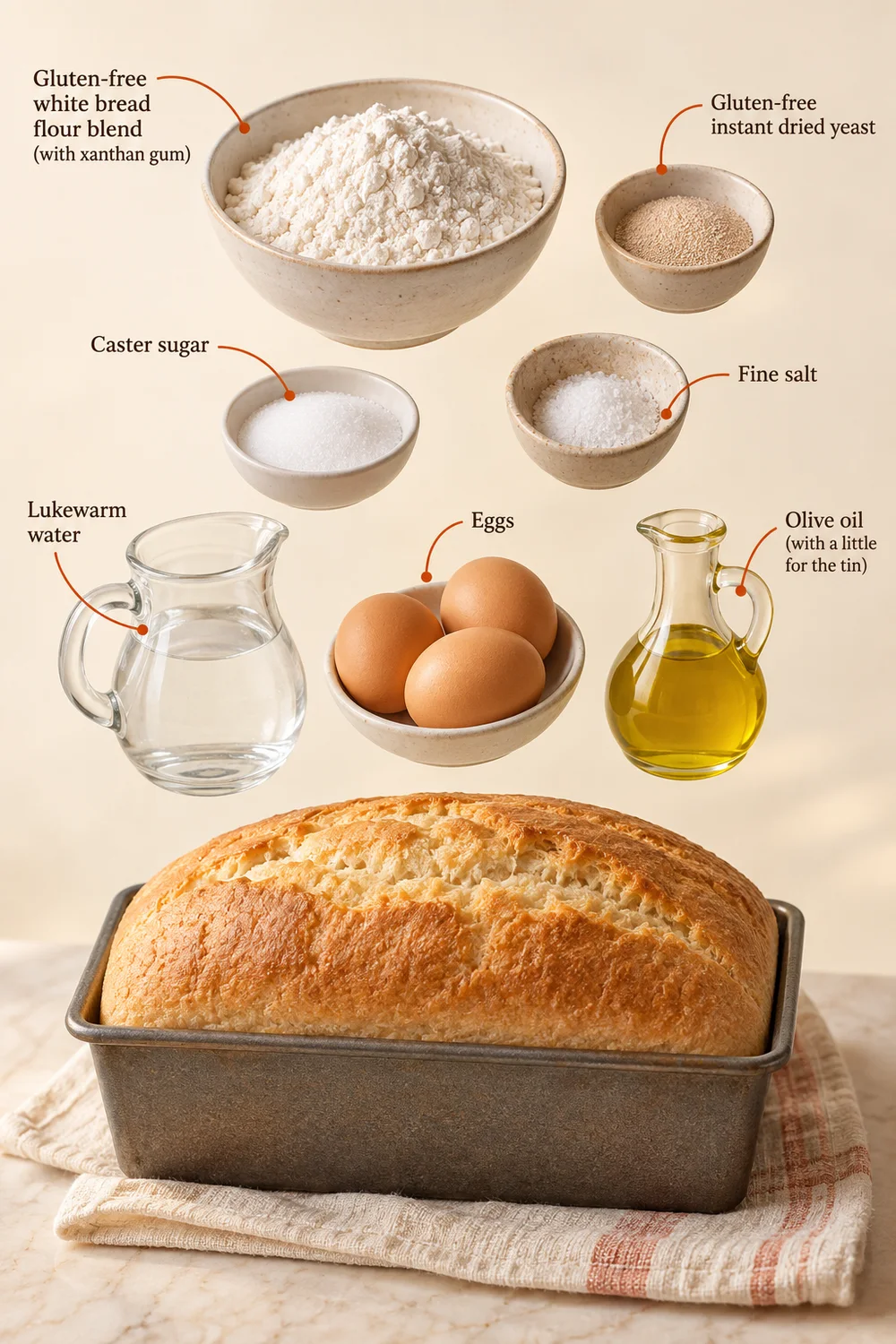
The miniature kitchen
Tiny chefs.
Big ideas.
A playful look at the same familiar favourite. Meet the little team behind our food illustrations.
Explore the tiny kitchen