Everyday dinners
Gluten-free pizza
Two homemade pizzas with a no-yeast base, tomato and oregano sauce, and melted mozzarella.
Free guide: thirty gluten-free dinners, with the shopping lists
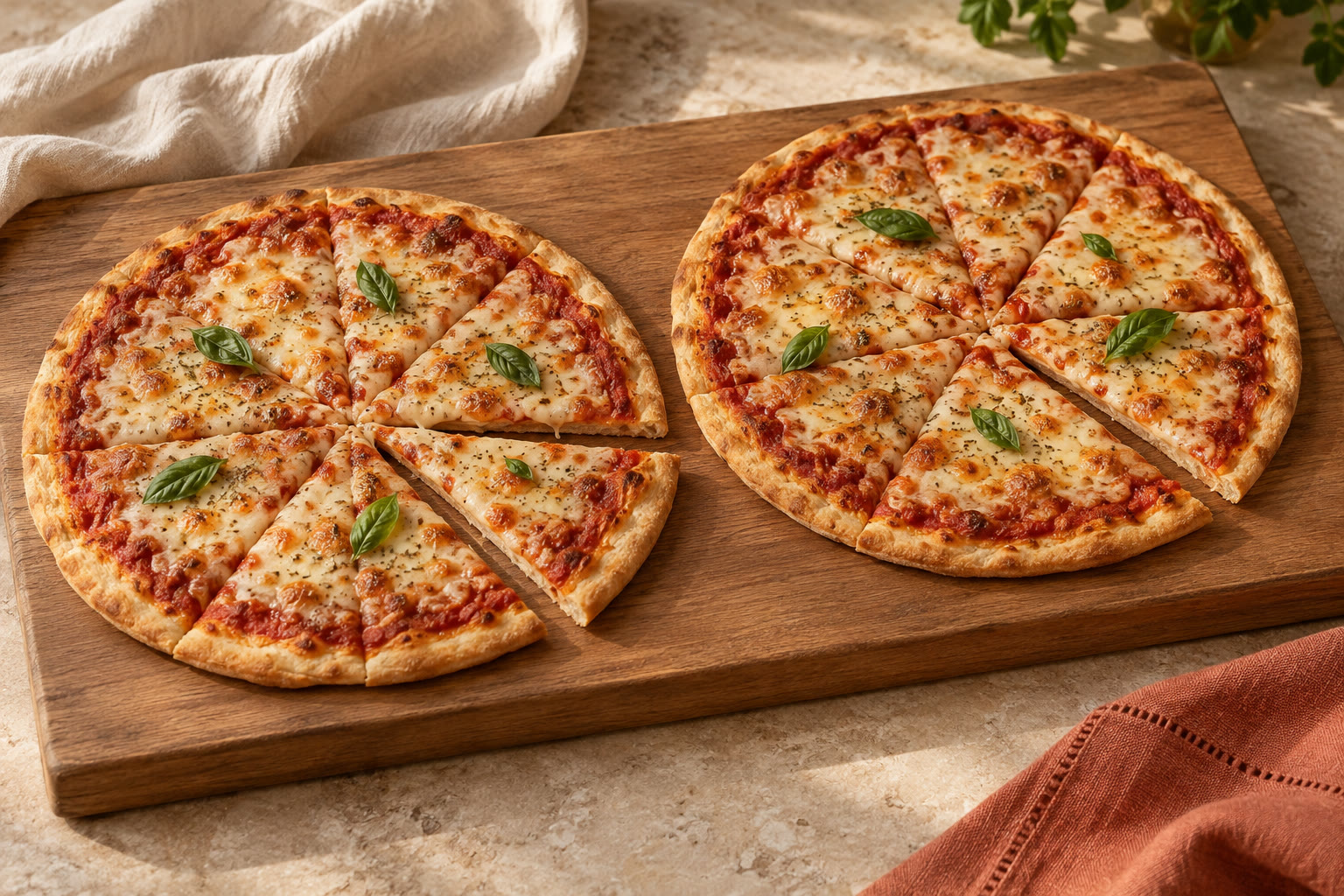
This recipe makes two pizzas, each about 28 cm across, to share between four. Baking the bases before adding the toppings helps the middle cook through.
The dough uses baking powder, so there is no yeast or rising time. This recipe is in development and has not been kitchen-tested.
The recipe
Gluten-free pizza
- Prep
- 25 min
- Cook
- 25 min
- Total*
- 50 min
- Makes
- 4 servings
*Estimated development timings. Allow 3 minutes standing after baking, in addition to the total time. Timings assume both pizzas fit in the oven together; baking in separate batches adds approximately 25 minutes.
Ingredients
Tick things off as you go.
For the bases
For the topping
Equipment
- Use digital kitchen scales, a measuring jug and measuring spoons.
- Use a large mixing bowl and a sturdy spoon.
- Use a small bowl for the sauce.
- Use two shallow baking trays, each large enough for a 28 cm pizza.
- Use baking parchment rated for 220°C.
- Use a spatula, oven gloves and a pizza cutter or sharp knife.
Let’s make it.
- 01
Prepare the oven and trays
Heat the oven to 220°C / 200°C fan. Position shelves in the upper and lower thirds, leaving room for air to circulate. Line both trays with baking parchment, trimming it so it does not hang over the edges. Wait until the oven reaches the set temperature before baking.
- 02
Mix the topping
Stir the passata, tomato purée and oregano together in the small bowl. The mixture should be smooth and thick enough to spread without running like water. Grate the mozzarella if necessary and keep it chilled until needed.
- 03
Make the dough
Mix the flour, baking powder, xanthan gum, sugar and salt thoroughly. Stir in 30 ml of the oil and 250 ml water until no dry flour remains. If crumbly, add the extra water 5 ml at a time, using no more than 30 ml. Aim for a soft, slightly sticky dough that holds together when pressed; it will not stretch like wheat dough.
- 04
Shape the bases
Divide the dough equally between the trays. Use the remaining 15 ml oil to coat your fingers and the dough surfaces. Press each portion into a round about 28 cm across, keeping the centre approximately 5 mm thick and the rim slightly thicker. Close any cracks by pressing their edges together. Check that neither centre has a thick mound.
- 05
Bake the bases
Bake both bases for 10–12 minutes, swapping the trays between shelves halfway through. The surfaces should look dry and set, and the edges should just begin to colour. A spatula should slide beneath the edge without picking up wet dough.
- 06
Add the topping and finish baking
Take out the trays using oven gloves. Divide all the sauce between the bases, leaving a 1 cm border, then scatter over all the mozzarella. Bake for another 10–13 minutes, swapping shelves halfway through, until the cheese bubbles and the undersides have golden patches. Lift an edge with a spatula to check underneath, then cut into the centre: the dough should be set with no wet, paste-like layer and the topping should be steaming hot. If necessary, bake a little longer, checking every 2 minutes.
- 07
Stand and slice
Scatter the basil over the pizzas and leave them on their trays for 3 minutes. The cheese should settle enough to cut without sliding off. Transfer to a clean board and divide each pizza into slices; half a pizza is one serving.
Ingredient checks
Use a flour blend labelled gluten-free and check that it contains no added xanthan gum, guar gum or raising agents for this formulation. Check the baking powder, xanthan gum, tomato products, dried herbs and cheese for gluten-free suitability and declared allergens. For someone with coeliac disease, use clean trays, bowls, utensils and work surfaces, fresh parchment and ingredients protected from wheat-flour dust and crumbs. Check labels against all 14 UK allergens: celery, cereals containing gluten, crustaceans, eggs, fish, lupin, milk, molluscs, mustard, tree nuts, peanuts, sesame, soya and sulphites.
Allergens: Contains milk from the mozzarella.; No other UK priority allergens are deliberately included in the specified ingredients, but flour blends and packaged products vary; check their labels.; Gluten-free does not always mean wheat-free: some gluten-free blends contain specially processed wheat starch and are unsuitable for a wheat allergy.; Dairy-free cheese alternatives may contain soya or tree nuts; check the replacement and update the allergen information..
Make it work for you
Replace the mozzarella with 150 g grated mature Cheddar for a stronger cheese topping.
For a dairy-free version, use 200 g of a gluten-free dairy-free pizza topping suitable for melting; the colour and texture will differ.
Replace the dried oregano with the same quantity of dried basil.
Do not replace the flour blend with a single flour such as almond or coconut flour; the dough needs a balanced flour-and-starch blend.
For another day
Separate leftover slices so they cool quickly, then cover and refrigerate within 1–2 hours at 0–5°C.
Eat refrigerated leftovers within 48 hours, or freeze them promptly once cool in a sealed container with parchment between the slices.
Defrost frozen slices in the fridge and use within 24 hours of fully defrosting.
Reheat only once, in an oven preheated to 200°C / 180°C fan, until steaming hot through the centre; begin checking after 10 minutes and continue as needed.
Freezing and reheating texture have not been kitchen-tested.
Exploding food
What goes in.
The ingredients, seen a little differently. This image is an illustration of the main ingredients; use the written recipe for the full list and quantities.
See the collection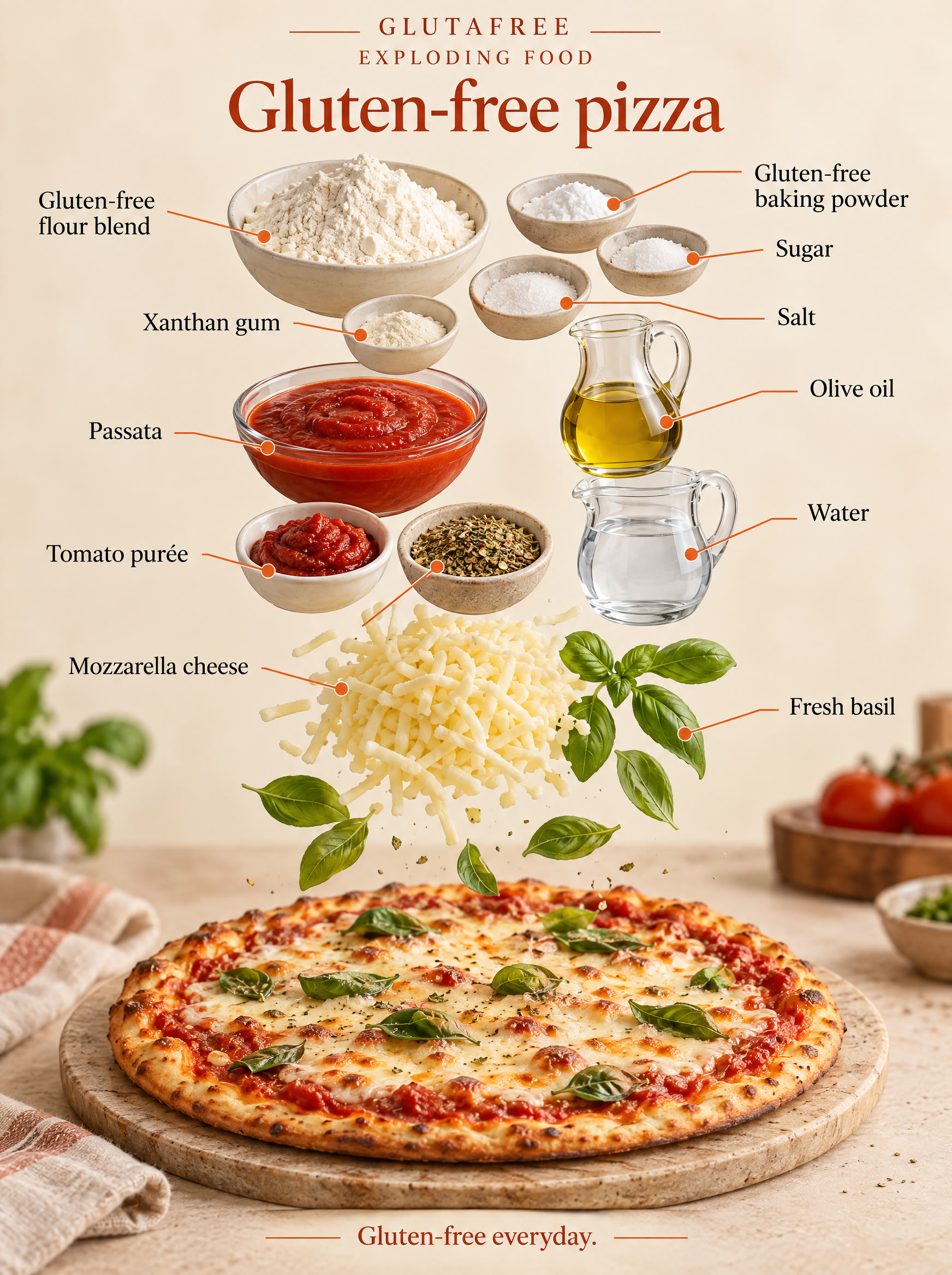
The miniature kitchen
Tiny chefs.
Big ideas.
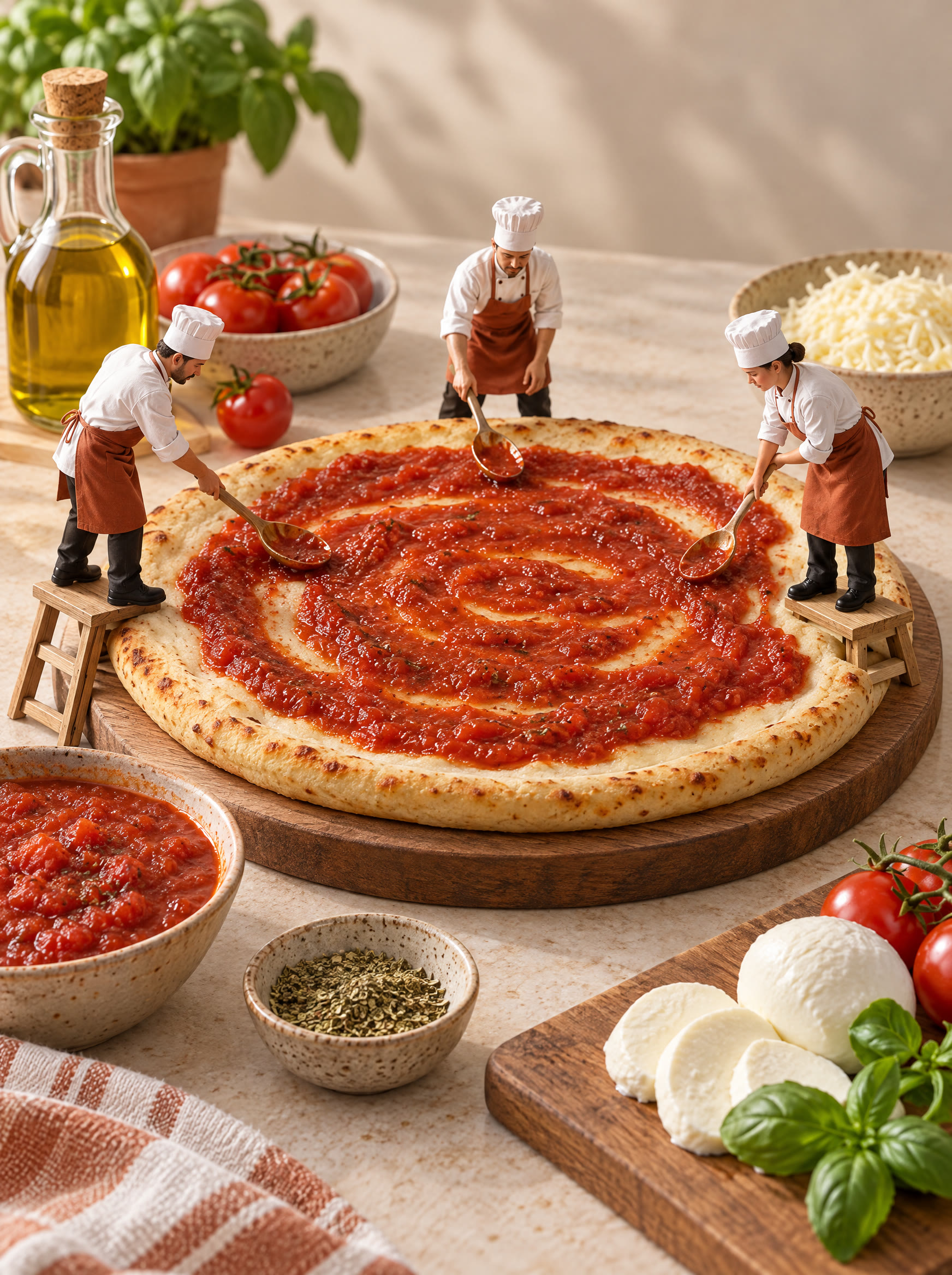
A playful look at the same familiar favourite. Meet the little team behind our food illustrations.
Explore the tiny kitchen