Everyday dinners
Gluten-free quiche
A buttery gluten-free pastry case filled with softened onions, mature Cheddar and creamy egg custard.
Free guide: thirty gluten-free dinners, with the shopping lists
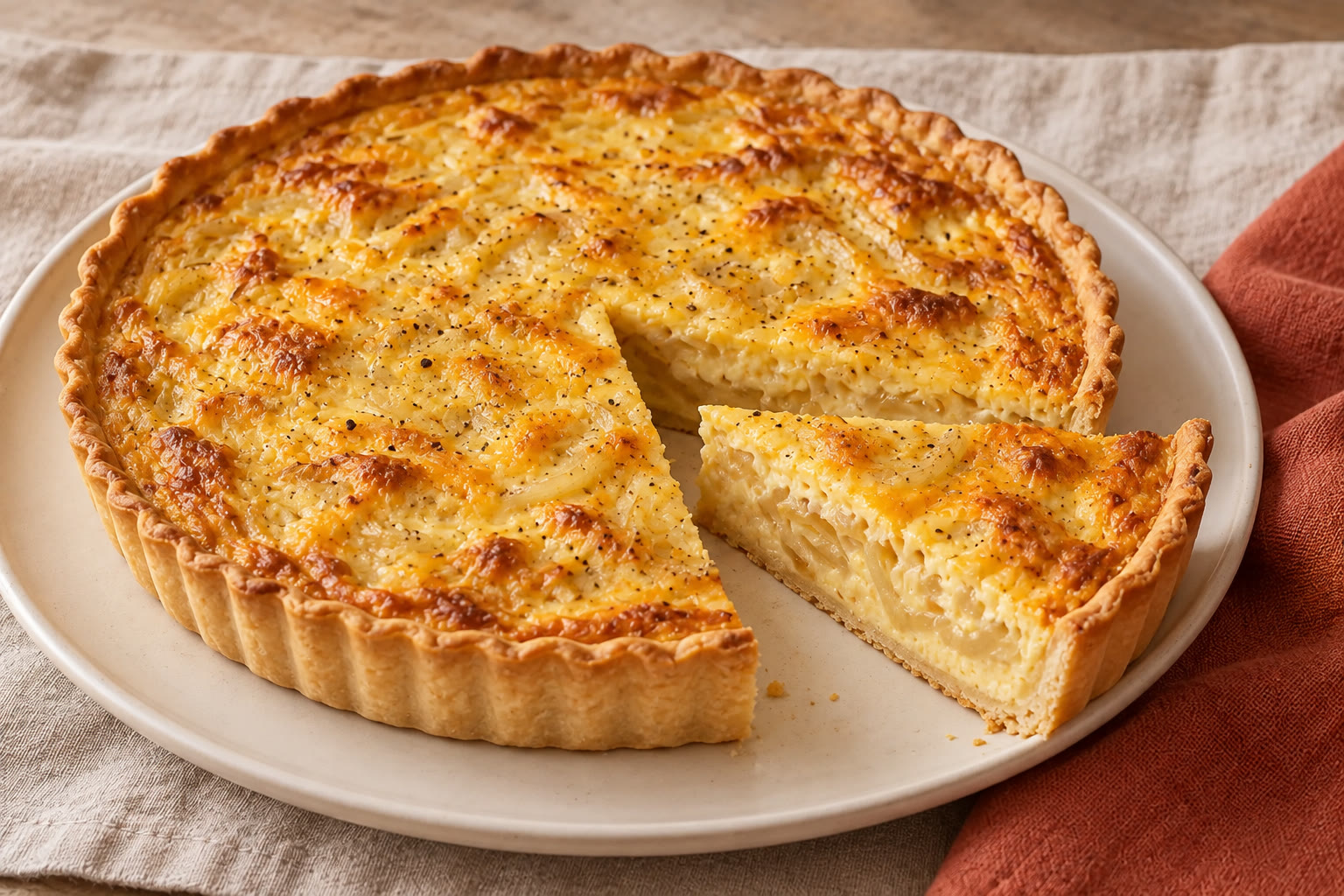
This cheese and onion quiche has a homemade gluten-free crust and a creamy, savoury filling. Baking the empty pastry case first helps the base cook before the custard goes in.
Gluten-free pastry can crack when moved. Roll it between sheets of baking paper and press any splits together in the tin. This recipe is in development and has not been kitchen-tested.
The recipe
Gluten-free quiche
- Prep
- 75 min
- Cook
- 85 min
- Total*
- 160 min
- Makes
- 6 servings
*Estimated development timings. Allow up to approximately 2 hours 40 minutes in total. The 75-minute preparation allowance includes 30 minutes of active preparation, 30 minutes of pastry chilling and 15 minutes of standing after baking; do not add these waits again. The 85-minute cooking allowance includes the onions and both baking stages. Cooking the onions while the pastry chills can reduce elapsed time by about 20 minutes; oven timings may vary.
Ingredients
Tick things off as you go.
For the pastry
For the filling
Equipment
- Use a 23 cm loose-bottomed metal tart tin approximately 3 cm deep.
- You will need a baking tray, baking paper and ceramic baking beans.
- Have a mixing bowl, measuring jug, fork and whisk ready.
- Use a rolling pin, kitchen scales and measuring spoons.
- You will need a frying pan, spatula, knife, chopping board and cheese grater.
- Use a clean digital food thermometer to check the centre of the filling.
- Have a wire rack and kitchen foil ready.
Let’s make it.
- 01
Make the pastry
Mix the flour, xanthan gum and salt in a bowl. Rub in the cold butter until only small flecks remain. Beat in the pastry egg with a fork, then add 15 ml cold water. Press together, adding the remaining water a teaspoon at a time only if needed. Stop when a squeezed piece holds together without dry cracks; the dough should feel pliable rather than sticky.
- 02
Line and chill
Roll the dough between two sheets of baking paper to a circle about 30 cm across and 3–4 mm thick. Peel off the top paper, invert the pastry into the tin and remove the other sheet. Ease it into the corners without stretching. Patch any splits with trimmings and trim level with the rim. The base and sides should be evenly covered with no visible holes. Refrigerate for 30 minutes until firm.
- 03
Soften the onions
While the pastry chills, heat the olive oil in the frying pan over a medium-low heat. Add the onions and cook for 15–20 minutes, stirring regularly, until soft and lightly golden with no liquid pooling in the pan. Spread on a plate to cool until no longer steaming. Heat the oven to 200°C / 180°C fan with the baking tray on the middle shelf; wait until it reaches temperature.
- 04
Bake the empty case
Line the chilled pastry with crumpled baking paper and fill with ceramic baking beans, supporting the sides. Place on the hot tray and bake for 15 minutes. Lift out the paper and beans carefully, then bake for another 8–10 minutes until the base looks dry and the edges are pale golden. Reduce the oven to 180°C / 160°C fan.
- 05
Mix and fill
Whisk the three filling eggs with the cream, milk and black pepper until evenly combined with no streaks of egg white. Spread the cooled onions and 90 g of the Cheddar across the pastry base. Keeping the tin on its tray, pour in the custard slowly, stopping 5 mm below the pastry rim. Scatter over the remaining 30 g Cheddar. If your tin leaves spare custard, bake it separately in an ovenproof ramekin and apply the same cooking check.
- 06
Bake until set
Bake for 35–40 minutes, checking from 30 minutes, until lightly golden and set across the centre with no liquid ripple when the tray is nudged. Check the middle with a clean food thermometer: it should reach 75°C for at least 30 seconds. Continue baking if needed, covering the pastry edges loosely with foil if they colour too quickly.
- 07
Rest and slice
Place the tin on a wire rack and stand for 15 minutes. The filling should settle and hold together when cut. Support the base as you remove the outer ring, then cut into six portions. The metal base may still be hot.
Ingredient checks
Use a labelled gluten-free plain flour blend and check the xanthan gum, cheese and all other packaged ingredients for gluten-free suitability and allergens. Gluten-free wheat starch can still require a wheat allergen declaration, so inspect the flour ingredients if wheat allergy also matters. For someone with coeliac disease, use clean equipment, baking paper and a preparation surface free from ordinary flour and crumbs. Check whether the flour blend already contains xanthan gum before measuring.
Allergens: Contains eggs in the pastry and filling.; Contains milk in the butter, cream, milk and Cheddar.; The specified ingredients do not intentionally include the other 12 UK regulated allergens: celery, cereals containing gluten, crustaceans, fish, lupin, molluscs, mustard, tree nuts, peanuts, sesame, soya or sulphites; check every product label for ingredients and cross-contact warnings..
Make it work for you
If your gluten-free plain flour blend already contains xanthan gum, omit the separate xanthan gum; water needs and pastry texture may differ.
Replace the onions with 250 g washed, trimmed and thinly sliced leeks, cooking until tender and any released moisture has evaporated.
Replace the Cheddar with the same weight of Red Leicester; this still contains milk.
Do not replace the flour blend with a single flour such as coconut or almond flour, as it will need different binding and liquid quantities.
For another day
Divide leftovers into portions, cool promptly and refrigerate within 1–2 hours of baking, including the standing time.
Keep covered in a fridge at 0–5°C and eat within 48 hours; properly cooked and chilled quiche can be eaten cold.
For longer storage, freeze cooled portions promptly in sealed containers, then defrost fully in the fridge and use within 24 hours of thawing.
Reheat portions only once until steaming hot throughout; cover the pastry loosely with foil if reheating in the oven.
Freezing and reheating texture have not been kitchen-tested for this recipe.
Exploding food
What goes in.
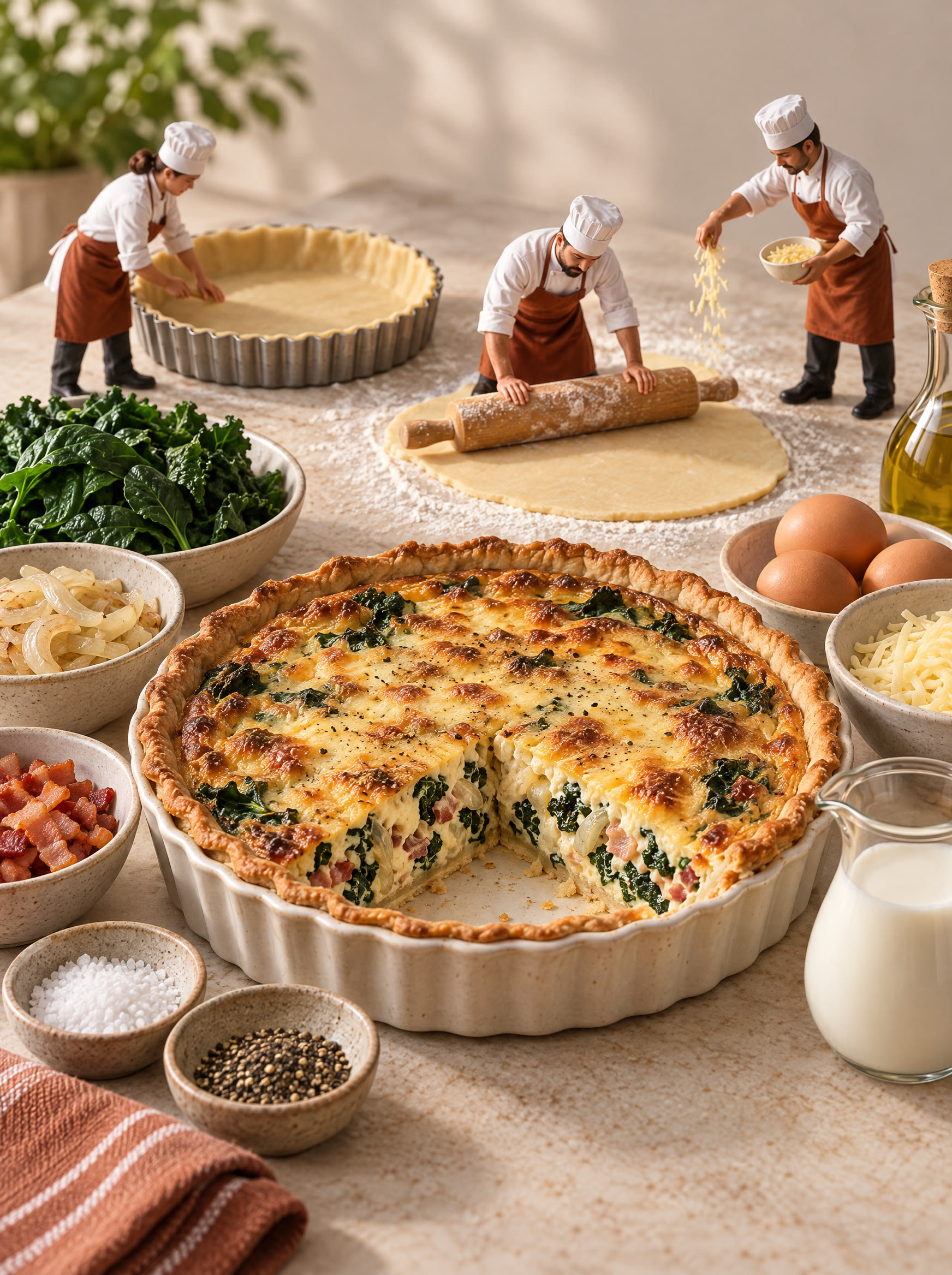
The ingredients, seen a little differently. This image is an illustration of the main ingredients; use the written recipe for the full list and quantities.
See the collection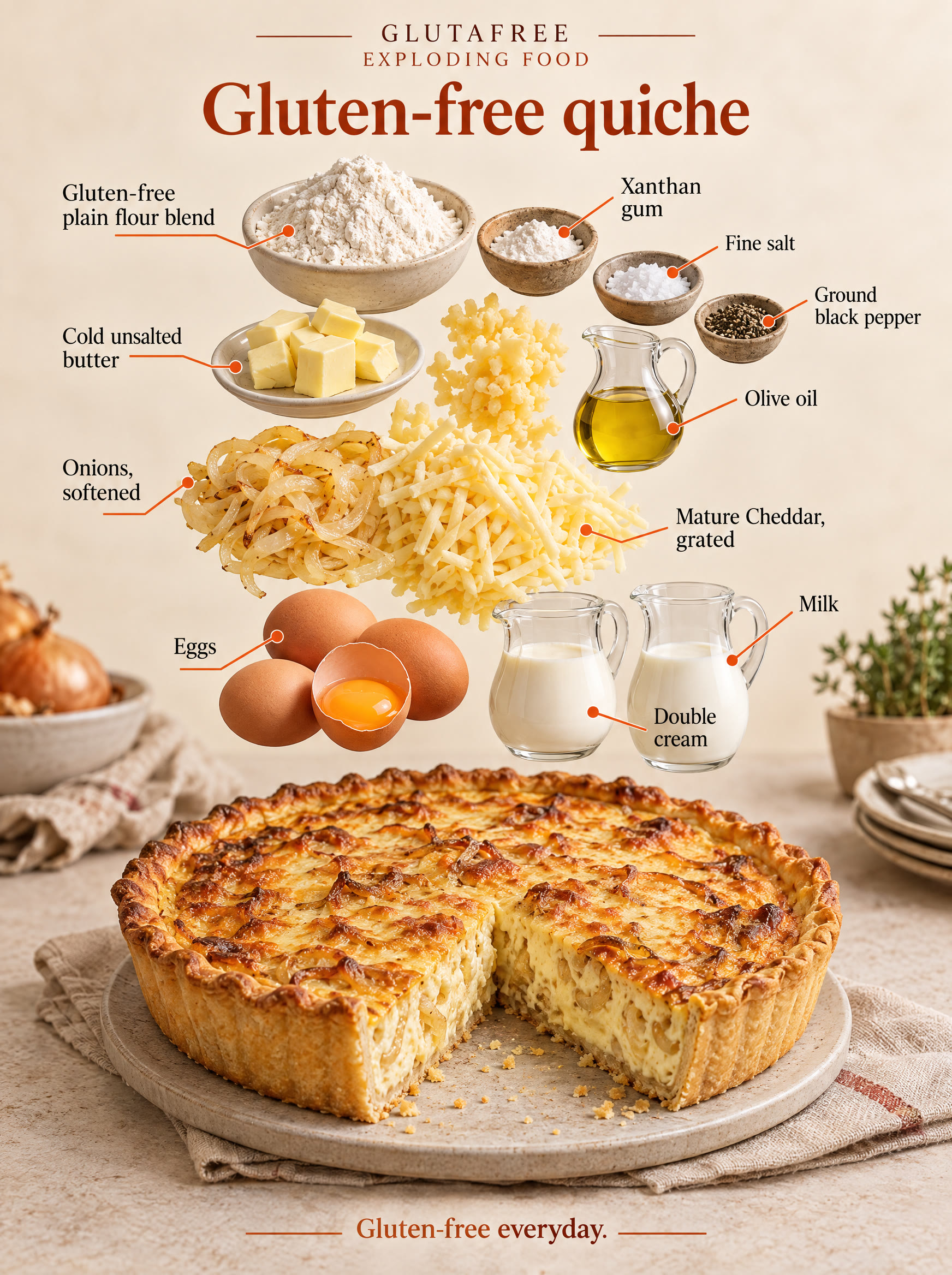
The miniature kitchen
Tiny chefs.
Big ideas.
A playful look at the same familiar favourite. Meet the little team behind our food illustrations.
Explore the tiny kitchen