Lunch
Gluten-free Scotch eggs with cabbage and apple slaw
Oven-baked Scotch eggs with a crisp gluten-free coating, crunchy apple slaw and buttered new potatoes.
Free guide: thirty gluten-free dinners, with the shopping lists
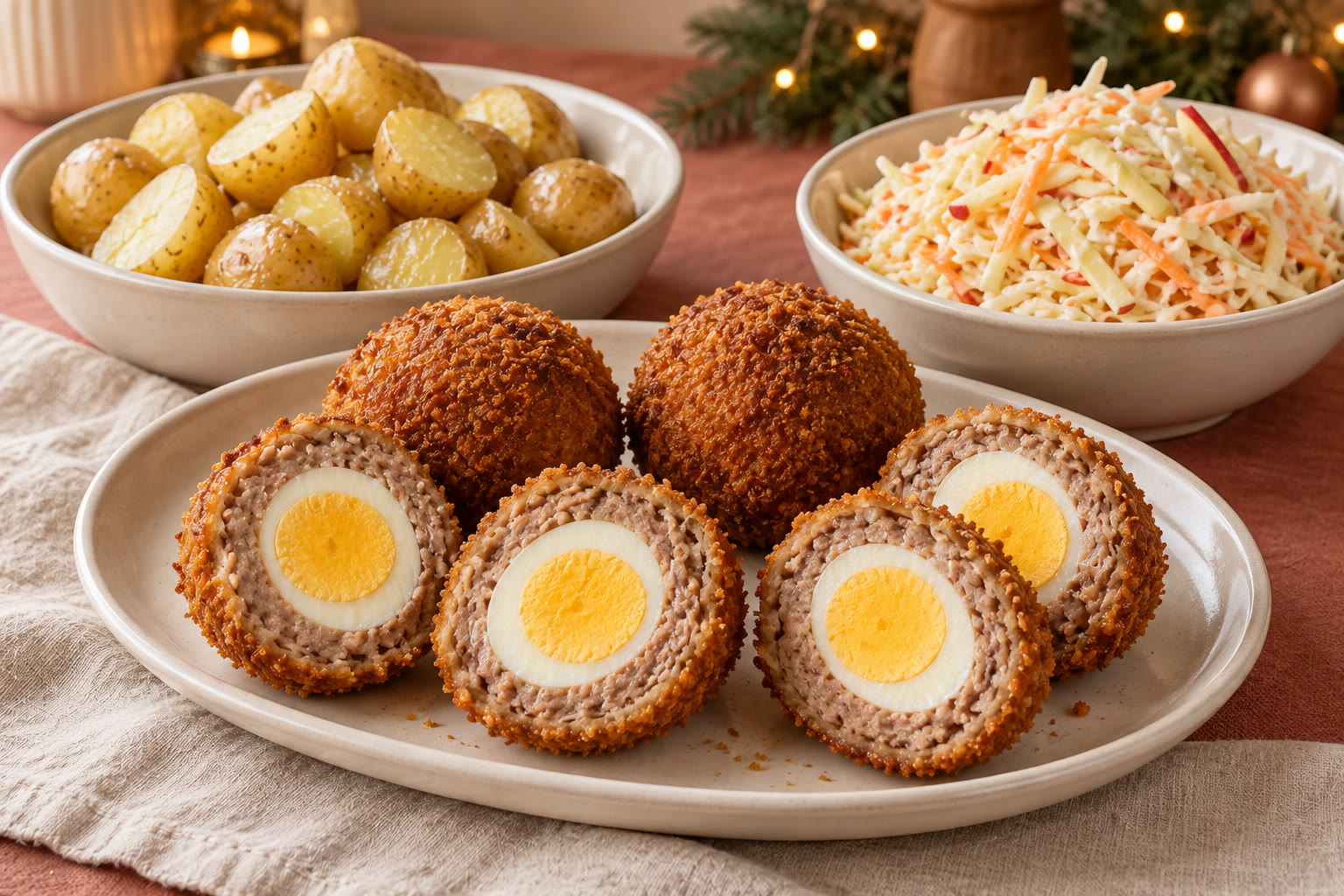
A substantial lunch of baked Scotch eggs, buttered new potatoes and crisp cabbage, carrot and apple slaw. Each serving includes one Scotch egg, a quarter of the potatoes and a generous helping of slaw.
The eggs have firm yolks for easy slicing and packing. For a packed lunch, chill the cooked food properly and keep the slaw in a separate container. This recipe is in development and has not been kitchen-tested.
The recipe
Gluten-free Scotch eggs with cabbage and apple slaw
- Prep
- 45 min
- Cook
- 50 min
- Total*
- 95 min
- Makes
- 4 servings
*Estimated development timings. The preparation allowance includes 10 minutes to cool the boiled eggs and 5 minutes standing before serving. Potatoes and slaw are prepared during baking. Allow additional cooling and refrigeration time for a packed lunch.
Ingredients
Tick things off as you go.
For the Scotch eggs
For the cabbage and apple slaw
For the potatoes
For boiling and cooling
Equipment
- Use a medium saucepan for the eggs and a second saucepan for the potatoes, with two hob rings available.
- Use one rimmed baking tray approximately 30 × 40 cm, lined with baking parchment, on the middle oven shelf.
- Use kitchen scales, a measuring jug, a mixing bowl and three shallow dishes for coating.
- Use a chopping board, a sharp knife, a grater, a colander, a slotted spoon and a pastry brush.
- Use a clean digital food thermometer with a thin probe to check the sausage layer.
- Use shallow storage containers and an insulated bag with frozen ice packs for packed lunches.
Let’s make it.
- 01
Prepare the kitchen
Check the packaged ingredients as described in ingredientChecks. Clear away ordinary flour and breadcrumbs, then clean the worktop and equipment. Keep the sausagemeat refrigerated while you prepare the eggs. Set out the lined tray and check that four Scotch eggs will fit with at least 5 cm between them.
- 02
Boil and cool the eggs
Bring enough of the water to cover four eggs by about 2 cm to a gentle boil. Lower in the four eggs with a slotted spoon and simmer for 10 minutes. Drain carefully and place in cold water for about 10 minutes, refreshing it from the measured supply until the shells feel cool. Peel and pat dry; the whites should be firm and intact. Keep the fifth egg for coating.
- 03
Wrap the eggs
Heat the oven to 200°C / 180°C fan. Divide the sausagemeat into four equal portions, roughly 112 g each. Flatten each portion into a disc large enough to enclose an egg. Put the cornflour in a shallow dish and lightly dust each peeled egg. Wrap a meat disc around each egg, pinching the joins and smoothing the surface until no white or open seams remain.
- 04
Add the coating
Beat the remaining raw egg in a second shallow dish and put the breadcrumbs in a third. Roll each meat-wrapped egg in the remaining cornflour, shake off loose flour, then coat with beaten egg and breadcrumbs. Press gently so the crumbs cover the surface evenly. Transfer to the tray and dab the rapeseed oil over the coating. Discard any coating ingredients left in the dishes after contact with raw meat or egg. Wash your hands and clean the utensils and worktop before preparing the slaw.
- 05
Bake the Scotch eggs
Bake on the middle shelf for 35–40 minutes, gently turning after 20 minutes. Prepare the potatoes and slaw during this time. The coating should become golden, but colour alone does not show that the pork is cooked. Insert a clean thin probe from the side into the thickest sausage layer close to the egg, keeping the tip in the meat. Check each Scotch egg in more than one place: the pork must reach at least 75°C for 30 seconds. If necessary, continue baking in 5-minute intervals and check again, cleaning the probe between checks.
- 06
Cook the potatoes
About 15 minutes after the Scotch eggs go into the oven, halve the potatoes, cutting larger ones into pieces about 3 cm across. Put them in the second saucepan with enough of the remaining water to cover. Bring to the boil and simmer for 12–15 minutes, until a knife slips easily through the centre. Drain thoroughly, add the butter and turn gently until it has melted and lightly coated the potatoes. Cover off the heat while you finish the meal.
- 07
Mix the slaw
Rinse the cabbage, carrots and apple. Finely shred the cabbage, grate the carrots and core and cut the apple into thin matchsticks. In a clean bowl, stir together the yoghurt, lemon juice, mustard, salt and pepper until smooth. Add the vegetables and apple and toss until everything has a light, even coating. Cover and refrigerate until serving; the cabbage and apple should still feel crisp.
- 08
Serve or chill
Once the pork has passed the temperature check, stand the Scotch eggs for 5 minutes. Cut with a clean knife; the egg whites and yolks should be firm and the surrounding pork cooked throughout. Serve one Scotch egg per person with a quarter of the potatoes and slaw. For packed lunches, cool the cooked components separately in shallow containers and refrigerate within 1–2 hours, then pack only once cold. Keep the slaw separate so the crumb stays as dry as possible.
Ingredient checks
Choose explicitly gluten-free sausagemeat, cornflour and breadcrumbs. Check the mustard, yoghurt, butter, oil and seasonings for gluten-containing additions and relevant warnings; no specific brands have been verified. For someone with coeliac disease, keep ordinary flour and crumbs away and use clean trays, boards, colanders and utensils. The ingredient groups form one combined shopping list: five eggs total, with four boiled and one used for coating; 15 ml oil is for the Scotch eggs and 15 g butter is for the potatoes. All other quantities belong to their named component and appear once. No pantry stock has been assumed or deducted; subtract only quantities you have checked at home. Coating quantities include working excess, which must be discarded after raw contact. Start with fresh raw sausagemeat and freshly boiled eggs; this version does not use previously cooked leftovers.
Allergens: Contains eggs, milk from the yoghurt and butter, and mustard.; Packaged sausagemeat and gluten-free coatings may add celery, soya, sulphites, lupin or other declared allergens; check the actual labels.; Cereals containing gluten must be excluded through suitable ingredient choices; gluten-free products containing specially processed wheat starch may still be unsuitable for someone with a wheat allergy.; Crustaceans, fish, molluscs, tree nuts, peanuts and sesame are not intentionally added, but check all labels and cross-contact warnings rather than assuming their absence..
Make it work for you
Replace the white cabbage with the same weight of red cabbage; it will colour the dressing.
For a version without dairy ingredients, use 100 g unsweetened gluten-free dairy-free yoghurt and replace the butter with 15 ml rapeseed oil; check replacement products for allergens.
If avoiding mustard, leave it out and use an extra 5 ml lemon juice, checking that the sausagemeat and coatings also meet your needs.
For another day
Refrigerate the slaw promptly and cool cooked Scotch eggs and potatoes in shallow containers, placing them in the fridge within 1–2 hours.
Keep the components covered and separate at 0–5°C and eat within 48 hours, or sooner if a packaged ingredient requires it.
Carry chilled portions in an insulated bag with frozen ice packs and refrigerate on arrival; do not leave a packed lunch warm for the morning.
Properly cooked, promptly chilled Scotch eggs and potatoes may be eaten cold; if reheating, heat only once until steaming hot throughout and keep the slaw cold.
Freezing this complete meal is not recommended for quality because the boiled eggs and dressed slaw can lose their texture; freezing performance has not been tested.
Exploding food
What goes in.
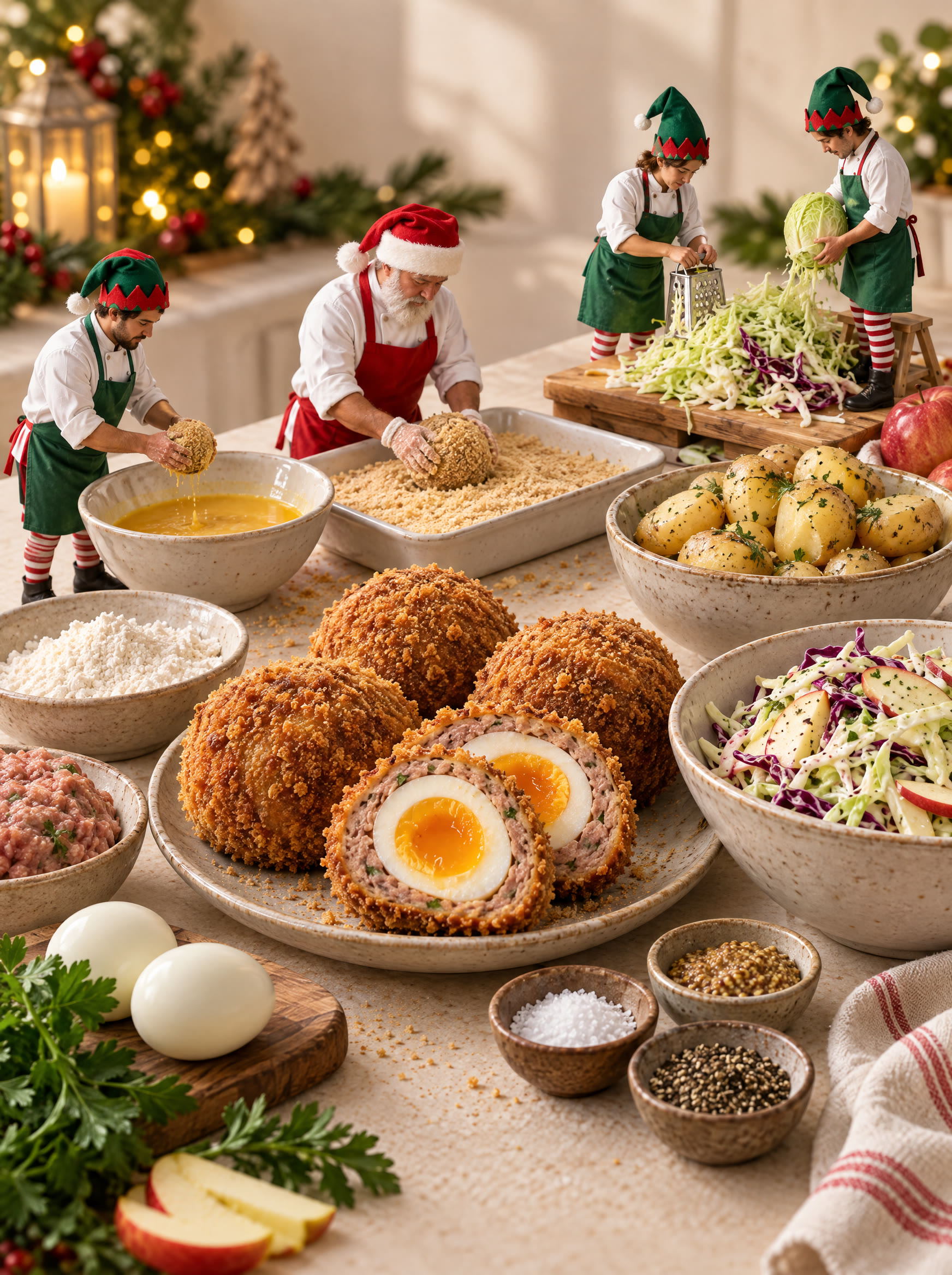
The ingredients, seen a little differently. This image is an illustration of the main ingredients; use the written recipe for the full list and quantities.
See the collection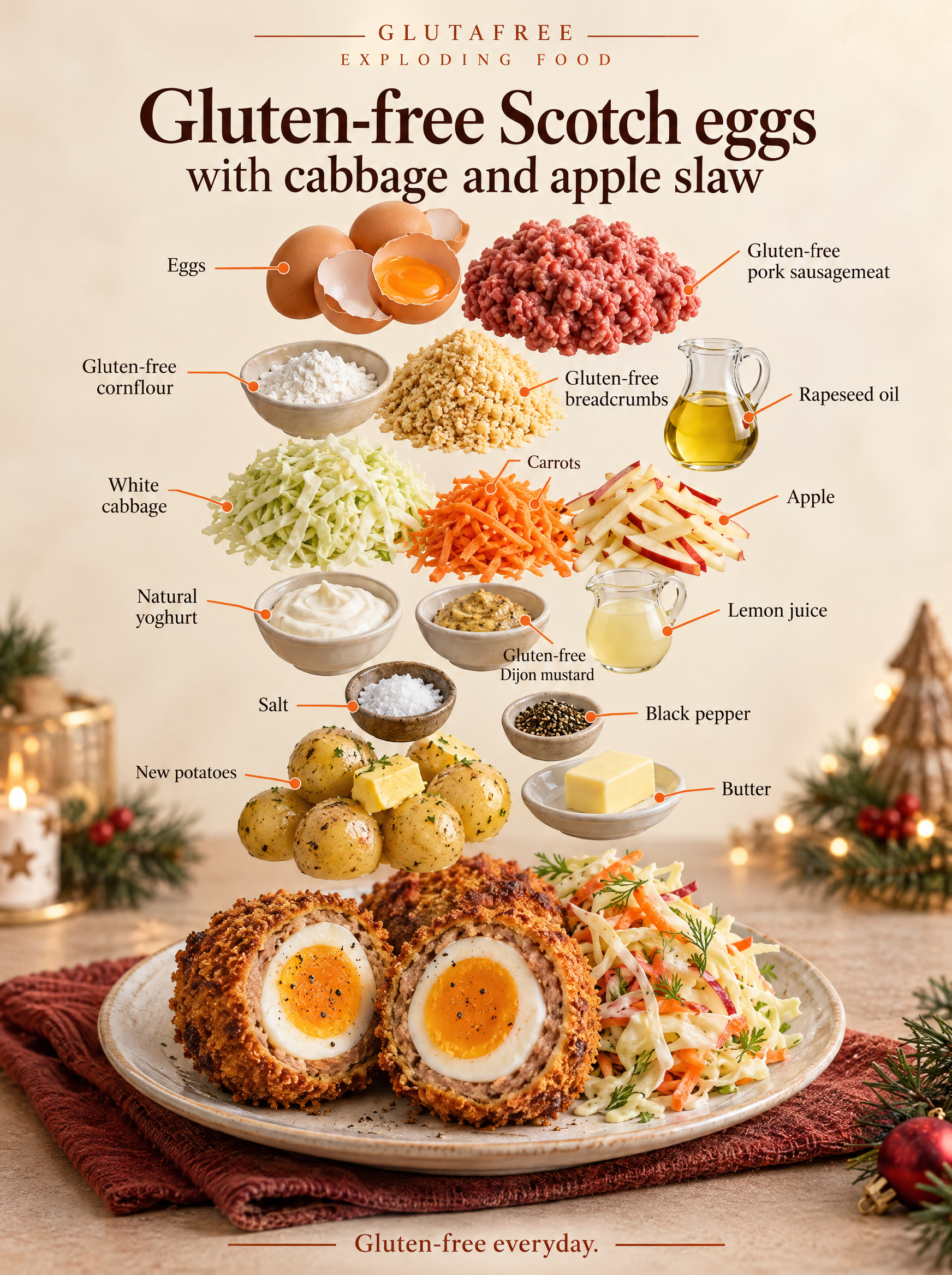
The miniature kitchen
Tiny chefs.
Big ideas.
A playful look at the same familiar favourite. Meet the little team behind our food illustrations.
Explore the tiny kitchen