Biscuits and cookies
Gluten-free shortbread biscuits
Buttery gluten-free shortbread fingers made with plain flour, butter, caster sugar and xanthan gum.
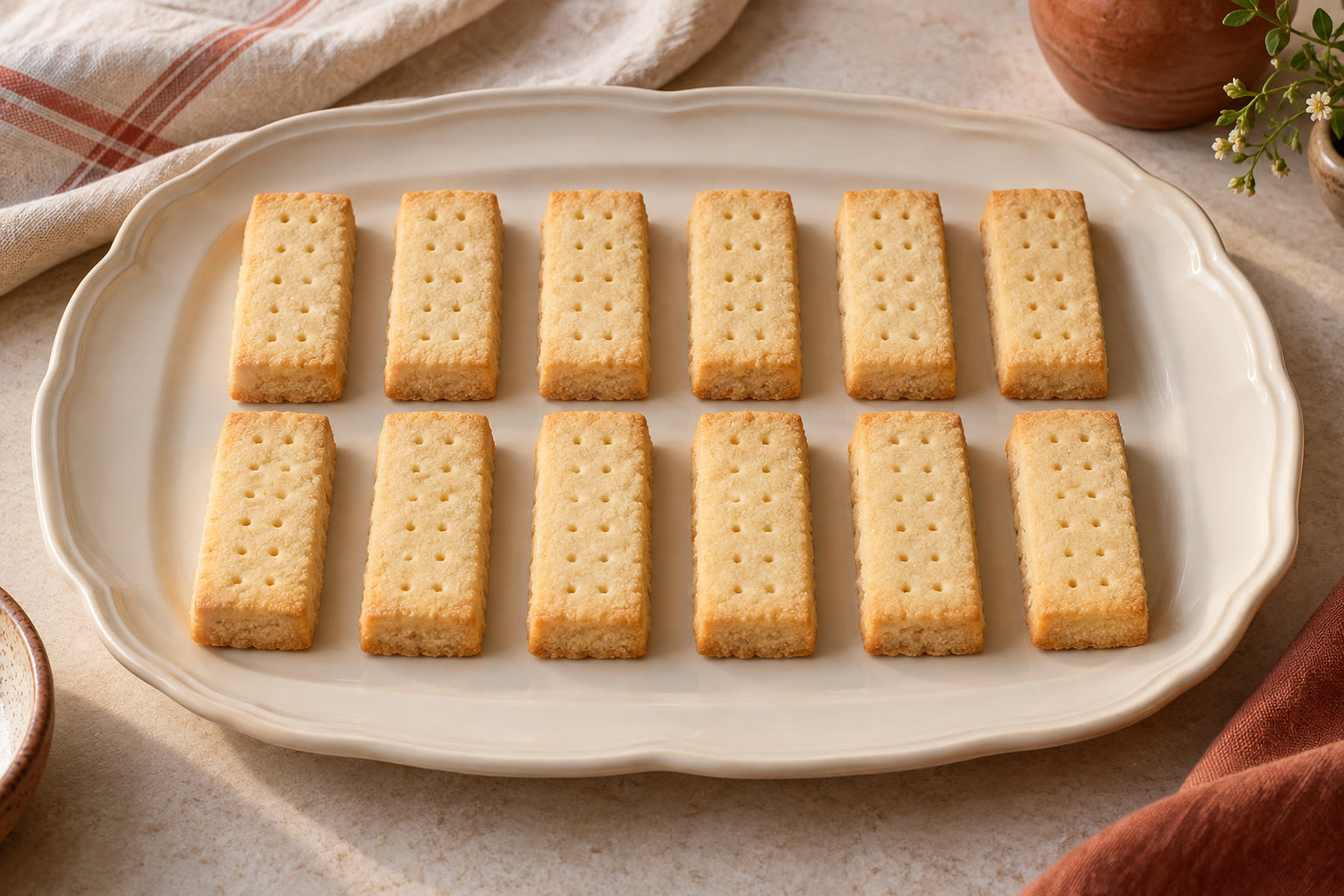
These gluten-free biscuits are pressed into a tin and baked as shortbread fingers. A little xanthan gum helps bind the dough, and cooling in the tin gives the delicate biscuits time to firm up.
Makes 12 fingers, serving six with two each. Choose a gluten-free plain flour blend without added gum. This recipe is in development and has not been kitchen-tested.
The recipe
Gluten-free shortbread biscuits
- Prep
- 15 min
- Cook
- 45 min
- Total*
- 60 min
- Makes
- 6 servings
*Estimated development timings. Allow 20 minutes chilling and at least 45 minutes cooling, including 10 minutes standing before retracing the cuts. These are additional to the 60 minutes preparation and cooking allowance, making approximately 125 minutes from starting to serving. Extra baking or cooling may be needed. Soften the butter before starting.
Ingredients
Tick things off as you go.
For the biscuits
Equipment
- Use digital kitchen scales and a level 5 ml measuring teaspoon.
- Use two mixing bowls and a wooden spoon or firm spatula.
- Use a shallow 18 cm square metal baking tin.
- Use baking parchment to line the tin.
- Use a fork and a sharp knife.
- Use oven gloves, a heatproof surface and a wire cooling rack.
- Keep kitchen foil available if the top needs covering.
Let’s make it.
- 01
Prepare the tin
Wash your hands with soap and warm water, then clean the worktop and equipment so no ordinary flour or crumbs remain. Line the tin with baking parchment, leaving overhang on two opposite sides. Check that the base and sides are covered.
- 02
Mix the butter and sugar
Beat the softened butter and caster sugar together with a wooden spoon for about 2 minutes. Stop when the mixture is creamy and evenly mixed, with no firm butter lumps; it should not look oily.
- 03
Bring the dough together
In a second bowl, stir the gluten-free flour and xanthan gum together thoroughly, breaking up any visible lumps. Add to the butter mixture and work together with the spoon, then gently squeeze with your hands until the crumbs form a dough with no loose flour. Do not taste the raw dough.
- 04
Press and chill
Press the dough into the tin in an even layer roughly 1 cm thick, filling the corners. Smooth with the back of the spoon, lightly score into 12 equal fingers and prick with a fork. Chill for 20 minutes, until the surface feels firm. Heat the oven to 200°C / 180°C fan. After handling the dough, wash your hands with soap and warm water and clean the utensils and worktop.
- 05
Bake the biscuits
Bake on the middle shelf for 20 minutes, until the surface has set. Set the hot tin on a heatproof surface and carefully cut through the scored lines, keeping the fingers in place. Return to the oven for another 20–25 minutes, checking from 40 minutes total because this is a thin slab. It is ready when the top is pale golden, the edges are a shade darker and the cuts show no glossy dough. If it browns before the centre looks baked, cover loosely with foil and continue in 5-minute intervals.
- 06
Cool and separate
Stand the tin on a wire rack for 10 minutes, then gently retrace the cuts while the shortbread is warm. Leave in the tin for at least another 35 minutes, until completely cool and firm. Lift out using the parchment and separate carefully. A broken finger should have a dry, crumbly centre rather than a sticky dough layer; do not serve an underbaked batch.
Ingredient checks
Use a plain rice-and-starch flour blend explicitly labelled gluten-free, suitable for biscuits and without added xanthan gum or another gum. Use xanthan gum labelled gluten-free. Check every ingredient and substitute against all 14 UK allergens: celery, cereals containing gluten, crustaceans, eggs, fish, lupin, milk, molluscs, mustard, tree nuts, peanuts, sesame, soya and sulphites. Review ingredient lists and precautionary allergen statements for the person eating. For someone with coeliac disease, prevent gluten cross-contamination with clean equipment, fresh parchment and butter free from bread crumbs. Follow flour packaging instructions and never taste raw flour or dough.
Allergens: Contains milk from the butter.; No other UK priority allergen is intentionally included, but check every ingredient label for allergen ingredients and cross-contact warnings.; A dairy-free baking block may introduce soya or other allergens, so check its label before substituting..
Make it work for you
Salted butter can replace the unsalted butter gram for gram; the biscuits will taste slightly saltier.
For a dairy-free variation, try 120 g of a firm dairy-free baking block labelled gluten-free and suitable for baking; avoid reduced-fat or soft tub spreads, and check for soya and other allergens.
Another gluten-free plain rice-and-starch flour blend without added gum may replace the flour gram for gram, although absorption and texture may differ.
Do not substitute self-raising flour, coconut flour, ground almonds or a single rice flour, and do not omit the xanthan gum; these variations need separate recipe development.
The substitutions have not been kitchen-tested in this recipe.
For another day
Cool completely before putting the biscuits in an airtight container, so trapped steam does not soften them.
Keep in a cool, dry place and aim to eat within four days; the keeping quality of this recipe has not been tested.
For longer storage, freeze the cooled fingers in a sealed container with baking parchment between layers for up to one month for best quality, then thaw in the container at room temperature; freezing performance has not been tested.
Exploding food
What goes in.
The ingredients, seen a little differently. This image is an illustration of the main ingredients; use the written recipe for the full list and quantities.
See the collection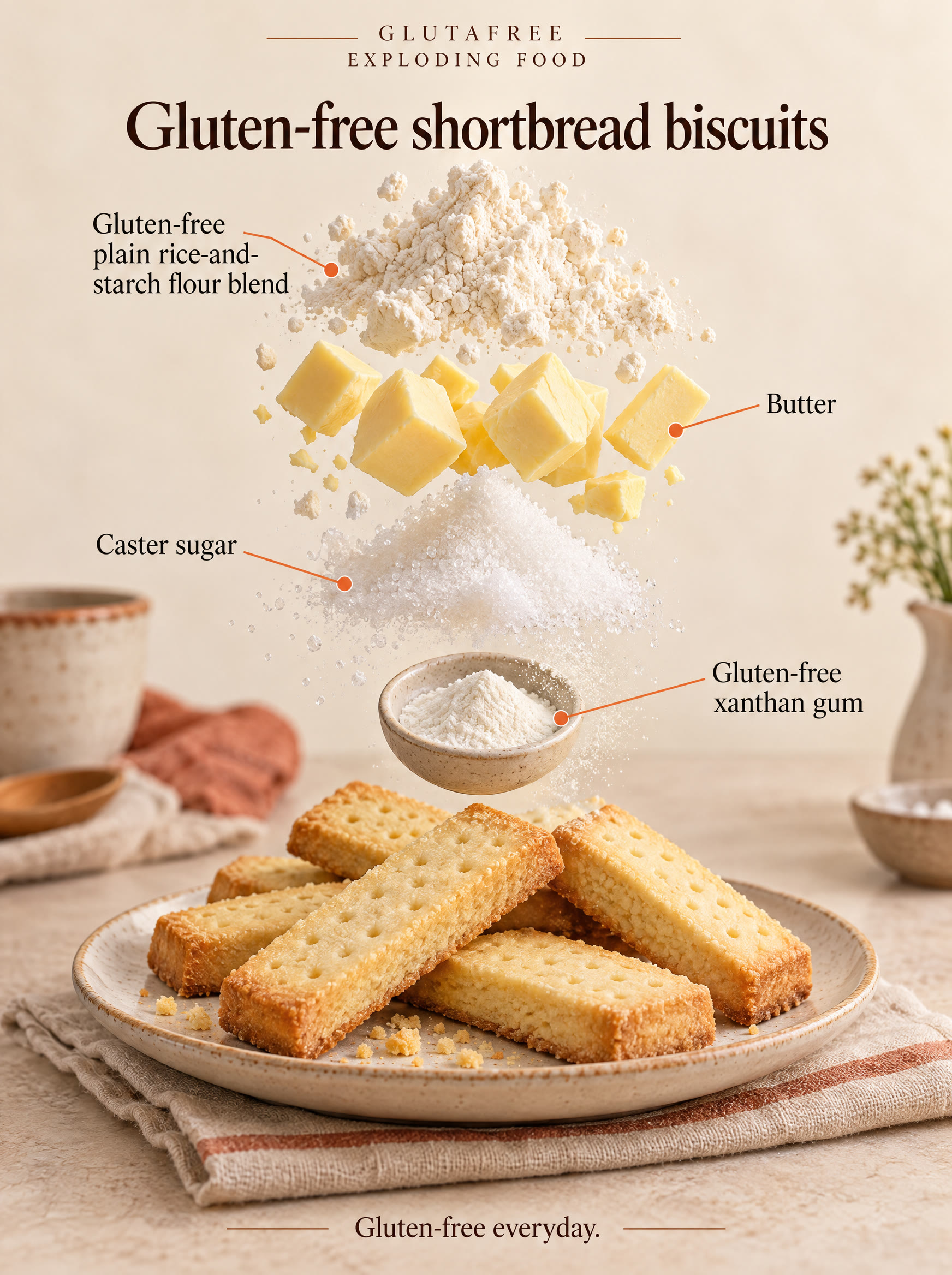
The miniature kitchen
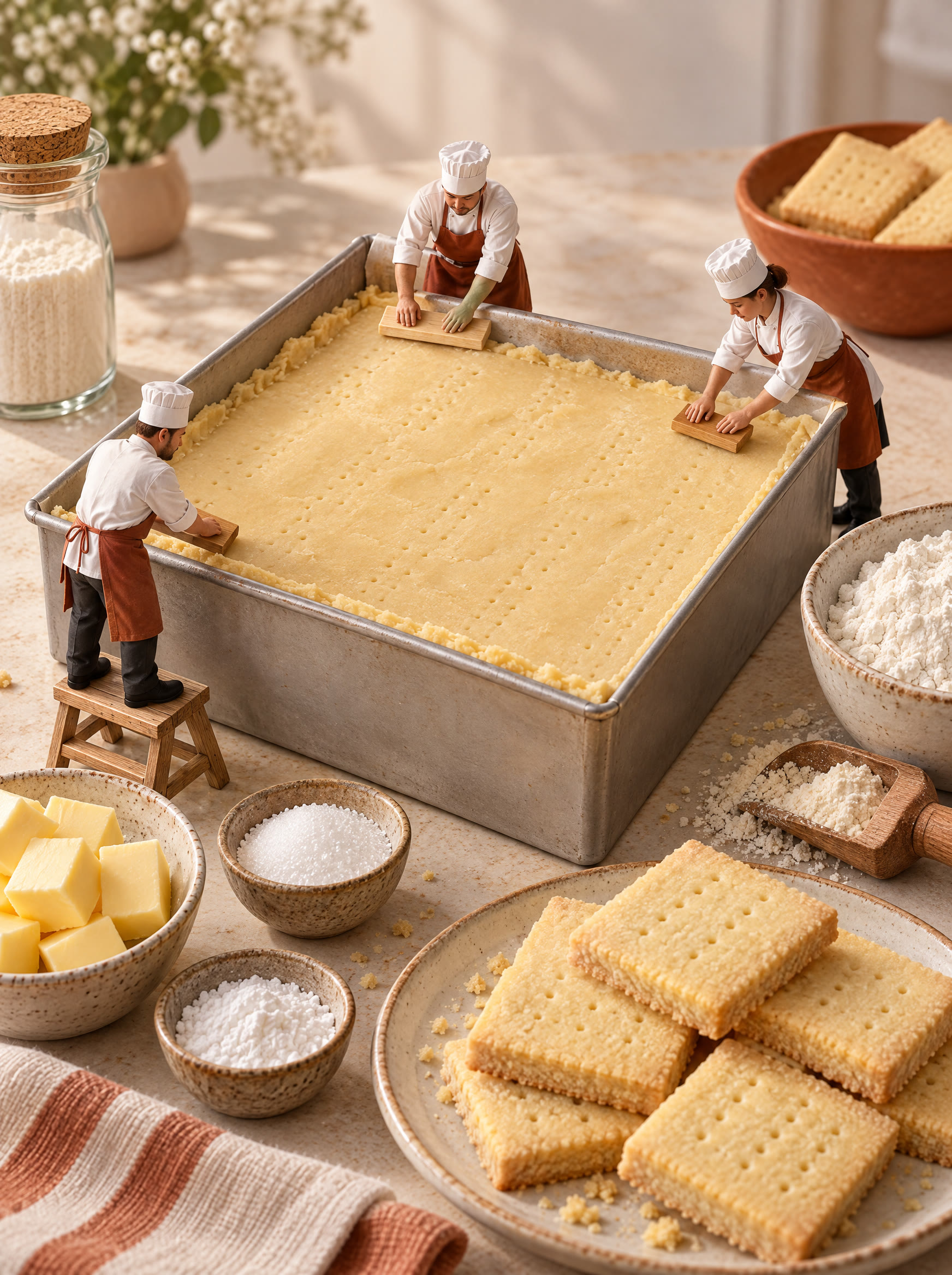
Tiny chefs.
Big ideas.
A playful look at the same familiar favourite. Meet the little team behind our food illustrations.
Explore the tiny kitchen