Everyday dinners
How to make a gluten-free cake
A simple orange and yoghurt tray cake, with clear checks for mixing, baking and cooling.
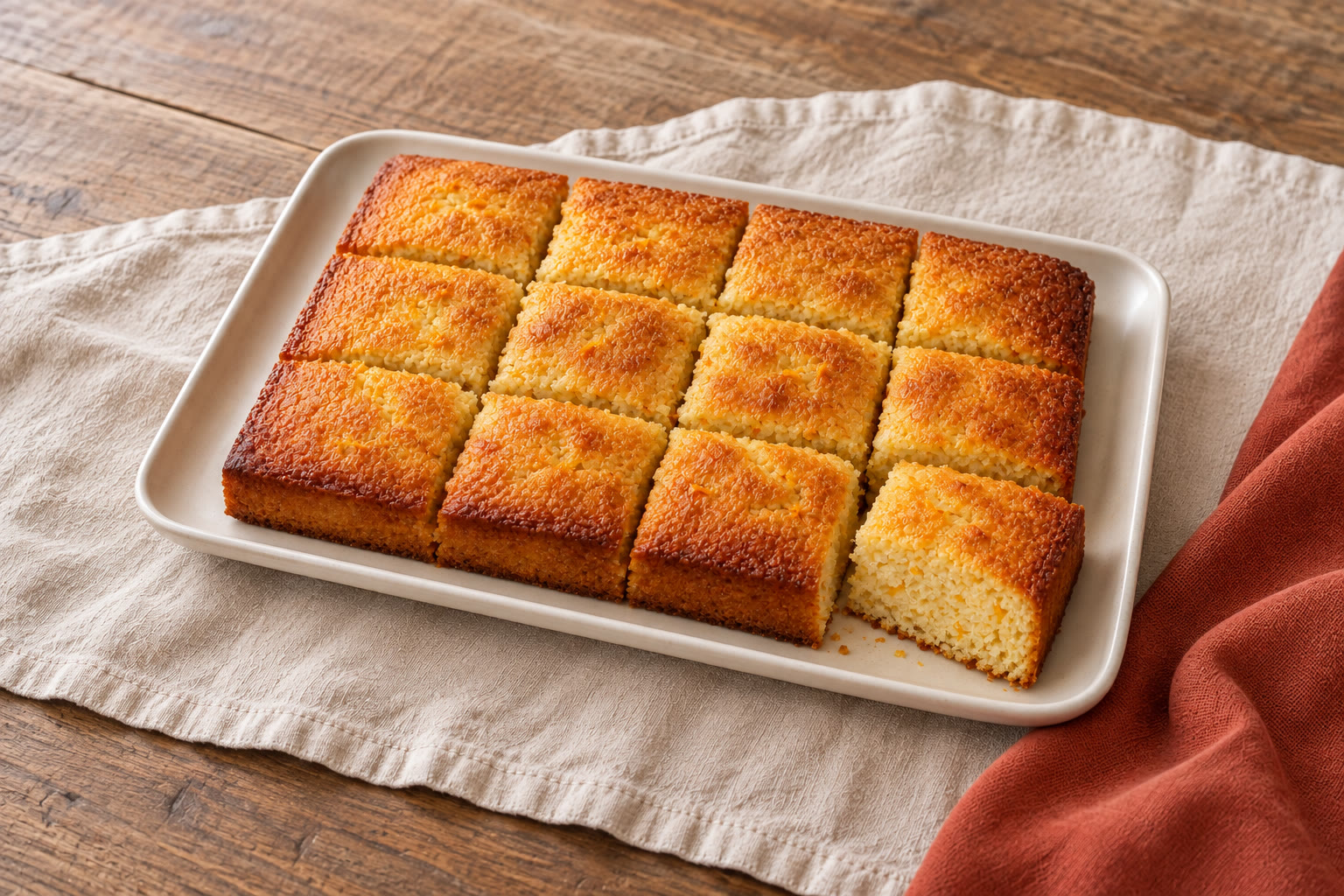
This orange and yoghurt tray cake is a straightforward place to start with gluten-free baking. Oil means there is no butter to soften, and the cake is served plain in squares.
Use a gluten-free flour blend intended for cakes: single flours such as coconut or rice flour will not behave the same way. Let the cake cool before cutting so the crumb has time to firm up. This recipe is in development and has not been kitchen-tested.
The recipe
How to make a gluten-free cake
- Prep
- 20 min
- Cook
- 45 min
- Total*
- 65 min
- Makes
- 12 servings
*Estimated development timings. Allow 15 minutes in the tin and approximately 45 minutes on a rack after baking. This cooling hour is additional to the 65-minute preparation and cooking allowance. The 45-minute cooking allowance includes the extra five minutes described in the method; ovens vary.
Ingredients
Tick things off as you go.
For the cake
Equipment
- Use a 20 cm square metal cake tin at least 5 cm deep.
- Use baking parchment to line the base and sides.
- You will need digital scales, a measuring jug and measuring spoons, including a ¼ teaspoon measure.
- Use two mixing bowls, a hand whisk and a flexible spatula.
- Use a fine grater for the orange zest.
- Have a skewer, a cooling rack and a knife ready.
Let’s make it.
- 01
Prepare the oven and tin
Heat the oven to 180°C / 160°C fan / gas 4. Line the base and sides of the tin with baking parchment, leaving enough above two opposite sides to lift out the cake. Check that the corners are covered and the paper sits against the tin. Start mixing once the oven is heating.
- 02
Mix the dry ingredients
Check the flour packet for xanthan or guar gum. Whisk the flour and baking powder in a bowl, adding ¼ level teaspoon of xanthan gum only if neither gum is already included. Use a ¼ teaspoon measuring spoon for this small quantity. Break up any lumps with the whisk until the mixture looks even.
- 03
Whisk the wet ingredients
In the second bowl, whisk the eggs and sugar for about a minute until evenly combined and lightly frothy. Whisk in the yoghurt, oil and all the finely grated orange zest until no streaks of yoghurt or pools of oil remain. Keep the orange flesh for another use. Wash your hands after handling the eggs.
- 04
Bring the batter together
Tip the dry mixture into the wet mixture. Whisk gently until incorporated, then scrape around the sides and base with the spatula. The batter should be thick but pourable, with no pockets of dry flour. Do not taste uncooked batter. Transfer it to the lined tin and spread into the corners so the surface is level.
- 05
Bake until set
Bake on the middle shelf for 35–40 minutes, checking first at 35 minutes. The top should be golden, the centre should spring back when gently pressed, and a skewer inserted into the middle should have no wet batter on it. If the centre is still wet, bake for another 5 minutes and check again; ovens and flour blends vary.
- 06
Cool and slice
Leave the cake in its tin for 15 minutes, until it feels firm enough to lift without bending. Lift it onto a rack using the parchment and gently peel the paper away from the sides. Cool for about 45 minutes more, until the centre and underside no longer feel warm, then cut into 12 squares. Cool and refrigerate any cake being kept for later within 2 hours of baking.
Ingredient checks
Choose flour and baking powder labelled gluten-free, and check the xanthan gum and all other packaged ingredients for suitability. A gluten-free label does not guarantee that a product is free from other allergens. For someone with coeliac disease, use thoroughly cleaned equipment and work surfaces, fresh parchment and ingredients protected from wheat flour and crumbs. Do not prepare this cake beside airborne wheat flour. Use plain natural yoghurt rather than sweetened or strained yoghurt, and measure baking powder and xanthan gum with level measuring spoons.
Allergens: Contains eggs and milk from the eggs and yoghurt.; The remaining UK regulated allergens are not intentionally included: celery, cereals containing gluten, crustaceans, fish, lupin, molluscs, mustard, tree nuts, peanuts, sesame, soya and sulphites.; Check every packet for additional allergens and precautionary warnings, particularly the flour blend, and reassess allergens when making substitutions..
Make it work for you
Replace the sunflower oil with the same quantity of rapeseed oil.
For a dairy-free variation, use 150 g of plain unsweetened gluten-free soya yoghurt with a similar consistency; this introduces soya, and the variation has not been kitchen-tested.
Use the same weight of a comparable gluten-free plain cake flour blend if changing brands; absorption varies, so the texture and baking time may change. Omit the added xanthan gum if the replacement blend already contains xanthan or guar gum.
Do not replace the flour blend directly with coconut flour, ground almonds or a single starch, or replace the eggs without a separately developed recipe.
For another day
Cool the cake and place it in a covered container in the fridge within 2 hours of baking; keep the fridge at 0–5°C and eat within 48 hours.
Freeze cooled portions promptly, individually wrapped inside a freezer container, for up to 1 month as a conservative quality guide; this recipe's frozen texture has not been tested.
Defrost covered portions in the fridge and eat within 24 hours of thawing completely.
Serve cold or let only the portions needed lose their fridge chill briefly before eating; reheating is not necessary.
Exploding food
What goes in.
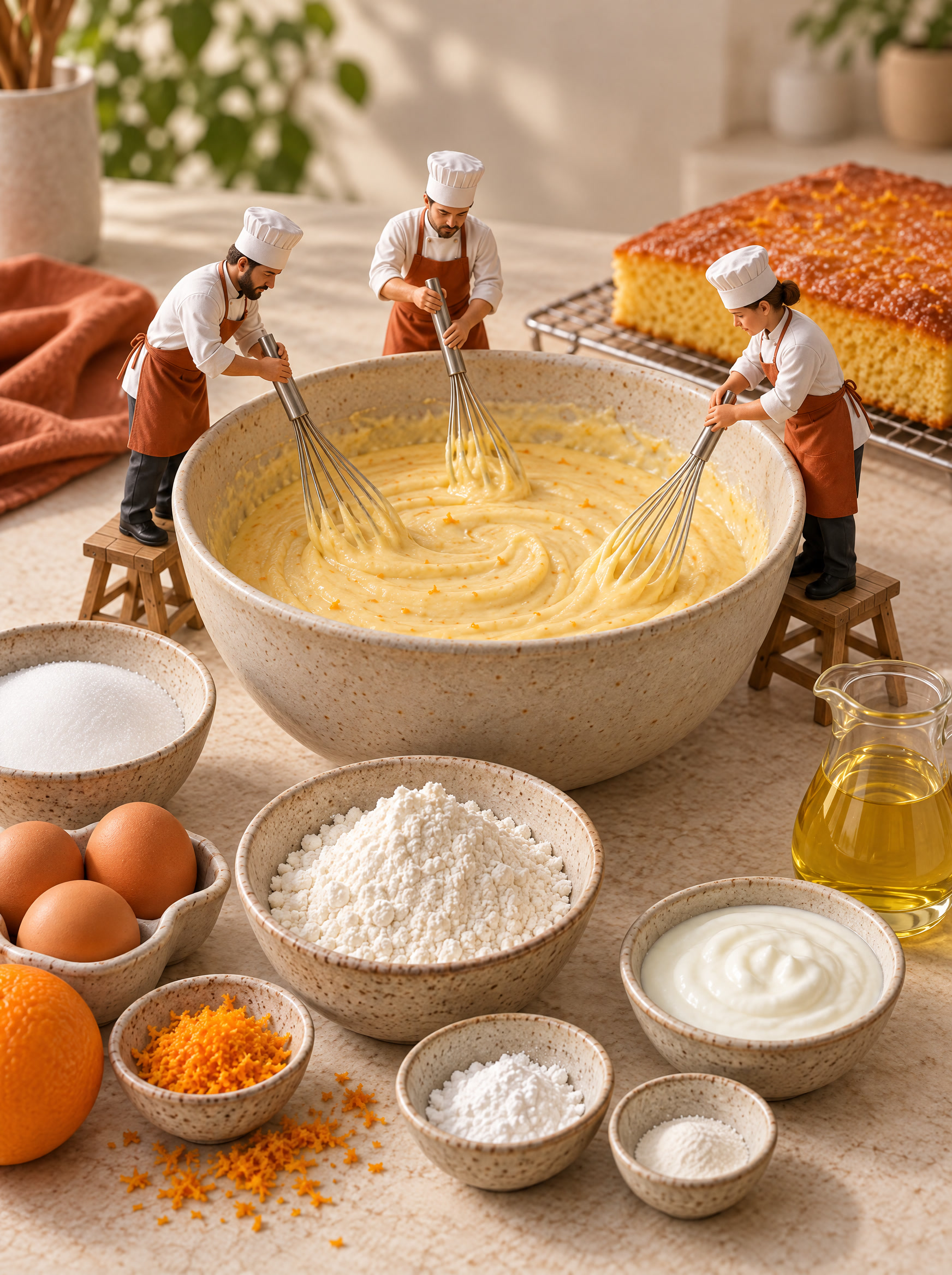
The ingredients, seen a little differently. This image is an illustration of the main ingredients; use the written recipe for the full list and quantities.
See the collection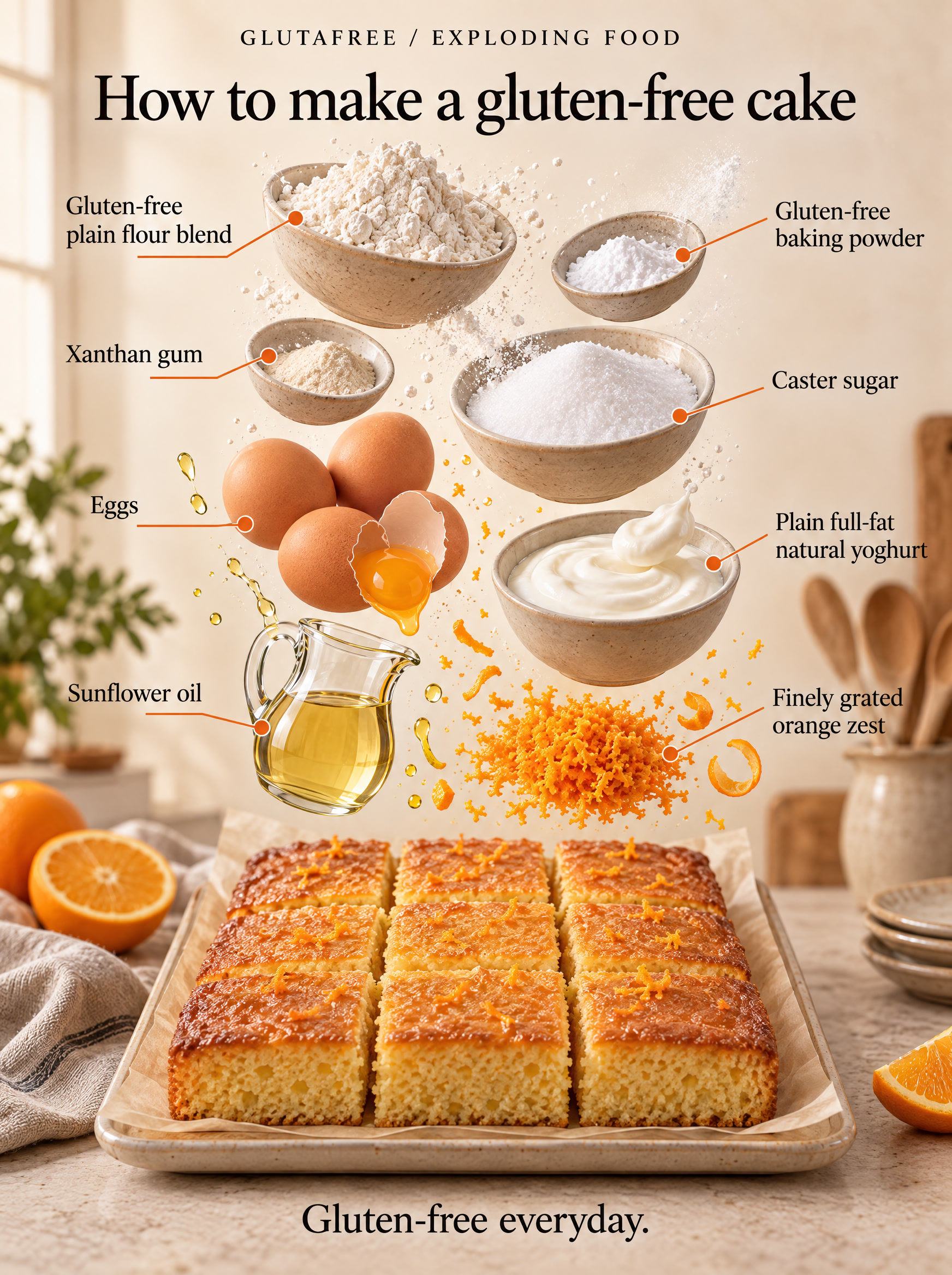
The miniature kitchen
Tiny chefs.
Big ideas.
A playful look at the same familiar favourite. Meet the little team behind our food illustrations.
Explore the tiny kitchen