Everyday dinner
Prawn and vegetable rice-noodle stir-fry
Rice noodles, juicy prawns and crisp vegetables tossed with ginger, garlic and gluten-free tamari.
Free guide: thirty gluten-free dinners, with the shopping lists
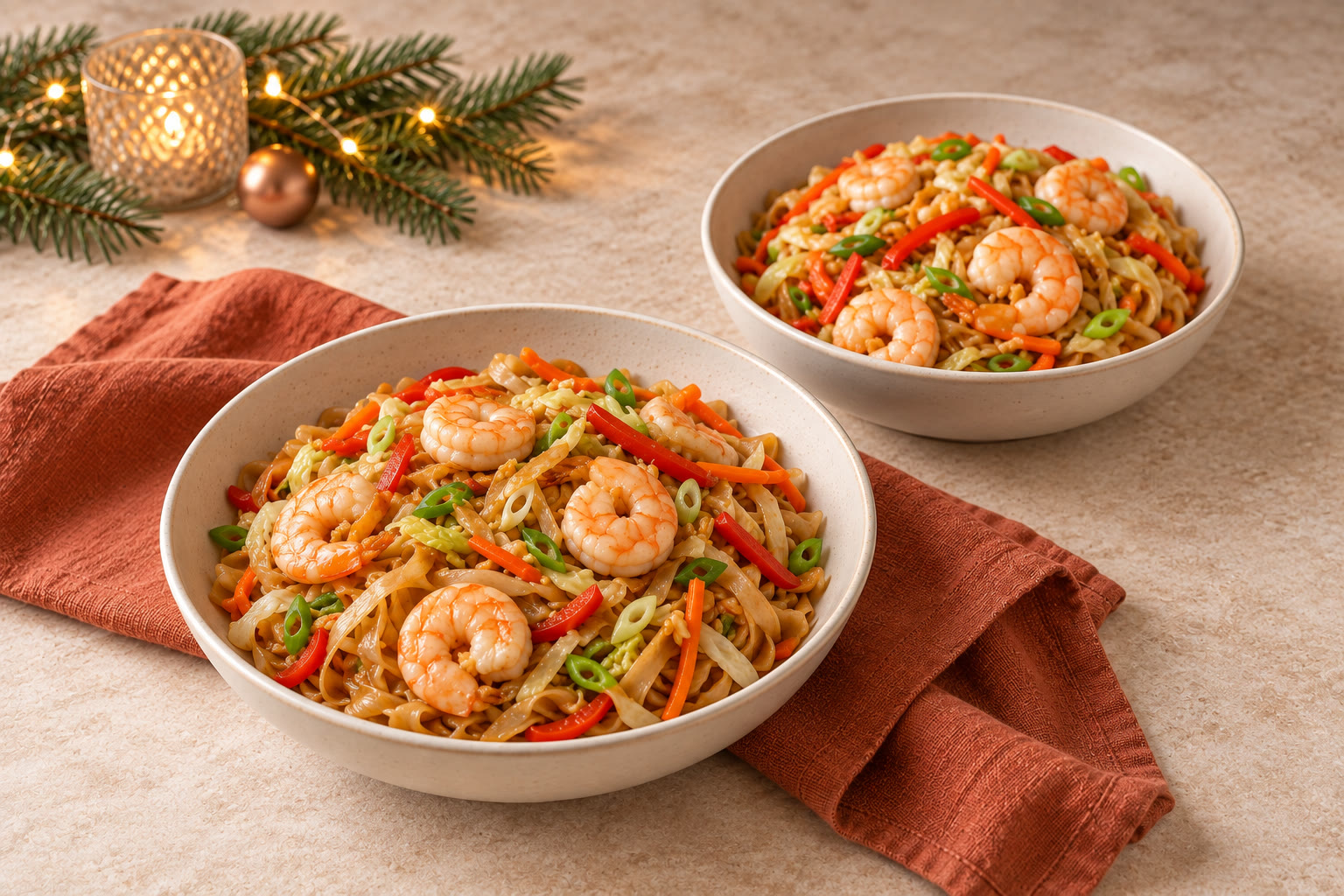
This quick dinner brings prawns, rice noodles and plenty of vegetables together in a ginger and garlic sauce. Everything for two complete servings is included.
Prepare the vegetables and sauce before heating the pan. Choose rice noodles and tamari labelled gluten-free, and follow your noodle packet for soaking or cooking: different widths soften at different speeds.
The recipe
Prawn and vegetable rice-noodle stir-fry
- Prep
- 20 min
- Cook
- 15 min
- Total*
- 35 min
- Makes
- 2 servings
*Estimated development timings. No standing time is needed. If using frozen raw prawns, allow time to defrost them fully in the fridge before starting. Noodle preparation runs alongside the stir-fry; packets requiring more than 15 minutes will extend the total.
Ingredients
Tick things off as you go.
Noodles, prawns and vegetables
Sauce and cooking water
Equipment
- Use a deep 30–32 cm frying pan or wok with a lid.
- Use a saucepan or heatproof bowl for the noodles, as their packet requires, and a clean colander.
- Have a chopping board, sharp knife, small jug, measuring spoons and tongs ready.
- Use a clean plate for the cooked vegetables and separate utensils for handling raw prawns.
- Allow one hob ring for the stir-fry and a second if the noodles need boiling; no oven is needed.
Let’s make it.
- 01
Prepare everything
Wash and cut the vegetables as listed, keeping the carrot matchsticks and cabbage shreds thin so they cook quickly. Measure the remaining ingredients before heating the pan. Keep the prawns refrigerated until needed; fully defrosted prawns should separate easily with no icy centres. Wash hands and clean any equipment that touches raw prawns.
- 02
Mix the sauce
Stir the gluten-free tamari, lime juice, sugar and 30 ml of the measured water together in a small jug. Keep the other 30 ml water beside the hob. The sauce is ready when no sugar crystals remain visible.
- 03
Prepare the noodles
Soak or boil the rice noodles in the separate noodle water according to their packet, timing them to be ready near the end of the stir-fry. Check a strand: it should bend freely and have no hard centre. Drain well, rinse only if the packet directs, and keep ready to add to the pan.
- 04
Cook the vegetables
Heat 10 ml of the oil in the deep pan over a medium-high heat. Add the carrot, pepper and cabbage and stir-fry for 3 minutes. Add the reserved 30 ml water, cover and cook for 2 minutes, then uncover and toss for about 1 minute. The carrot should bend with a little bite and any pooled water should have evaporated. Transfer the vegetables to a clean plate.
- 05
Cook the prawns
Add the remaining 5 ml oil to the pan. Add the spring onion whites, ginger and garlic and stir for 30 seconds, until fragrant without browning. Add the drained raw prawns in one layer and cook for about 3–5 minutes, turning and stirring. Check the thickest prawns: the flesh must be firm and opaque all the way through, with no translucent centre. Continue cooking if needed.
- 06
Toss and serve
Return the vegetables to the pan and add the drained noodles, sauce and spring onion greens. Toss gently over the heat for 1–2 minutes, lifting the noodles to distribute the sauce. Serve between two bowls once the noodles are tender, everything is steaming hot throughout and the sauce lightly coats the noodles rather than pooling beneath them.
Ingredient checks
Use rice noodles and tamari explicitly labelled gluten-free: neither the words rice noodles nor tamari alone establish suitability for someone with coeliac disease. Use plain, uncoated prawns and check their ingredients for marinades and sulphites. Check the current labels of every packaged ingredient, including oil and sugar, for additions and relevant allergen warnings. No stock, bottled stir-fry sauce or seasoning blend is required. Use clean pans, colanders, utensils and work surfaces, fresh noodle water and ingredients protected from gluten cross-contact. The ingredient groups together are the complete shopping quantities for two servings; oil and water allocations are included once, not additional amounts. Deduct only measured, suitable pantry stock already available; no pantry quantities have been assumed.
Allergens: Contains crustaceans from the prawns and soya from the tamari.; Prawns can contain sulphite preservatives; check the pack and declare sulphites when listed.; Celery, cereals containing gluten, eggs, fish, lupin, milk, molluscs, mustard, tree nuts, peanuts and sesame are not intentionally included, but packaged ingredients and substitutions need their own label checks.; Gluten-free does not mean free from all allergens; check precautionary warnings against the needs of the people eating..
Make it work for you
Replace the white cabbage with the same trimmed weight of savoy cabbage, finely shredded, and cook until tender with a little bite.
Replace the red pepper with 150 g thinly sliced courgette; cook uncovered until excess moisture evaporates before removing the vegetables.
Replace the lime juice with the same volume of fresh lemon juice.
If tamari is unavailable, use the same volume of soy sauce explicitly labelled gluten-free; ordinary soy sauce and unlabelled tamari are not suitable replacements.
For another day
Use raw chilled or fully defrosted prawns for this method, not cooked prawn leftovers. Defrost in a covered container in the fridge and use within 24 hours of complete thawing, following any stricter pack instructions.
Serve freshly cooked where possible. For this noodle dish, cool leftovers promptly in shallow portions and aim to refrigerate within one hour; eat within 24 hours. Keep the fridge at 0–5°C.
Reheat only once, stirring thoroughly until the prawns, vegetables and noodles are steaming hot throughout. Add a little water if needed to loosen the noodles.
Freezing quality has not been tested; noodles may soften and prawns may become firmer after reheating.
Exploding food
What goes in.
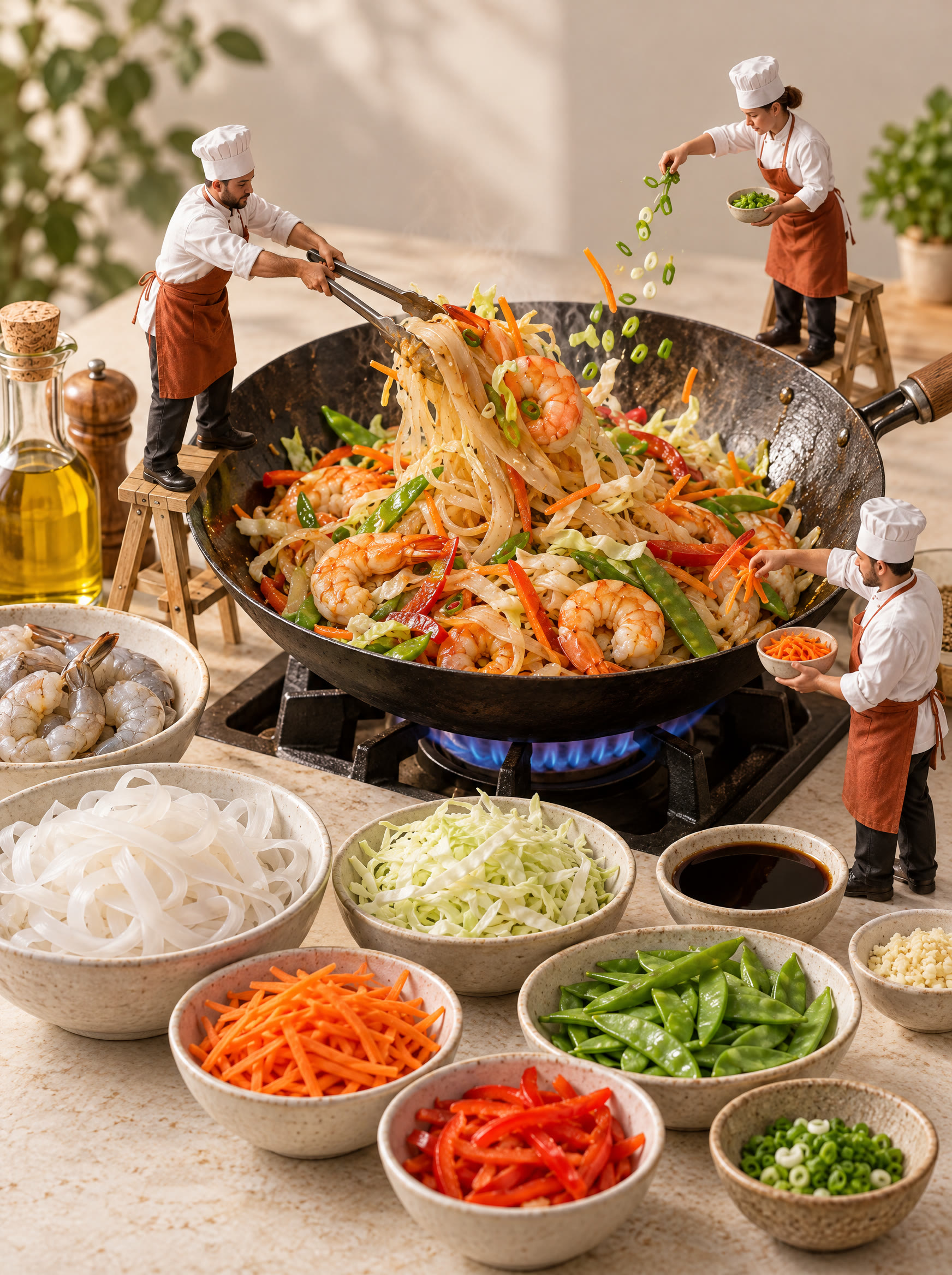
The ingredients, seen a little differently. This image is an illustration of the main ingredients; use the written recipe for the full list and quantities.
See the collection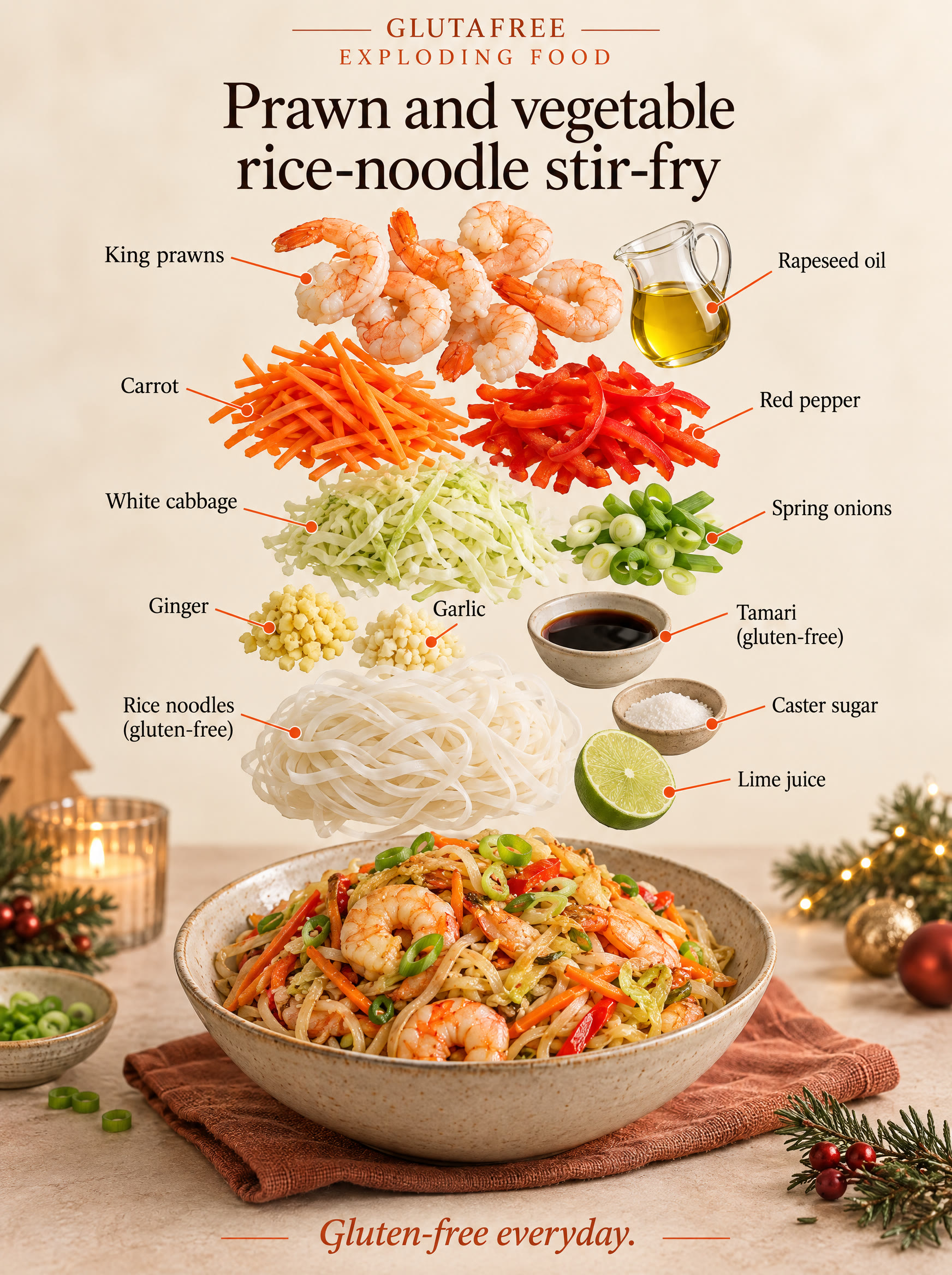
The miniature kitchen
Tiny chefs.
Big ideas.
A playful look at the same familiar favourite. Meet the little team behind our food illustrations.
Explore the tiny kitchen