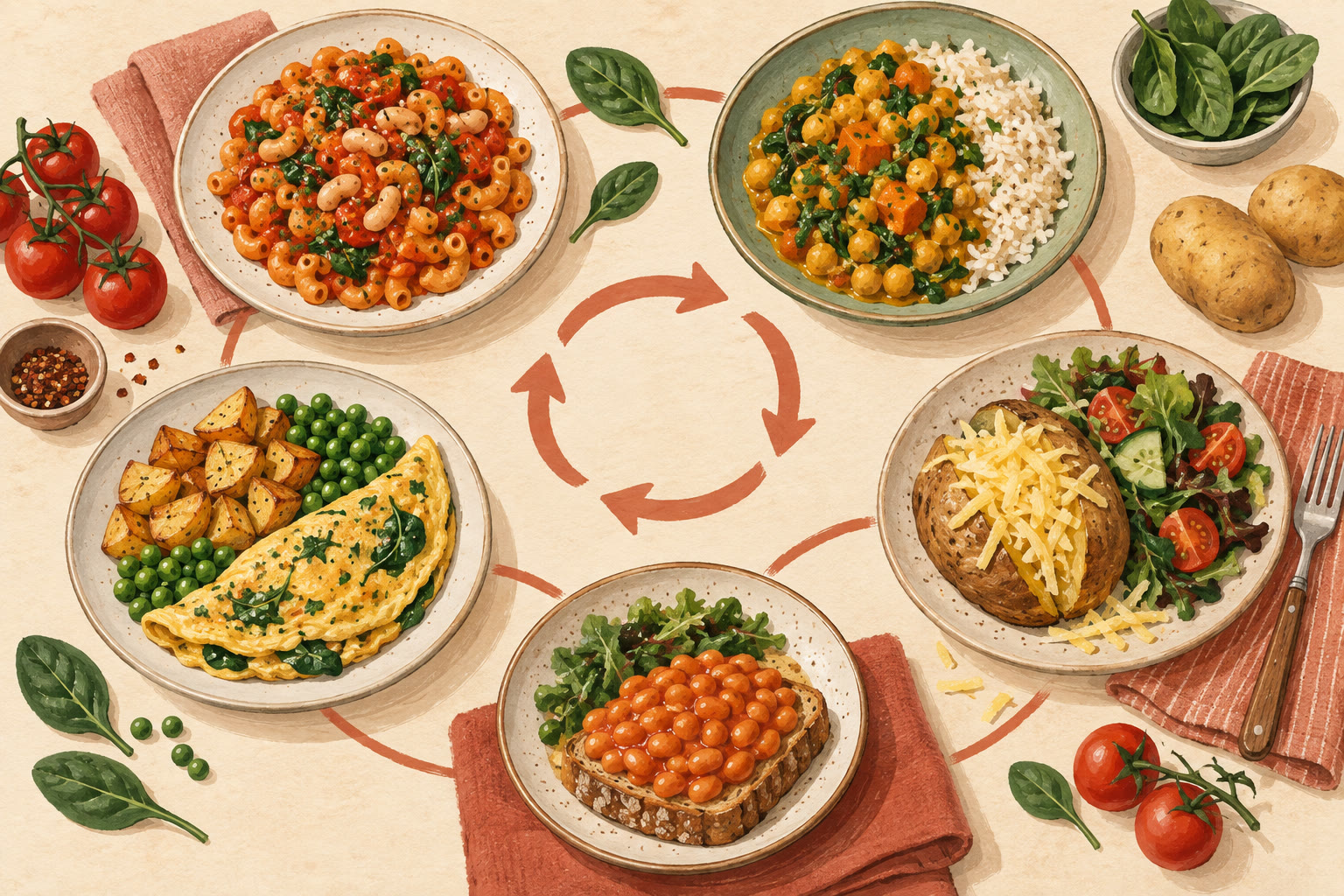
A flexible gluten-free meal rotation is a short list of dinners you already enjoy and are willing to make on an ordinary evening, such as gluten-free pasta with tomato sauce and beans, an omelette with potatoes and peas, a chickpea curry with rice, or a jacket potato with cheese and salad. You choose from that list as the week unfolds rather than pinning every meal to a fixed day, so a late finish or simply wanting a potato doesn't undo the plan.
The meals have a place in your week, but they don't each need an appointment.
If you're feeding yourself or a household gluten-free, the aim is to make the question "What's for dinner?" easier to answer. You don't need seven different recipes every week, and repeating something you enjoy isn't a planning failure.
1. What dinners should you start a gluten-free meal rotation with?
I’d begin with a blank page and a handful of familiar meals. Leave the aspirational recipes for another moment. This first list should reflect what you like eating and what you’re willing to make on an ordinary evening.
Be specific enough that each entry means something. “Rice” still leaves you with a dinner to invent. “Rice with chickpeas, tomatoes and spinach” gives you a meal to work towards. The same goes for a jacket potato: write down the filling, too.
For a starting rotation, you might include gluten-free pasta with tomato sauce and beans, an omelette with potatoes and peas, a vegetable and chickpea curry with rice, and jacket potatoes with cheese and salad. These are meal ideas, so choose recipes and quantities that suit the people you’re feeding.
Beside each dinner, note the part that asks most of you. Does it need constant attention at the hob? Several vegetables chopping? An oven on for a while? I’d find that more useful than giving every meal a vague “easy” label.
A dinner that mostly cooks without you may suit an evening at home, but be hopeless when you walk through the door hungry. Give your rotation a mixture of meals for different evenings, including something with very little preparation.
Keep the first version short enough to scan at a glance. You can add another dinner when you find a gap, rather than collecting twenty possibilities and making choosing dinner another job.
2. Do you need to check gluten-free labels every time?
A familiar meal name doesn’t remove the need to check its ingredients. I’d keep gluten-free suitability alongside each meal’s shopping needs, particularly where sauces, stock and seasonings are involved. Those details belong in the plan just as much as the main ingredient.
Coeliac UK advises reading the label every time you buy a product, because recipes and manufacturing processes can change without warning. A product being familiar isn’t a reason to skip that check on the next shop.
The NHS also advises always checking food labels, particularly on processed foods. For this rotation, that means checking every gluten-free product you buy, including the sauce for pasta, the stock for a rice dish and the seasonings for dinner.
I’d make the shopping list descriptive: gluten-free pasta, gluten-free stock, and the particular sauce or seasoning needed for the chosen recipe. That wording keeps the requirement visible if someone else does the shopping, although it doesn’t replace reading the actual label.
Give substitutions a little thought before you need them. If you can’t find a suitable sauce, another dinner from your list may be the simplest answer. There’s no need to force a planned meal through with an ingredient you haven’t checked.
Once you’ve chosen suitable ingredients, keep a brief note of what each meal needs. You’re saving yourself from having to reconstruct the recipe in the supermarket, while still checking the products you pick up.
3. How do you shop for a gluten-free meal rotation?
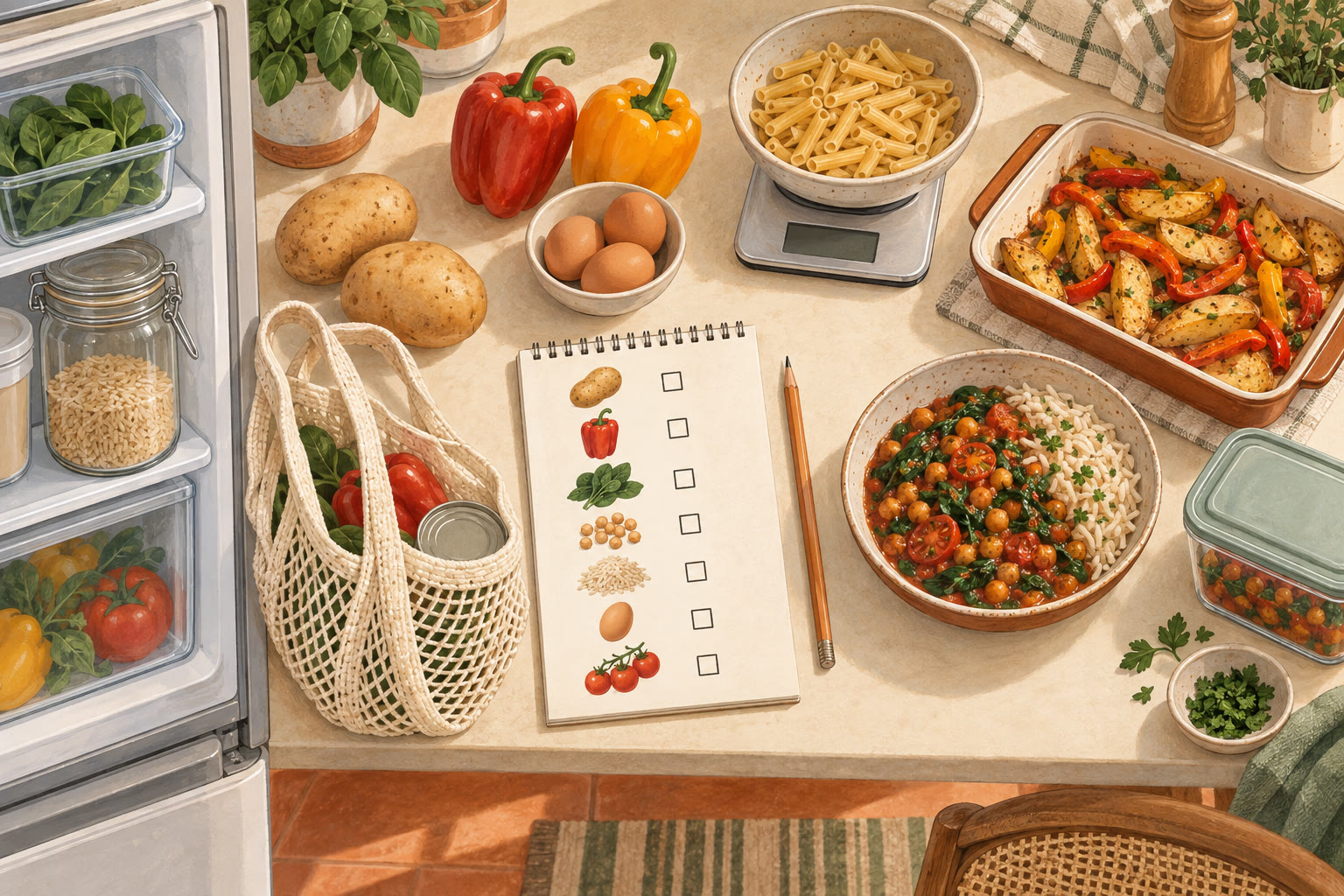
Before making the shopping list, look at the week you actually have. Count the evenings when you expect to need dinner at home. Then look at which ones leave room for cooking and which ones need the least demanding meal available.
I’d select dinners for those evenings without assigning all of them a fixed day. You might reserve one straightforward meal for a late finish and leave the others movable. That gives the week some shape without making Tuesday’s change of plans feel like a broken system.
Look for a little ingredient overlap as you choose. Spinach could feature in both a chickpea curry and an omelette. Potatoes could accompany one dinner and become the centre of another. The point is to give an ingredient a clear purpose in more than one planned meal.
Overlap doesn’t mean every dinner needs to taste alike. A tomato-based pasta dish and a jacket potato with cheese can share a side salad without becoming the same meal in different bowls. I’d keep the main dishes distinct enough to look forward to.
Check what you already have before adding anything to the list, and buy amounts suited to your chosen recipes. Let package instructions and use-by dates guide when ingredients need using. Flexibility still needs to take account of the food in front of you.
4. Give the rotation room to change
I’d include one fallback dinner that asks very little of you. Choose something you enjoy and can make with suitable ingredients you’ve planned for, such as a simple omelette with peas. Its job is to be available when the more involved dinner no longer fits.
Keep trying new recipes separate from maintaining the basic rotation. If you fancy something new, give it one space in the week. You don’t have to replace every familiar dinner to make room for a different flavour.
Afterwards, ask a small question: would you willingly make it again on an ordinary evening? If the answer is yes, add it. If it needs more attention than expected, keep it for a day when that suits you.
Start with three dinners you already enjoy, write down what they need, and choose a fallback. I’d call that a useful beginning. Your rotation can grow around your life, one worthwhile dinner at a time.
Nora is our brand character. Health information is sourced separately and should support conversations with your care team, not replace them.