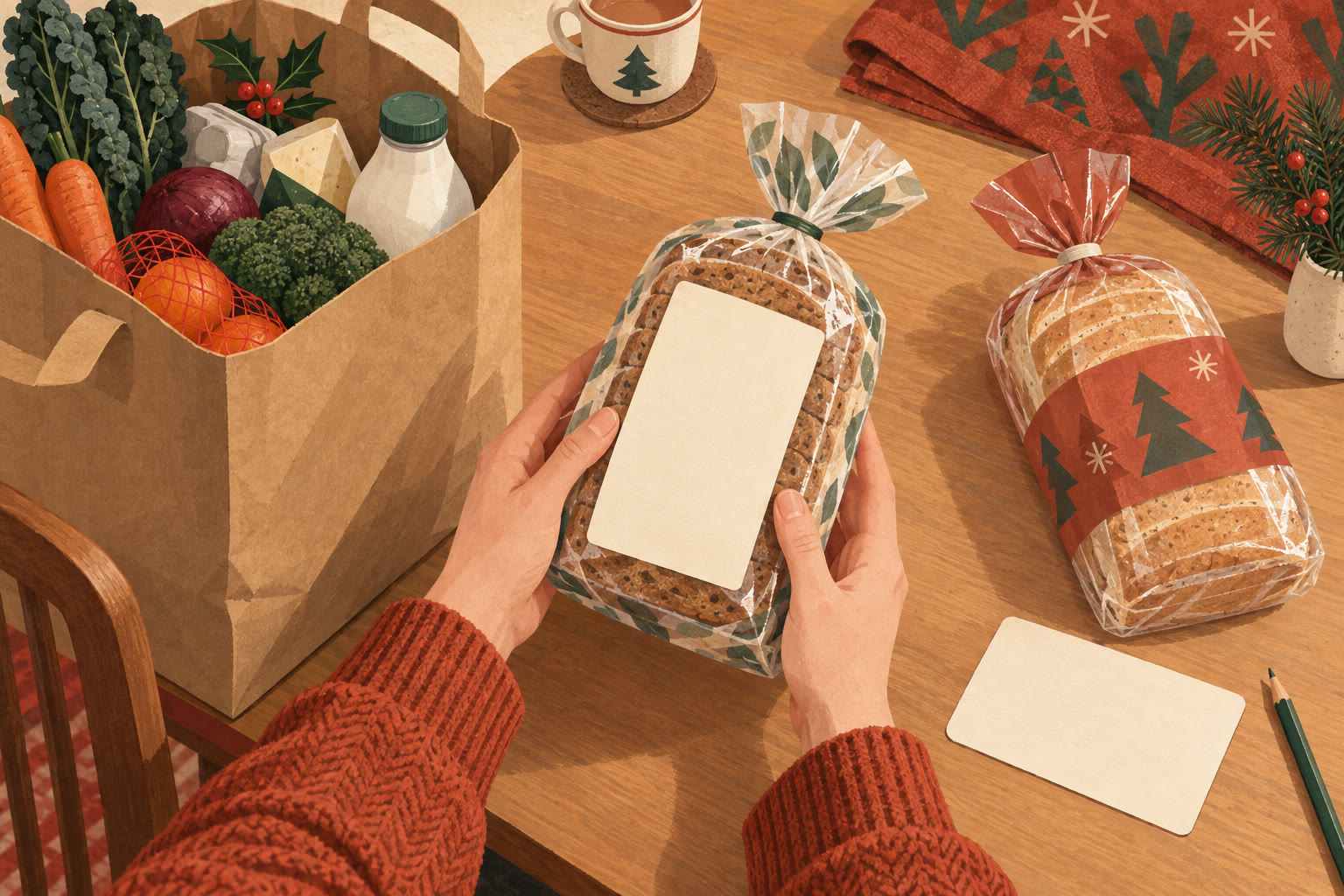
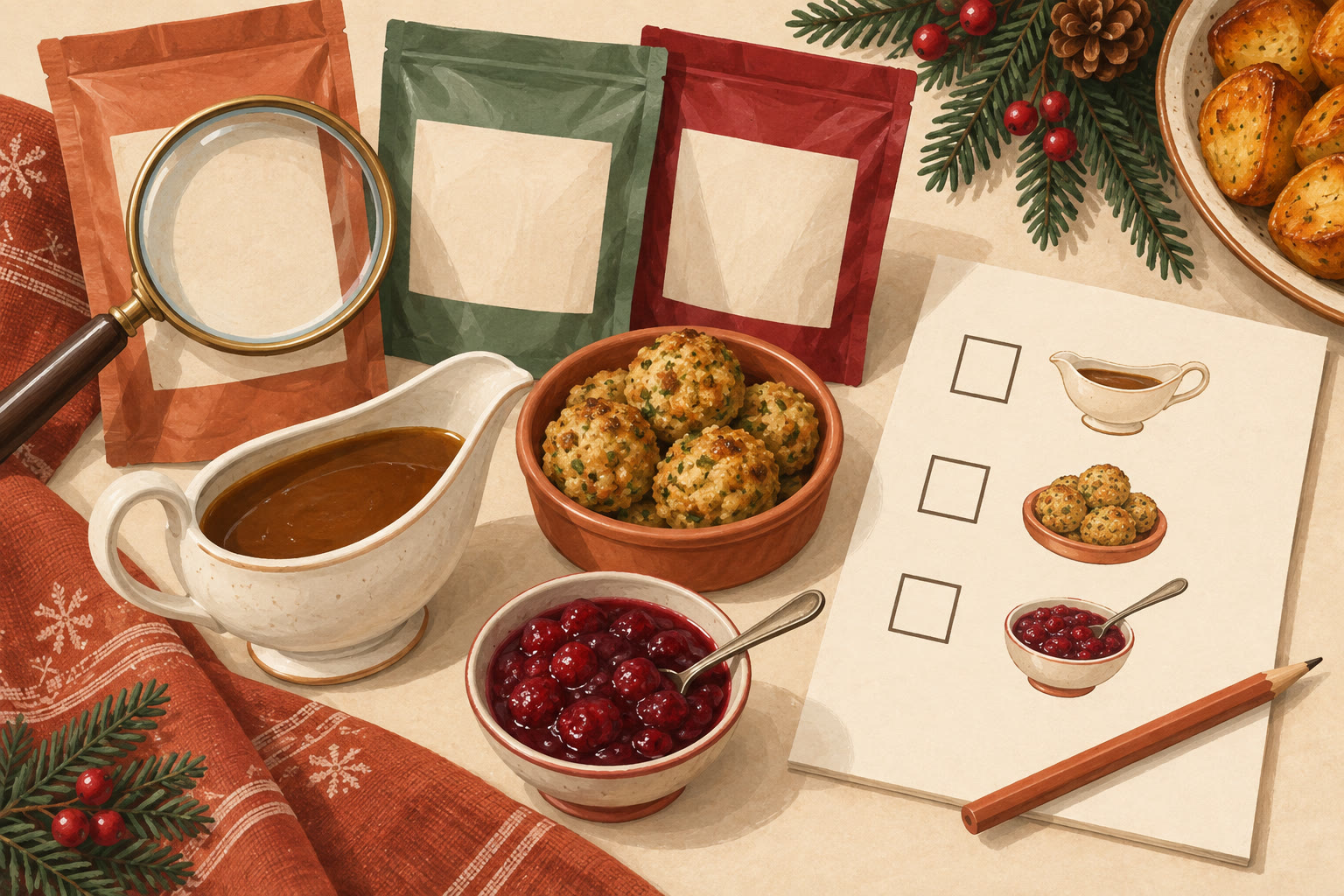
To check whether your Christmas gravy, stuffing and sauces are gluten-free, break each dish into everything that goes into it and read every label for three things: the ingredients list, any gluten-free claim, and any precautionary warning such as "may contain wheat". A familiar name or a festive sleeve doesn't tell you what's inside this year's pack, so each accompaniment needs its own check.
This is a shopping explainer, rather than a tested recipe or a list of approved products. You can use it whether you're choosing ready-made accompaniments or buying separate ingredients. The aim is a clearer list before you leave home, with fewer unanswered questions beside the gravy boat.
What ingredients should you check in Christmas gravy, stuffing and sauce?
For someone with coeliac disease, avoiding gluten is essential. The NHS explains that coeliac disease is an autoimmune condition: eating gluten triggers an attack on the small intestine, damaging it and affecting nutrient absorption. A gluten-free diet helps control symptoms and prevent long-term complications.
The NHS names wheat, barley and rye as gluten-containing cereals and includes sauces among everyday foods that can contain gluten. That’s why I’d give the accompaniments proper space on the shopping list, rather than treating them as decorations around the main event.
For gravy, write down the exact route you’re taking. If you’re buying a ready-made gravy, that’s the product to assess. If your planned version uses granules, stock, a thickener or another sauce, give each of those a separate line. One checked ingredient doesn’t answer the question for the whole jug.
For stuffing, distinguish between a complete prepared product and a mixture you’ll add things to. Read the preparation instructions as well as the ingredients: anything you’re asked to supply needs its own check. If you’re assembling stuffing from separate components, list those individually too.
For sauces, name each one you intend to serve and any additions you plan to stir in. “Sauces” is a useful heading but a poor shopping instruction. I’d rather have a few precise lines than one reassuring tick that leaves half the accompaniments unexamined.
How do you read a gluten-free food label?
Coeliac UK’s food-label guidance says to check the label every time you buy a product. Recipes and manufacturing processes can change without warning, so last Christmas’s choice is a starting point for checking, not a standing approval.
In the ingredients list, look for wheat, rye, barley, oats, spelt and Khorasan wheat, also called Kamut. These are the cereal names Coeliac UK tells shoppers to look for. Don’t limit your search to the word “gluten”; the specific cereal name is what you need to recognise.
Cereals containing gluten are one of the 14 regulated allergen categories. UK labelling rules require them to be clearly identified and emphasised in the ingredients list, for example in bold. Other allergens are emphasised too, so bold text is a prompt to read the word, rather than an automatic gluten warning.
There is a wrinkle worth understanding before a long ingredient name sends you back to the shelf. Coeliac UK identifies certain highly processed derivatives, including glucose syrup from wheat or barley and wheat-based maltodextrin, as suitable for a gluten-free diet. Their cereal origin doesn’t make them equivalent to the original cereal.
I’d keep that exception specific. It doesn’t give every ingredient derived from wheat or barley a free pass, and it doesn’t establish that the rest of a product is suitable. Read the complete list and consider the other label information alongside it.
For your shopping notes, record the exact product and variety you intend to check. “The usual stuffing” leaves room for a different version to slip into the basket. A precise description also makes the task clearer if someone else is doing the shopping.
What's the difference between "gluten-free" and "may contain wheat"?
A gluten-free claim has a defined meaning. Under the government’s allergen-labelling guidance, a product labelled “gluten-free” must contain no more than 20mg/kg of gluten, also expressed as 20 parts per million or 20ppm. That is a legal limit, rather than a loose description of the ingredients.
“May contain wheat” answers a different question. Coeliac UK explains that precautionary statements are voluntary and signal a risk of cross-contamination. They do not mean wheat is a confirmed ingredient, but they are information you need to consider, not wording to skim past.
The government guidance says precautionary allergen labelling should follow a risk assessment showing a real cross-contamination risk that cannot be removed by other means. It isn’t supposed to be a casual catch-all phrase.
I’d keep these three pieces of information separate on the page: the ingredient list, any gluten-free claim and any precautionary statement. Recording one doesn’t replace reading the others. Because precautionary wording is voluntary, its absence alone isn’t a gluten-free claim either.
If the wording leaves you unsure, mark that product as unresolved. Seek clarification from the manufacturer or consult Coeliac UK’s guidance before treating it as a settled choice. You don’t need to turn uncertainty into a yes just to finish the list.
Give your shopping list a final pass
Before shopping, put your planned gravy, stuffing and sauces beside their component lists. For each packaged item, leave space to note the cereal ingredients, gluten-free wording, precautionary wording and anything still to clarify. This keeps the decision attached to the actual product.
If someone substitutes a different pack, check that replacement in its own right. The same applies when the original choice is familiar: the label on the purchase still needs reading.
My next step would be small: choose one accompaniment and write down everything intended for it. Then work through the others. Christmas has enough sprawling lists already; this one earns its place by making the details visible before they reach the dinner table.
Nora is our brand character. Health information is sourced separately and should support conversations with your care team, not replace them.