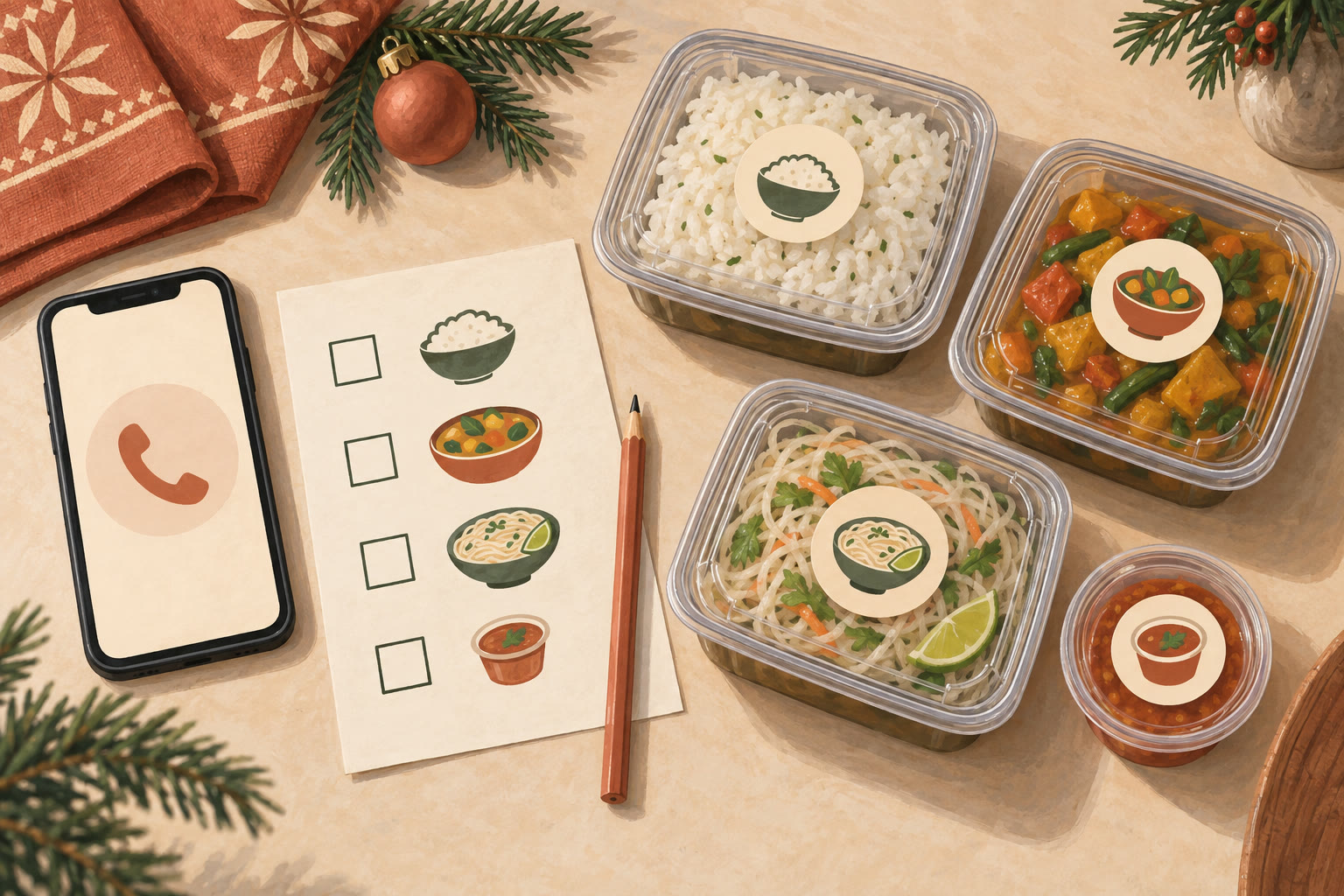
Ordering gluten-free takeaway safely means checking twice: once before you pay, and again when the delivery arrives. Before payment, find a venue that gives written allergen information, ask the kitchen specific questions about ingredients and preparation for each dish, and agree substitutions and labelling before checkout; when the food arrives, match every container to what was agreed before anyone eats.
I want a takeaway to mean an evening off, not an evening off wondering which of three identical containers holds dinner. A menu description is a starting point, not the whole answer, which is why the checks below cover the kitchen conversation, the order itself and the delivery.
For someone with coeliac disease, this matters beyond preference. The NHS explains that coeliac disease involves an immune response to gluten that damages the small intestine and affects nutrient absorption. A lifelong gluten-free diet helps control symptoms and prevent long-term complications. You don’t need to apologise for asking questions about your dinner.
How do you find a gluten-free takeaway you can trust?
I’d begin with somewhere you can contact about the food, whether you ultimately order through its own website, over the phone or through a delivery platform. Before choosing dishes, find the allergen information and the route for asking anything it doesn’t answer.
The Food Standards Agency’s best-practice guidance says businesses should make written allergen information available before non-prepacked food is ordered and again when it is delivered. For online, phone and third-party orders, customers should be clearly told where to find that information before placing the order.
Where written information cannot be given online, the guidance says businesses should clearly explain how to get it, such as by speaking to staff on the phone. I’d follow that route before paying, with the exact dish names in front of me.
For the broader questions to take into that conversation, start with our guide to eating out at gluten-free restaurants. The delivery checks here pick up where choosing a venue leaves off.
You can also use Coeliac UK’s accredited venue guide to look for options. Its Gluten Free Accreditation scheme uses a GF trademark to confirm that a caterer meets its Gluten Free Standard. I’d still discuss the particular dishes and delivery order I wanted.
What questions should you ask a takeaway kitchen about gluten-free food?
I’d make the conversation specific: “This order needs to be suitable for someone with coeliac disease. Can you check the ingredients and preparation of these dishes with the kitchen?” Then name the mains, sides, sauces and extras individually. A clear question gives staff something concrete to check.
The NHS lists wheat, barley and rye as sources of gluten, including in some sauces and ready meals. The FSA’s allergen guidance includes cereals containing gluten among the 14 allergens businesses must be able to disclose. Those cereals include wheat, rye, barley, oats and hybridised strains.
Ingredients are only part of the discussion. Coeliac UK’s takeaway advice highlights preparation questions that are worth making explicit. For fish and chips, ask about the fryer and oil: chips can be contaminated by oil shared with battered fish, and oil is often rotated between batches.
Some shops have a dedicated gluten-free fryer or designated gluten-free frying times. Ask what applies to the order you’re placing. Removing batter from cooked fish does not make it suitable, because contamination has already happened.
For a Chinese or Asian takeaway, ask about wheat noodles, soy sauce and oil previously used for gluten-containing food. Coeliac UK identifies rice noodles as an alternative to wheat noodles, but that still leaves the sauce and cooking questions to resolve. For pizza, a gluten-free base also leaves kitchen cross-contamination to discuss.
I’d ask staff to explain anything vague before moving on. “Can you check whether that sauce contains wheat?” is easier to act on than another round of “Are you sure?” If the kitchen cannot answer the relevant questions, I’d leave that dish out of the order.
Agree the order and substitutions before checkout
Once you have answers, connect that conversation to the order the kitchen will receive. I’d ask which ordering route to use and how to make sure the coeliac requirement reaches the people preparing it. If you’re using a platform, ask how the venue will recognise your order.
A checkout note can record your request, but I’d ask staff to confirm it rather than assume it settles the preparation questions. Keep the order confirmation and a brief note of what was agreed, especially if a dish needs a different sauce or another adjustment.
Make substitutions part of the conversation: “Please contact me before replacing any item. If you cannot reach me, please leave it out.” That is a suggested instruction to agree with the venue, not a promise about how its ordering system works.
I’d also ask how the gluten-free dishes will be identified on arrival, particularly when other people are ordering food containing gluten. Agree a description or label you can match to the order. Include sauce pots and sides in that request, because “the curry” is not much help when there are two.
How do you check a gluten-free delivery when it arrives?
Before serving, put the order confirmation beside the containers and check the dish names, agreed changes and any replacements. Read the written allergen information supplied. The FSA guidance gives a container sticker or a menu included with the delivery as examples of how that information can arrive.
I’d keep the containers separate while checking, with their lids and labels alongside them. The aim is to identify each dish before anything gets shared around the table.
If a label is missing, a sauce is unexpected or two dishes cannot be told apart, contact the venue with the order number. Ask it to identify the food and confirm whether the agreed preparation and substitutions were followed. Don’t settle the question by colour, smell or a taste.
If the venue cannot resolve the uncertainty, I wouldn’t eat the uncertain item. My final check is simple: can I match this container to the dish and preparation we discussed? Dinner should arrive with answers, not a guessing game.
Nora is our brand character. Health information is sourced separately and should support conversations with your care team, not replace them.