Cakes and baking
Coffee and walnut cake, gluten-free
Two coffee sponges with chopped walnuts, coffee buttercream and a simple walnut topping.
Free guide: thirty gluten-free dinners, with the shopping lists
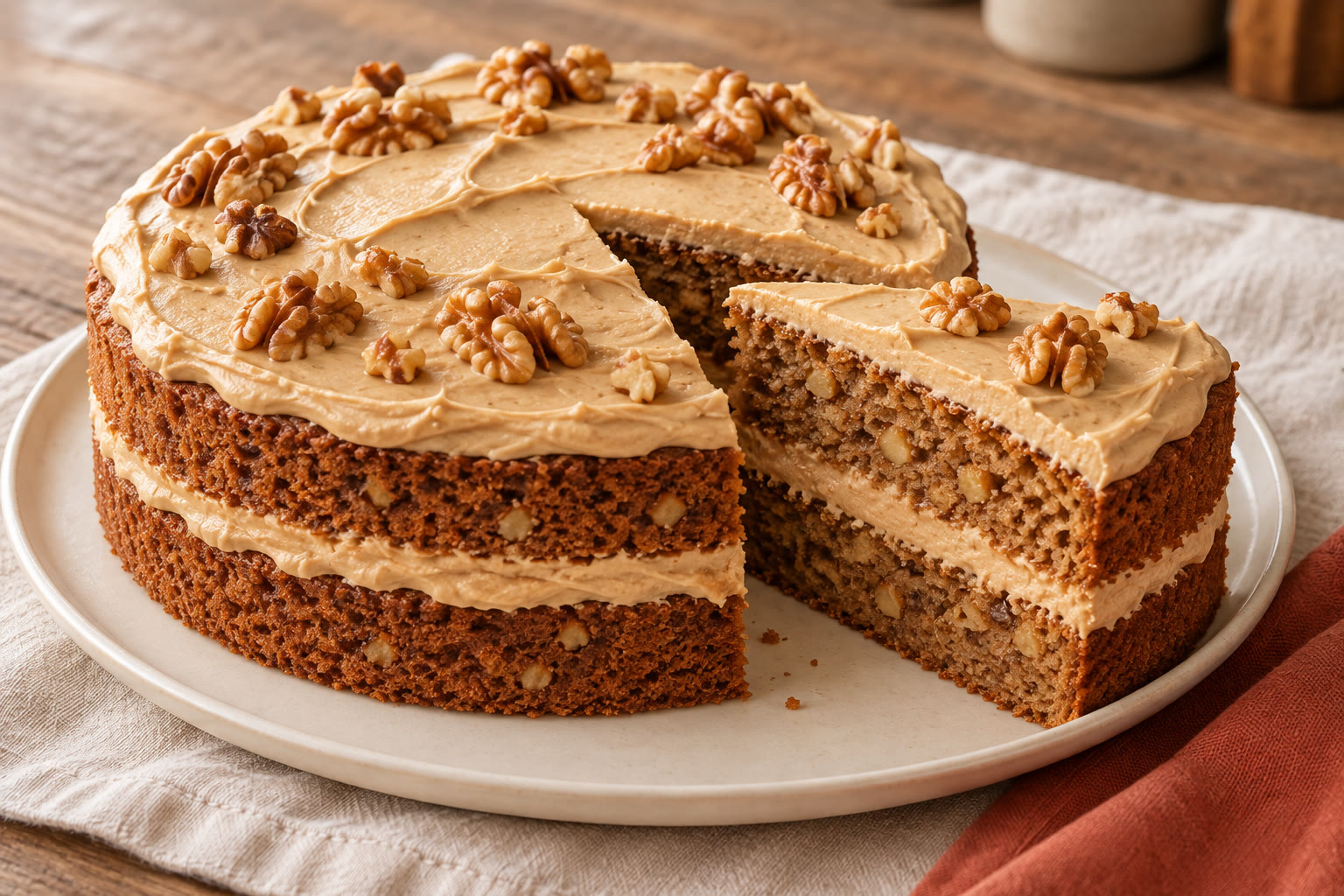
Chopped walnuts give these coffee sponges a little bite, with coffee buttercream between the layers and across the top. Use plain instant coffee so you can dissolve it in a small, measured amount of water.
Let the sponges cool completely before decorating: even a little warmth can soften the buttercream and make the layers slide.
The recipe
Coffee and walnut cake, gluten-free
- Prep
- 35 min
- Cook
- 40 min
- Total*
- 75 min
- Makes
- 12 slices
*Estimated development timings. Allow 15 minutes standing in the tins and approximately 60 minutes cooling on a rack, or until completely cold. This cooling time is additional to the total.
Ingredients
Tick things off as you go.
For the sponges
For the buttercream and topping
Equipment
- Use two round cake tins measuring 20 cm across and at least 4 cm deep.
- Have baking paper, digital scales and measuring spoons, including a quarter-teaspoon measure, ready.
- Use a large mixing bowl, a smaller bowl and an electric hand mixer.
- Have two small heatproof cups, a spatula and a palette knife ready.
- Use a chopping board, a sharp knife, a skewer and a wire cooling rack.
Let’s make it.
- 01
Prepare the tins and coffee
Heat the oven to 180°C / 160°C fan / gas 4. Grease both tins with the 10 g butter and line their bases with baking paper. In separate cups, dissolve the sponge coffee in 40 ml hot water and the buttercream coffee in 15 ml hot water. Leave both until cool; no granules should remain.
- 02
Cream the butter and sugar
Beat the 250 g softened butter with the caster sugar for 3–5 minutes, scraping down the bowl, until noticeably paler and fluffy. In the smaller bowl, stir the flour, baking powder and measured quarter teaspoon of xanthan gum together until evenly mixed.
- 03
Mix the sponge batter
Beat in the eggs individually, adding a spoonful of the measured flour mixture if the batter splits. Fold in the remaining flour mixture, cooled sponge coffee, milk and chopped walnuts. Stop when no dry flour remains and the walnuts are evenly spread through the batter. Do not taste uncooked batter.
- 04
Bake the sponges
Share the batter equally between the tins and level it. Bake for 30–35 minutes, checking at 30 minutes. Both centres should spring back lightly and a skewer should emerge without wet batter. If necessary, bake for another 3–5 minutes and check again.
- 05
Cool the cakes
Leave in the tins for 15 minutes, then turn out carefully, peel off the paper and cool on a rack for about an hour. The centres and undersides must feel completely cool before icing.
- 06
Beat the buttercream
Beat the 200 g softened butter until smooth. Add the 400 g icing sugar in three batches, starting slowly each time. Beat in the cooled buttercream coffee until evenly coloured and spreadable, with no visible butter lumps.
- 07
Fill and finish
Spread half the buttercream over one sponge, add the second and cover its top with the remainder. Add the walnut halves or pieces. Check that the layers sit level and the filling holds its shape, then cut into 12 slices.
Ingredient checks
Use a gluten-free self-raising flour blend intended for cakes, containing xanthan gum, and add the separate quarter teaspoon of xanthan gum listed for this recipe. Single flours such as coconut or almond flour are not direct replacements. Check the flour, xanthan gum, baking powder, coffee, icing sugar and walnuts for gluten-free suitability. Avoid coffee mixes containing barley malt. For someone with coeliac disease, use clean tins, bowls, utensils and work surfaces, and keep wheat flour and crumbs away from the ingredients and finished cake.
Allergens: Contains eggs, milk and tree nuts (walnuts).; Check every packet for the other UK regulated allergens: celery, cereals containing gluten, crustaceans, fish, lupin, molluscs, mustard, peanuts, sesame, soya and sulphites.; Gluten-free flour blends and dairy-free substitutes can contain other allergens, so check their ingredients and precautionary warnings for everyone eating the cake..
Make it work for you
Use plain decaffeinated instant coffee in the same quantities if preferred.
For a dairy-free version, replace all butter with a firm dairy-free baking block and the milk with an unsweetened gluten-free plant drink; check for soya or tree nuts.
These substitutions have not been kitchen-tested in this recipe.
For another day
Refrigeration is the conservative storage choice for this recipe; it is not a claim that every buttercream cake requires identical storage. Chilling can firm or dry the sponge, so bring only the portions being served briefly towards room temperature.
Once completely cool, cover and refrigerate the cake at 0–5°C; aim to have it chilled within two hours of leaving the oven, refrigerating the cooled sponges before decorating if necessary.
Eat within 48 hours or freeze promptly in well-wrapped individual portions.
Defrost covered in the fridge until the centre is fully thawed and eat within 24 hours of complete defrosting.
Let only the slices you plan to serve stand out for about 20 minutes to soften the buttercream; keep the remaining cake refrigerated.
Freezing and thawing texture have not been kitchen-tested for this recipe.
Exploding food
What goes in.
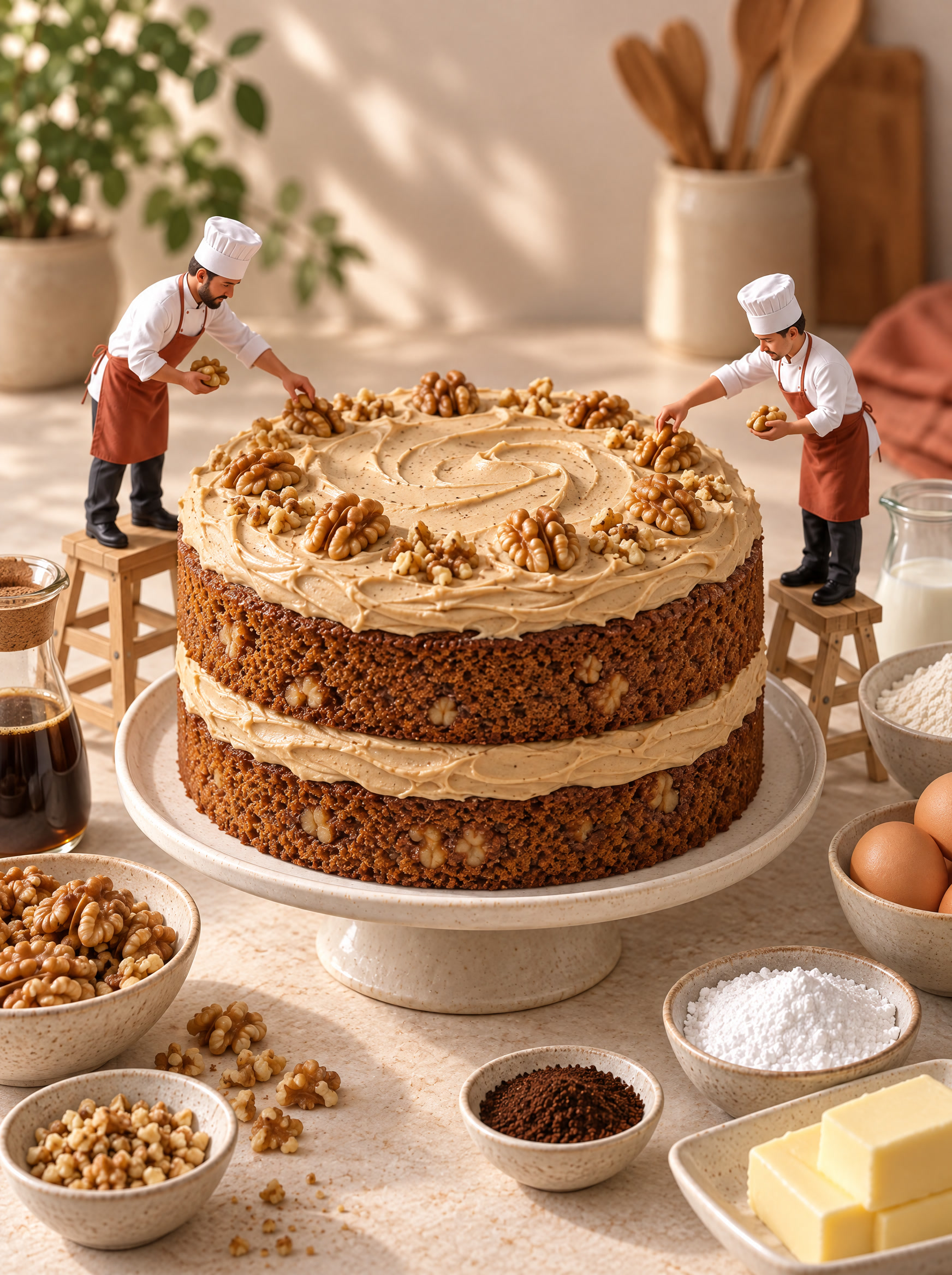
The ingredients, seen a little differently. This image is an illustration of the main ingredients; use the written recipe for the full list and quantities.
See the collection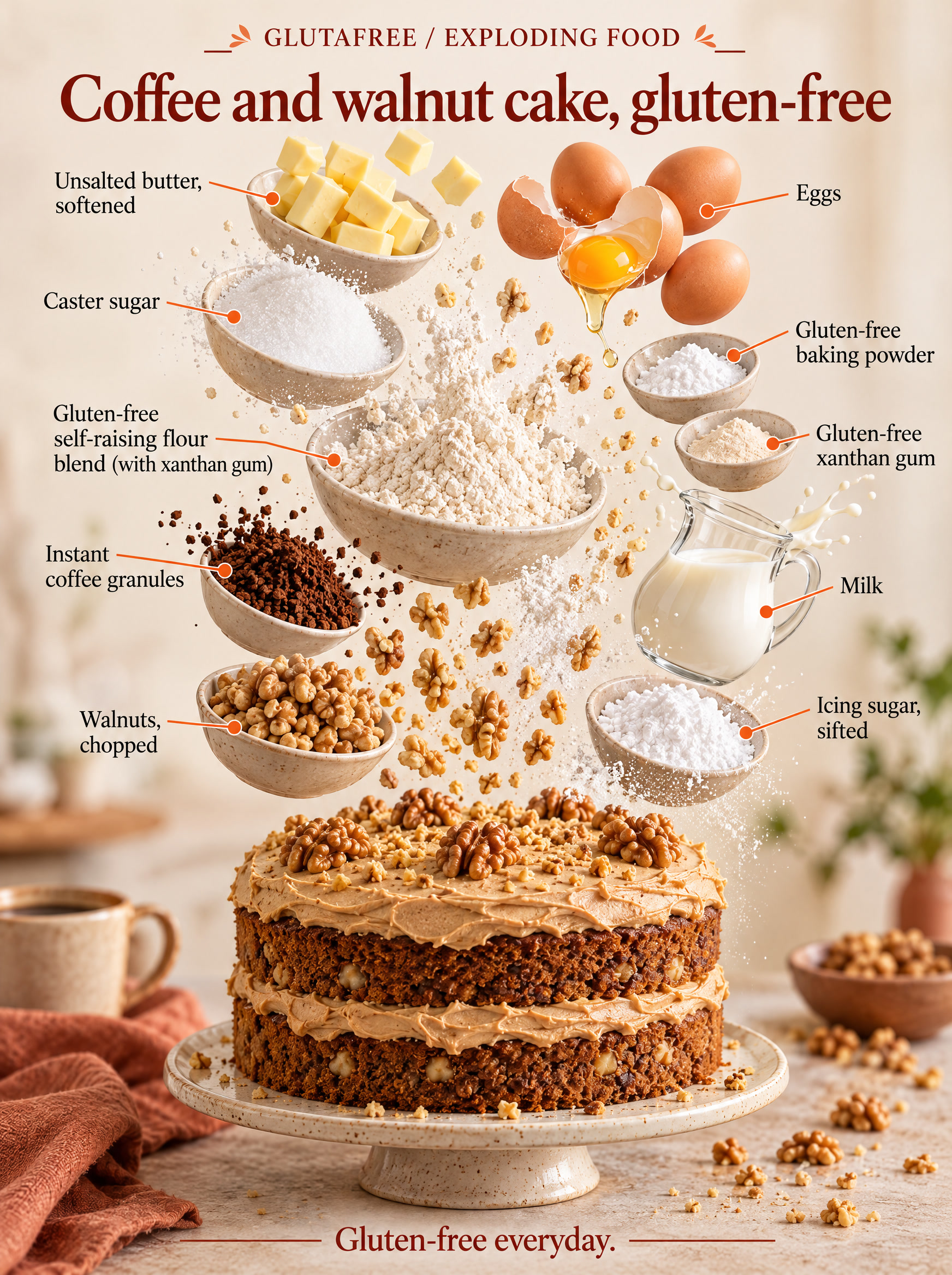
The miniature kitchen
Tiny chefs.
Big ideas.
A playful look at the same familiar favourite. Meet the little team behind our food illustrations.
Explore the tiny kitchen