Everyday dinners
Gluten-free lemon cake
A round lemon sponge with a generous layer of lemon cream cheese icing, ready to cut into wedges.
Free guide: thirty gluten-free dinners, with the shopping lists
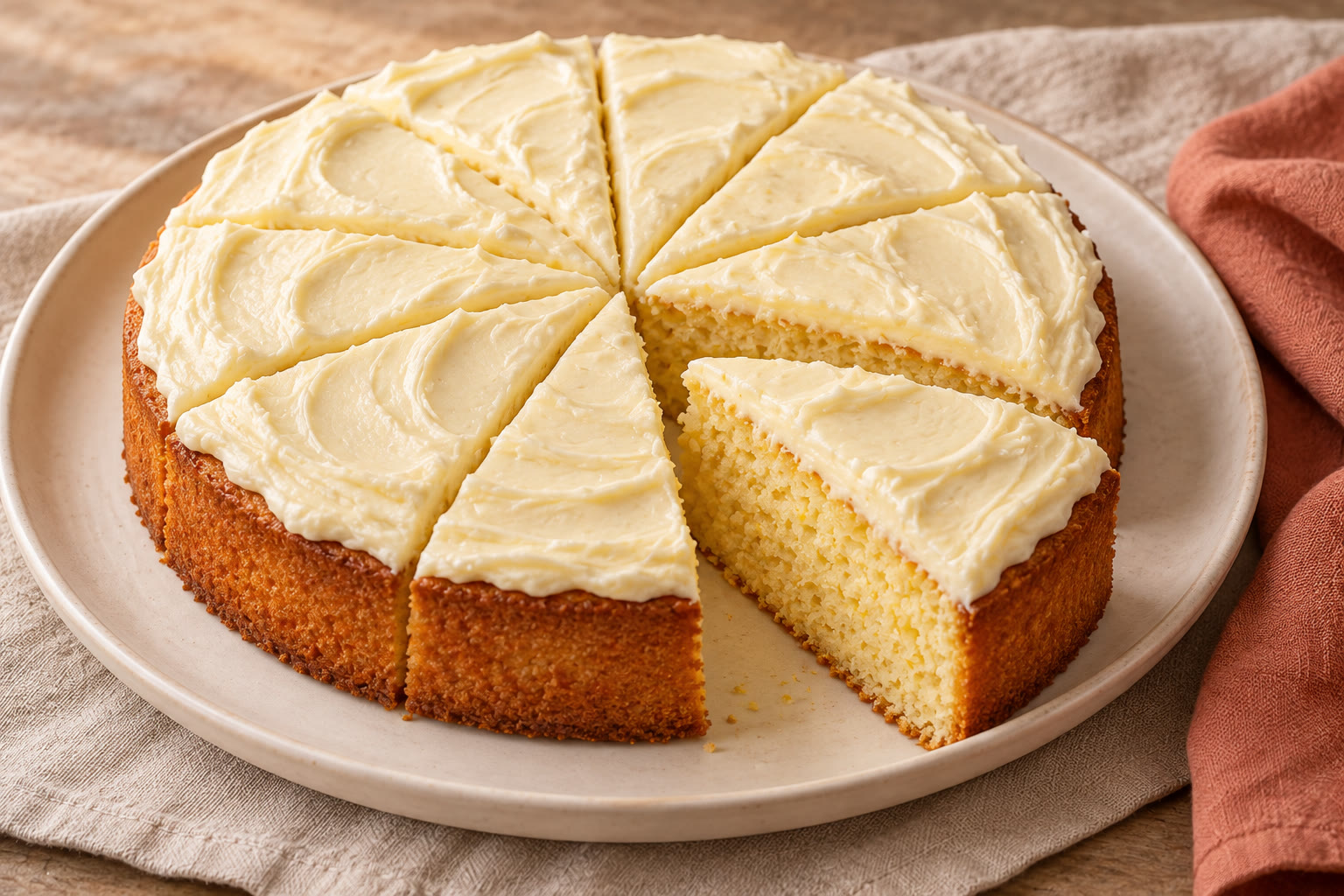
Lemon zest flavours this round sponge, with a little juice in the cream cheese icing for a sharp finish. Cut it into ten wedges for afternoon tea.
Let the cake cool completely before adding the icing, then keep it in the fridge until needed.
The recipe
Gluten-free lemon cake
- Prep
- 25 min
- Cook
- 45 min
- Total*
- 70 min
- Makes
- 10 servings
*Estimated development timings. Allow about 90 minutes for cooling, including 15 minutes standing in the tin, plus 30 minutes chilling after icing. These times are additional to the preparation and cooking total, giving about 3 hours 10 minutes overall. Loose icing may need another 15–20 minutes in the fridge.
Ingredients
Tick things off as you go.
For the cake
For the icing
Equipment
- Use a round cake tin measuring 20 cm across and at least 6 cm deep.
- You will need baking parchment, kitchen scales and measuring spoons.
- Have two mixing bowls, an electric hand mixer, a sieve and a flexible spatula ready.
- Use a fine grater and a citrus juicer for the lemons.
- Have a skewer, a wire cooling rack and a serving plate ready.
- Use a covered cake container that fits in the fridge.
Let’s make it.
- 01
Prepare the tin
Heat the oven to 180°C / 160°C fan / gas 4. Grease the tin with the reserved 10 g butter and line its base and sides with baking parchment. Check that the paper sits flat against the base. Finely grate the yellow zest from both lemons, stopping before the white pith, then squeeze and measure 10 ml juice for the icing.
- 02
Beat the butter and sugar
Beat the remaining 200 g cake butter with the caster sugar and lemon zest for about 4 minutes. Scrape down the bowl halfway through. The mixture should look paler and noticeably fluffier, with no firm lumps of butter.
- 03
Add the eggs
Beat in the eggs individually, mixing until each disappears before adding the next. If the mixture starts to look curdled, mix in a tablespoon of the measured flour. Scrape the sides and base of the bowl so no separate streaks of egg remain.
- 04
Finish the batter
Mix the remaining flour with the baking powder, then fold it into the bowl with the milk. Stop when there are no dry pockets and the batter drops heavily from the spatula. Spread it evenly in the prepared tin, leaving at least 2 cm clear below the rim.
- 05
Bake the cake
Bake on the middle shelf for 40–45 minutes. The surface should be golden, the centre should spring back gently and a skewer pushed into the middle should emerge without wet batter. If needed, bake for another 5 minutes and check again; oven and flour brands can affect the timing. The cake must be cooked through before serving.
- 06
Cool completely
Stand the cake in its tin for 15 minutes, then carefully turn it onto a rack and remove the parchment. Leave for about 75 minutes more, until the base and centre feel completely cool. Do not ice a warm cake.
- 07
Make the lemon icing
Beat the 50 g icing butter until smooth. Add the icing sugar in three batches, starting slowly, then beat until creamy. Briefly mix in the chilled cream cheese and the reserved 10 ml lemon juice, stopping as soon as the icing is smooth and holds soft ridges. If it feels loose, refrigerate for 15–20 minutes before spreading.
- 08
Ice and chill
Place the cooled cake on a serving plate and spread the icing over the top. Refrigerate for 30 minutes, until the icing holds its shape when a knife passes through it. Cut into ten wedges and keep the remaining cake covered in the fridge.
Ingredient checks
Use a labelled gluten-free flour blend and gluten-free baking powder. Check icing sugar and all other packaged ingredients for gluten-free suitability and relevant allergen warnings. For someone with coeliac disease, use clean utensils, tins, cooling racks and work surfaces, and avoid shared butter or equipment contaminated with wheat flour or breadcrumbs.
Allergens: Contains eggs and milk.; The other 12 UK regulated allergens are not intentional ingredients: celery, cereals containing gluten, crustaceans, fish, lupin, molluscs, mustard, tree nuts, peanuts, sesame, soya and sulphites.; Check every packaged ingredient for additional allergens and cross-contact warnings, particularly the flour blend, baking powder and cream cheese..
Make it work for you
If your gluten-free plain flour blend contains no xanthan gum, add 1/4 level teaspoon of xanthan gum with the flour; do not add extra if the blend already contains it.
Replace the whole milk with the same quantity of semi-skimmed or lactose-free milk if needed; lactose-free milk still contains the milk allergen.
For a simpler finish, omit all three icing ingredients and the reserved lemon juice, then serve the plain lemon sponge.
Do not replace the flour blend with a single flour such as coconut or almond flour at the same weight; these need different liquid and binding quantities.
For another day
Because the icing contains cream cheese, keep the finished cake covered in a fridge at 0–5°C and eat within 48 hours, or sooner if the cream cheese packaging requires it.
Keep cream cheese chilled until needed and return the iced cake to the fridge promptly after decorating or serving.
For freezing, wrap the completely cooled, uniced cake or individual wedges well and freeze promptly; aim to use within one month for quality.
Defrost wrapped cake in the fridge and eat within 24 hours of fully thawing. Add freshly made icing after thawing; the freezing texture of this recipe has not been kitchen-tested.
Exploding food
What goes in.
The ingredients, seen a little differently. This image is an illustration of the main ingredients; use the written recipe for the full list and quantities.
See the collection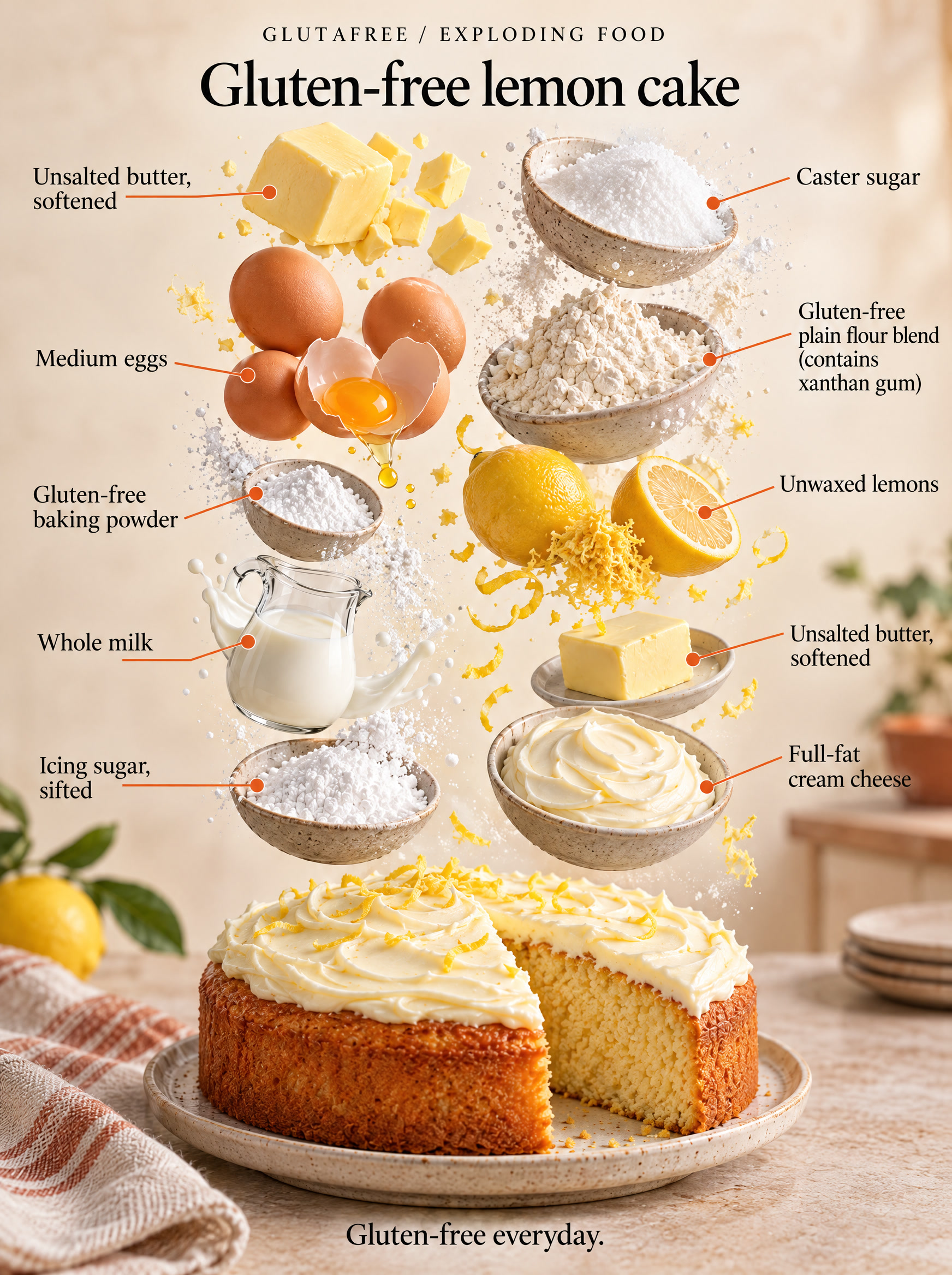
The miniature kitchen
Tiny chefs.
Big ideas.
A playful look at the same familiar favourite. Meet the little team behind our food illustrations.
Explore the tiny kitchen