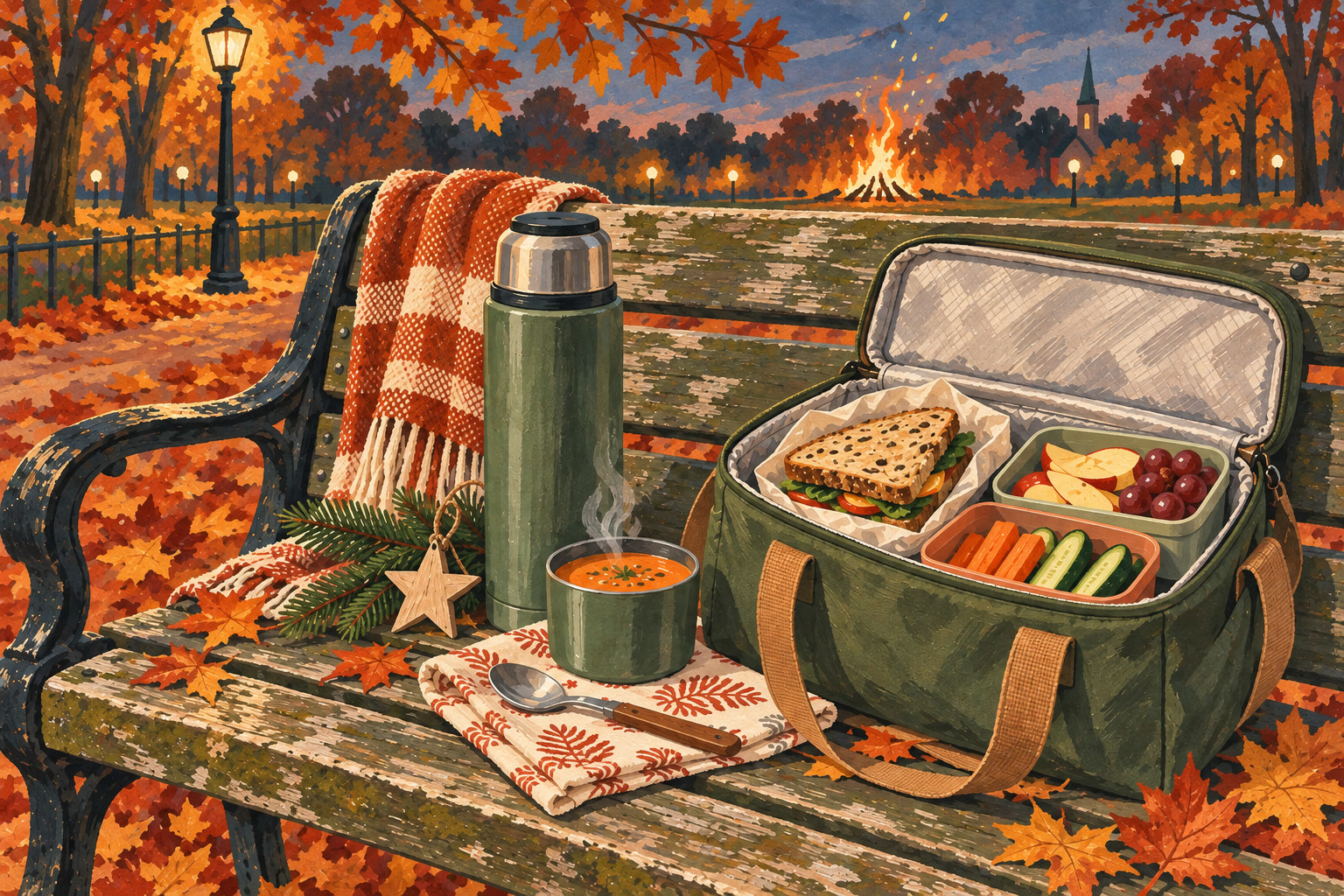
The safest plan for gluten-free food at a Bonfire Night outing is one you settle before you leave home: ask whoever is catering how the food is prepared and served, check any packaged item against the UK's 20ppm gluten-free labelling rule, and decide what you'll eat if those answers don't hold up on the night. Standing beside a queue, trying to read a packet while everyone wonders where you've gone, is a poor substitute for that plan.
For me, the useful checklist has three parts: ask whoever is providing the food, work out what you can take, and decide what happens if the answers change. You don't need a menu for every possible turn of the evening. You need enough information to make your own decision, plus a backup you can actually use.
1. What does the gluten-free label actually mean?
I’d start with the packet, before thinking about flasks or picnic bags. According to Coeliac UK’s explanation of gluten-free labelling, food can only be labelled “gluten-free” under UK law if it contains 20 parts per million, or ppm, or less of gluten. That is the defined threshold behind those words.
The rule covers specialist gluten-free products and everyday foods that meet the requirement. It doesn’t establish that a particular item you’re considering qualifies. I’m not naming any branded Bonfire Night food as gluten-free here because there is no verified manufacturer information for individual products in this article.
For anything bought to take along, check the actual pack yourself. If you need more information about that item, leave the question open until you have it. A familiar-looking wrapper or a suggestion from someone in the group isn’t the missing product check.
I’d also keep the packaging available if somebody else will be serving the food. That gives them the wording to refer to, rather than asking them to remember a message sent earlier in the week. Make the packet check part of packing, while there’s time to choose something else.
2. What questions should I ask about how the food is prepared?
A gluten-free label answers a question about the food. For a catered outing, I’d also want to understand the preparation and serving arrangements. The useful contact might be the organiser, but ask them to put you in touch with the caterer if they can’t answer those details.
My enquiry would be straightforward: “I need gluten-free food suitable for someone with coeliac disease. Could you explain how it will be prepared and served, including the equipment, utensils and condiments?” Then I’d follow up on whichever parts apply to the evening.
For a shared barbecue or grill, ask what surfaces and pans will be used and how they will be cleaned before gluten-free food is prepared. Ask about shared tongs and skewers too. Coeliac UK’s cross-contamination guidance says ordinary washing-up liquid or a normal dishwasher cycle is enough to remove gluten from utensils, pans and equipment. Surfaces and pans should be washed with hot soapy water, and gluten-free food must never be prepared on a floury surface.
If there is fried food, ask about clean oil or a separate fryer, as Coeliac UK recommends. If bread will be toasted, its guidance recommends a separate toaster or a toaster bag. Those are concrete questions that give the person cooking something specific to explain.
At a communal food table, I’d ask which utensils serve which dishes and how shared condiments or dips will be handled. Coeliac UK explains that shared butter or jam can pick up crumbs from gluten-containing bread and recommends clean cutlery or separate pots. Use that same practical question when discussing the evening’s shared pots: will people have clean serving cutlery or separate portions?
Keep a note of the answer and who supplied it. On arrival, check that the arrangements described are the ones in place. If someone can’t explain them, that is the point to use your fallback.
3. What should I pack, and what's my fallback plan?
Before planning food to carry, I’d ask whether the event allows food from outside, and whether there are restrictions on bags, containers or flasks. These are questions for your particular outing. Finding out at the entrance would rather defeat the purpose of packing supper.
Then consider the whole journey: getting there, waiting to enter, watching the display and getting home. What will you carry comfortably? Where will you eat? Will you need cutlery, and can you reach the food without unpacking everybody’s gloves onto a bench?
For packaged food, read the pack’s storage and preparation instructions as well as checking its gluten-free suitability. I’m not giving a keeping time for homemade food in a flask or insulated bag here. If your plan needs hot or chilled transport guidance, get that settled separately before choosing what to take.
I’d make the fallback a proper decision: eat before leaving, bring food whose suitability and transport requirements you have checked if permitted, or arrange a meal before or after the outing. Pick the option that fits the venue’s rules and your evening, then tell anyone travelling with you.
If you’re a member, Coeliac UK’s Live Well Gluten Free app includes a barcode scanner for checking whether shop-bought products are suitable for a gluten-free diet. It also lists venues with Coeliac UK Gluten Free accreditation alongside community-recommended venues. Look at which type of listing you’re reading, and use it to help plan if the outing includes eating out.
4. Keep the plan when it’s “just one night”
The NHS explains that coeliac disease causes the immune system to attack the gut lining when gluten is eaten, damaging the small intestine and affecting nutrient absorption. Symptoms can include stomach ache, bloating and diarrhoea. Its guidance recommends following a gluten-free diet even when symptoms are mild, because continuing to eat gluten can cause serious long-term complications.
I’d save the caterer’s answer, the packing decision and the fallback together on my phone. That’s enough to give the food question a clear place in the evening. Once those details are settled, there’s more room to think about warm socks and who’s carrying the umbrella.
Nora is our brand character. Health information is sourced separately and should support conversations with your care team, not replace them.