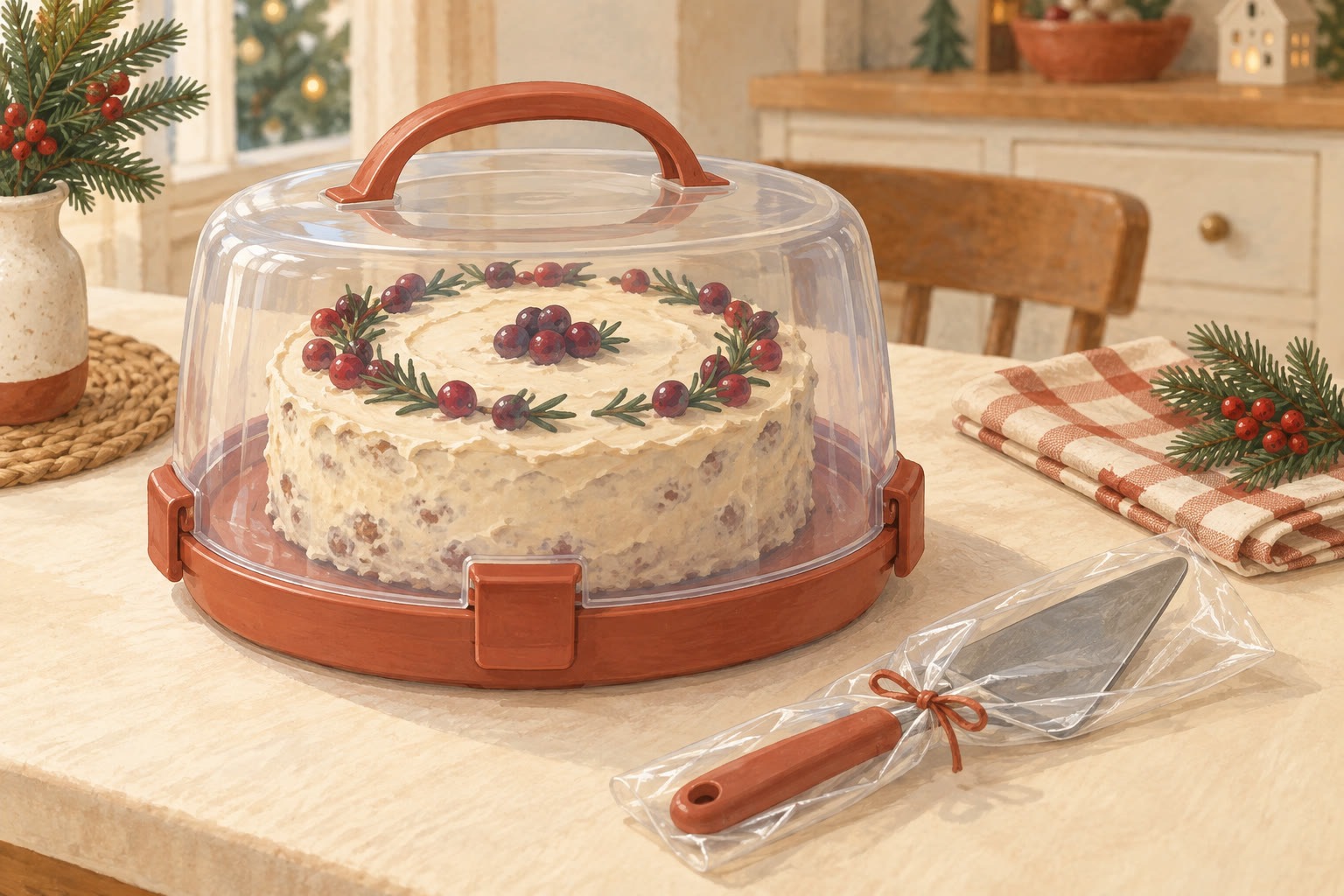
Taking a gluten-free dessert to someone else’s home safely means agreeing the full serving plan with your host, not just checking what’s in the dish itself. Share the ingredient information, carry the dessert covered, and agree which clean utensils will be used to cut and serve it, because a gluten-free dessert can still meet a knife that has just cut something containing gluten.
What arrives in the dish matters, and so does anything added or used to serve it. A lovely cake deserves a little attention beyond its icing.
These are practical ways to apply the guidance below, rather than a guarantee that any particular homemade dessert is suitable.
What should you agree with the host about serving it?
I’d begin with the complete dessert, including anything the host plans to add. A cake arriving on its own and a cake served with a topping are two different ingredient conversations. Ask what will go alongside it, and include those extras when checking the information.
The reason for being precise is straightforward. The NHS guidance on coeliac disease says treatment requires a strict gluten-free diet for life. For someone with coeliac disease, this isn’t simply a preference for a different flour. I’d keep the discussion grounded in that requirement, without making claims about anyone’s individual response.
Ask your host to use clean serving utensils and a clean surface for any cutting or plating. The NHS identifies preparing gluten-free and gluten-containing foods together, or serving them with the same utensils, as ways cross-contamination can happen.
I’d also agree whether the dessert will be served directly from its container or transferred to another dish. That gives you a specific point to check: the plate, knife or spoon that will actually touch the food. There’s no need to turn this into a discussion of every cupboard in the kitchen.
If several desserts are being served, ask for a clean utensil to be kept with the gluten-free one. Make that part of the serving agreement, including any spoon used for an accompaniment. The important detail is what touches the dessert, rather than who brought it.
What ingredient information should you bring with a gluten-free dessert?
I wouldn’t expect a host to identify ingredients by looking at a finished pudding. Share the recipe’s ingredient list and retain the packaging information for the ingredients used, including decorations and toppings. For a bought dessert, bring its label information rather than relying on a description from memory.
The NHS explains that food labelled gluten-free can legally contain no more than 20 parts per million of gluten. It says this level typically causes no problem for most people with coeliac disease. That wording matters: it is not a promise about every person or every dessert.
I wouldn’t turn that labelling rule into a claim that a homemade cake meets the same threshold. Its appearance cannot establish its gluten content, and an ingredient list doesn’t tell the whole story about preparation. Explain what went into it and how it was prepared, without offering a certainty you cannot support.
Oats are a useful detail to flag if they appear in a crumble topping or another dessert. The NHS advises people with coeliac disease to eat only oats labelled gluten-free, because oats can become contaminated with gluten during growing or processing. “It’s only oats” leaves out the relevant information.
Keep any gaps visible. If you no longer have the information for a decoration, say that you cannot confirm it. I’d much rather pass on an honest ingredient list with a clearly identified uncertainty than describe the whole dish as checked when part of it wasn’t.
How do you carry and hand over a gluten-free dessert safely?
For transport, I’d put the dessert in a clean, covered container and bring a clean serving utensil separately wrapped or enclosed. This is a practical suggestion for keeping the dessert and its utensil together through the journey. A lid itself does not prove that the contents are gluten-free.
At the handover, identify the ingredient information and the utensil intended for serving. Ask where the dessert will be cut or plated, and check that any dish used for transferring it is clean. If an accompaniment has been added to the plan, check that too.
Cleaning does not require a special gluten-removing product. Coeliac UK’s cross-contamination guidance says standard washing-up liquid or a dishwasher removes gluten. Surfaces, pots, pans and utensils can be cleaned with hot soapy water, without needing separate cloths or sponges.
That makes the request quite ordinary: ask for a properly cleaned knife, spoon, dish and preparation surface. You don’t need to insist that the host buy a new set of kitchen equipment. What matters here is the cleaning and how those items are used afterwards.
If the intended knife has since been used for a gluten-containing dessert, ask for it to be washed or replaced with a clean one before serving yours. The agreement needs to carry through to serving, rather than end when the container changes hands.
Check shared extras and equipment where relevant
I’d keep the final checks tied to this dessert. Coeliac UK highlights breadcrumb contamination in shared butter and jam, recommending separate supplies or, at minimum, clean cutlery each time. Ask for a clean knife and fresh spread if the shared supply has been touched by a knife used on gluten-containing bread.
Apply the same utensil question to shared cream: has the knife or spoon touched gluten-containing food before going into it? If so, ask for a fresh portion from an uncontaminated supply and a clean utensil. Cream is an accompaniment to check, not something to assume has remained separate.
If any part of the dessert involves toasting, check whether a toaster used for wheat bread was involved. Coeliac UK recommends toaster bags or a separate toaster for gluten-free bread products. For anything fried, ask whether the oil was previously used for battered or breadcrumbed food; its guidance recommends clean oil or a separate fryer.
Those checks only belong in the conversation when relevant. Before the lid comes off, I’d settle three things with the host: the ingredients and extras are accounted for, the serving items are clean, and those utensils will stay with this dessert.
Nora is our brand character. Health information is sourced separately and should support conversations with your care team, not replace them.