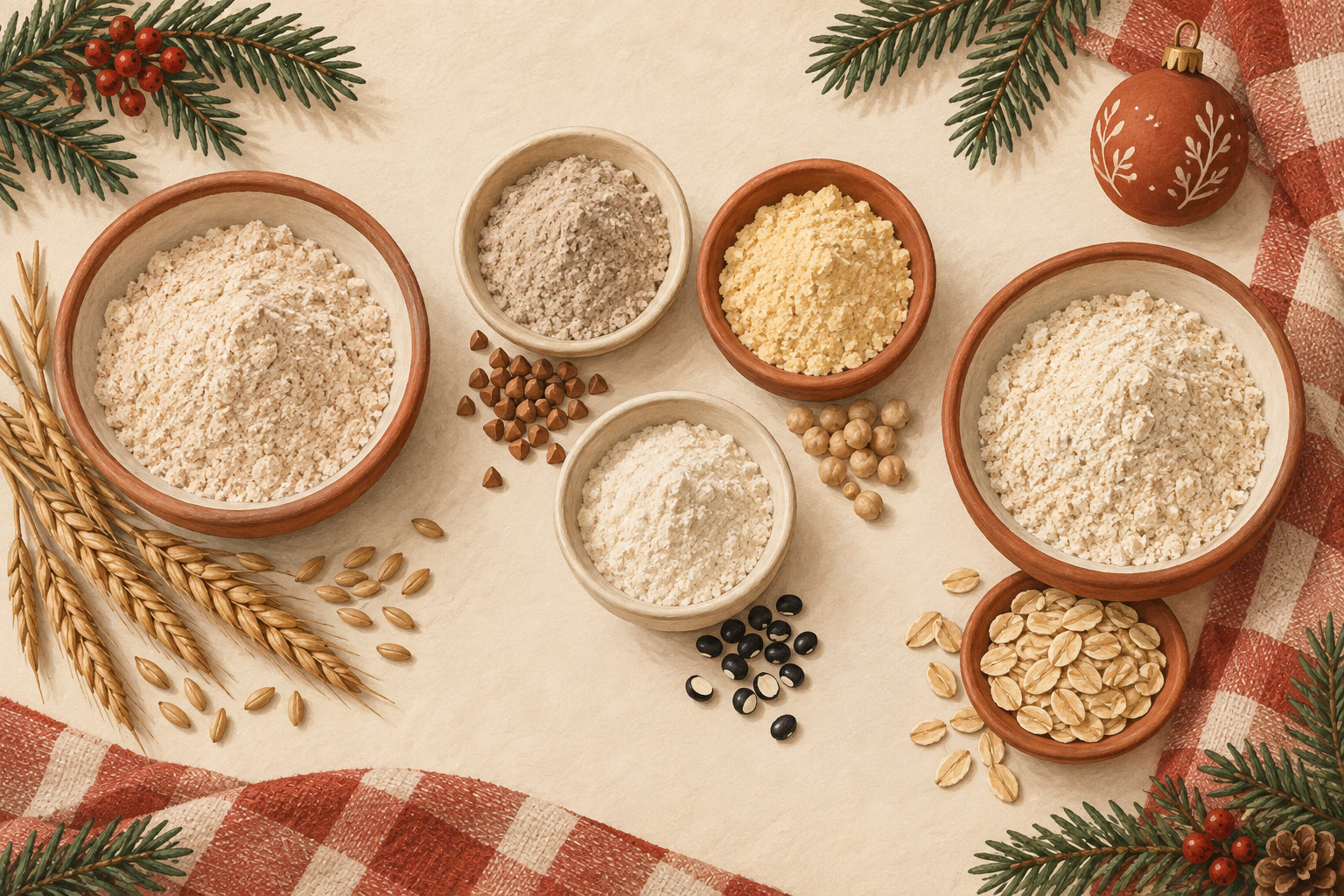
Three flour names cause most of the confusion on a gluten-free diet. Spelt, despite sounding like a separate ancient grain, contains gluten and must be avoided. Buckwheat, gram and urad are naturally gluten-free but still need a gluten-free label because of contamination risk during milling, and the same goes for oats, since standard oats are often milled alongside wheat.
Recognising an ingredient and checking a particular packet are different jobs, and for anyone navigating flour labels with coeliac disease in mind, that distinction matters more than how familiar or reassuring a name feels.
Here at Glutafree, I'd rather make the label easier to understand than give you another long list to memorise. These are the three name-confusion cases I'd start with, including how to read them when they appear among the ingredients of a flour blend.
Does spelt flour contain gluten?
Spelt is the one where I want the answer up front: spelt contains gluten and must be avoided on a gluten-free diet. Its name can sound like a separate alternative to wheat, especially when it is described as an ancient grain. That description does not make spelt gluten-free.
Coeliac UK lists spelt among the grains that contain gluten and are unsuitable. The NHS guidance on treating coeliac disease also names spelt among the foods to avoid. There is no need to work out what “ancient” might mean before making the decision about ordinary spelt flour.
The practical reading task is to recognise the word itself. If you are looking through the ingredients of a flour blend and find spelt, you have found a gluten-containing ingredient. Being one part of a blend does not change what spelt is.
I’d put the descriptive wording to one side and concentrate on that ingredient information. A name can tell a lovely story about a grain without answering the question that matters for coeliac living. “Ancient grain” and “gluten-free” are not interchangeable descriptions.
If you have been unsure about spelt, there is no reason to feel foolish. You cannot reliably work out a grain’s gluten status from how its name sounds. This is simply a useful word to recognise when scanning a packet: spelt means gluten, even when the surrounding description makes it sound like an alternative.
Are buckwheat, gram and urad flour gluten-free?
Buckwheat creates almost the opposite muddle. The name sounds as though it ought to put it alongside wheat, but buckwheat is naturally gluten-free. Gram flour and urad flour are naturally gluten-free too. Coeliac UK identifies these flours while making an important distinction between the ingredient itself and what can happen during milling.
According to Coeliac UK’s guidance on grains and flours, these naturally gluten-free flours can be milled in facilities that also mill wheat flour. Cross-contamination can occur, including in pulse-based flours such as gram and urad. Knowing the ingredient’s name therefore answers only part of the question.
This is where I’d turn from identifying the flour to checking the packet. Coeliac UK advises looking for flours specifically labelled gluten-free. For these flours, that label needs to be there; the naturally gluten-free ingredient name alone is not enough to make the choice.
It helps to read the information as two separate answers. “Buckwheat”, “gram” or “urad” tells you which flour you are looking at. “Gluten-free” gives you the relevant information for choosing it for a gluten-free diet. Neither job is done by deciding that a name sounds wholesome, unfamiliar or suspiciously close to “wheat”.
The same distinction is useful when one of these names appears in a blend. Finding buckwheat on the ingredients list does not, by itself, establish that the whole packet is gluten-free. Look for the gluten-free wording on the flour blend you are actually considering, rather than stopping at one recognisable ingredient.
I find this a clearer way to explain the apparent contradiction: buckwheat itself is naturally gluten-free, but a packet of buckwheat flour still needs the label check because of the milling risk. Those statements fit together. The second does not cancel the first, and the first does not remove the need for the second.
Are oats gluten-free?
Oats are naturally gluten-free, but production introduces another question. Coeliac UK explains that many standard oats are produced in the same place as wheat, barley and rye, creating a contamination risk that makes them unsuitable. The NHS advises avoiding oats and oat products that are not labelled gluten-free.
For me, the easily missed detail is the wording that can sound like reassurance. Coeliac UK specifically says that “100% oats” and “pure oats” do not tell you whether a product is gluten-free. Those phrases cannot answer the question about contamination during production, however complete they may sound.
Choose oats or oat flour specifically labelled gluten-free. The NHS states that, by law, food labelled gluten-free can contain no more than 20 parts per million of gluten. That is the threshold behind the label, rather than a promise implied by “pure”. You do not need to calculate it yourself when reading the packet.
There is also a separate point about individual tolerance. Coeliac UK says most people with coeliac disease tolerate gluten-free oats without problems, but a very small number may remain sensitive to avenin, a protein in oats. This is a different issue from contamination.
If symptoms occur or return when eating gluten-free oats, or you have concerns about introducing them, speak with a health professional who can monitor and advise. I would not try to settle that question by comparing reassuring phrases on packets.
Next time one of these names makes you pause, give yourself a specific question to answer: does this ingredient contain gluten, and where is the relevant gluten-free label? Spelt answers the first question immediately. Buckwheat, gram, urad and oats need the second check too. That is a manageable bit of label reading to take into your next recipe.
Nora is our brand character. Health information is sourced separately and should support conversations with your care team, not replace them.