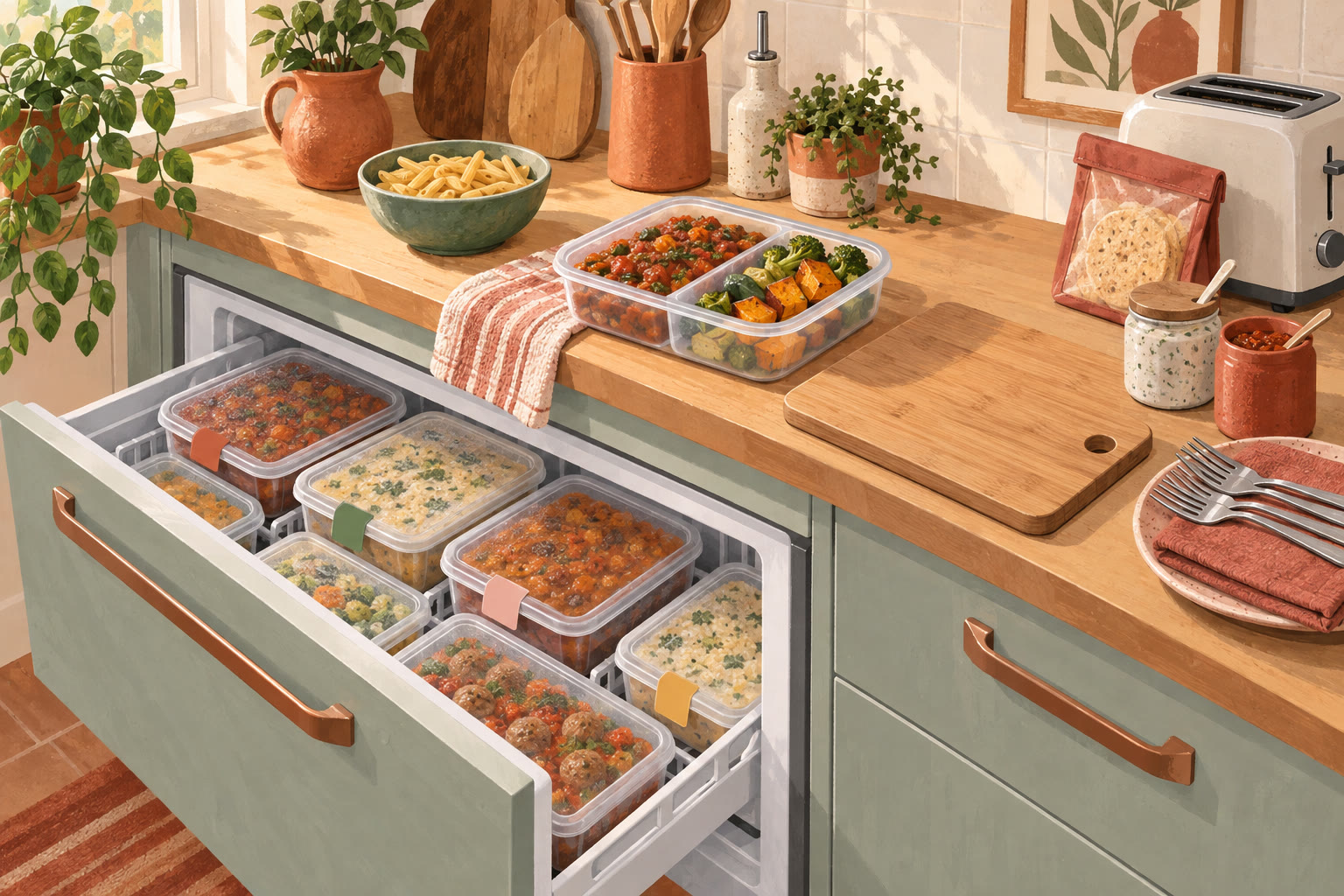
A good freezer plan for gluten-free dinners means choosing two or three familiar dishes you already enjoy, working out what each one needs, and labelling them clearly, rather than filling a drawer with anonymous tubs or relying on one elaborate main course that still needs three things you haven't bought.
You don't need to fill every drawer or turn a weekend into a cooking shift. The aim is to give yourself a few useful options and make it obvious what each one needs.
That means thinking about the whole evening, including how many people need feeding, whether a side dish is required and which preparation instructions you'll need. Here's how I'd put that together without making another household project out of it.
Which gluten-free meals should you freeze?
Before choosing dishes, I’d choose the situations they need to cover. Dinner for one after a late finish is a different job from feeding everyone together. If your household rarely eats at the same time, a large shared portion may be less useful than several individual ones.
Pick two or three familiar gluten-free dishes whose recipes include freezing and preparation instructions. This is a planning exercise, so there’s no need to experiment with a whole new menu at the same time. I’d rather have a short list of appealing options than a freezer full of good intentions.
For each dish, write down whether it makes a complete dinner or needs something alongside it. A portion of sauce might be useful, but it isn’t the whole meal. Put the accompanying gluten-free pasta or other planned side on your shopping list, rather than leaving that decision until dinner.
I’d also think about the effort still required on the day. If your backup dinner involves preparing several fresh ingredients, it may suit a quieter evening better. Give the busiest nights the meals with the simplest remaining steps, following the relevant recipe or packaging instructions.
Start with the space you have available. There’s little point planning several batches before checking what already occupies the drawer. Make a quick inventory of identifiable food first, then plan around the gaps rather than adding duplicates you didn’t know were there.
How do you avoid cross-contamination when freezing gluten-free food?
Freezer planning begins before the food reaches its container. In a kitchen shared with gluten-containing food, I’d include preparation and cleaning in the plan, alongside choosing the dishes. It’s easier to organise those steps beforehand than to work around bread-making or sandwich assembly halfway through.
Coeliac UK’s cross-contamination guidance highlights crumbs as one of several cross-contamination concerns, alongside toasters, chopping boards and shared condiments. It does not rank these concerns by severity.
For gluten-free bread, it advises using toaster bags or a separate toaster. It also suggests separate bread boards to keep gluten-free and gluten-containing bread apart. If bread is part of your dinner preparation, include those arrangements before you begin.
For shared butters, jams and spreads, Coeliac UK advises separate condiments, or at least using clean cutlery to avoid breadcrumbs contaminating them. I’d make that arrangement clear to anyone helping with the cooking, so everyone follows the same approach.
The cleaning advice is practical: wipe down surfaces and clean pots, pans and cooking utensils with hot soapy water. Coeliac UK states that standard washing-up liquid or a dishwasher will remove gluten, and that separate cloths or sponges are not needed.
Keep the identity of each dish clear as you portion it, too. If both gluten-free and gluten-containing meals are being prepared in the household, a label should say which is which. Labelling records what you prepared; it doesn’t replace the care needed during preparation.
How should you label gluten-free freezer meals?
The Food Standards Agency’s freezing guidance says warm dishes should be cooled before being put in the freezer. Dividing food into smaller portions in containers or freezer bags helps it cool more quickly before freezing. Leftovers and homemade food should be frozen as soon as possible. Food can be frozen right up until midnight on the ‘use by’ date printed on the label.
I’d decide the portion sizes before cooking, based on who will eat them. If you need separate dinners on different evenings, plan separate portions. If a dish is intended for a shared meal, label the number of portions so you aren’t trying to judge it through the container later.
A useful label gives you the dish name, the date frozen, the portion count and its gluten-free identity. Add any essential preparation details from the recipe or packaging, or keep those instructions somewhere you can easily find them. “Dinner” is technically a description, but it leaves rather a lot unresolved.
I’d include the missing part of the meal on the label or freezer list as well. “Needs gluten-free pasta” is a small note that makes the next shopping list easier. Keep any relevant original packaging instructions available rather than relying on memory once the packaging has gone.
Give each frozen dinner a place in the week
I’d keep a simple freezer list with the dish names and portions available, then cross portions off when they’re used. Paper or a phone note is enough. The useful part is being able to check it before shopping without unpacking the freezer.
When planning the week, give one of those dinners an actual evening. Check its defrosting and cooking instructions in advance so the plan allows for whatever preparation it needs. A frozen meal is only convenient when its instructions fit the time you have.
Afterwards, consider whether that dinner earned its space. Was the portion right? Did you have its side dish? Were there more steps than you wanted? Adjust the next batch around those answers. I’d start with one familiar gluten-free dinner, clear labels and a place for it in next week’s plan. That’s a useful beginning.
Nora is our brand character. Health information is sourced separately and should support conversations with your care team, not replace them.