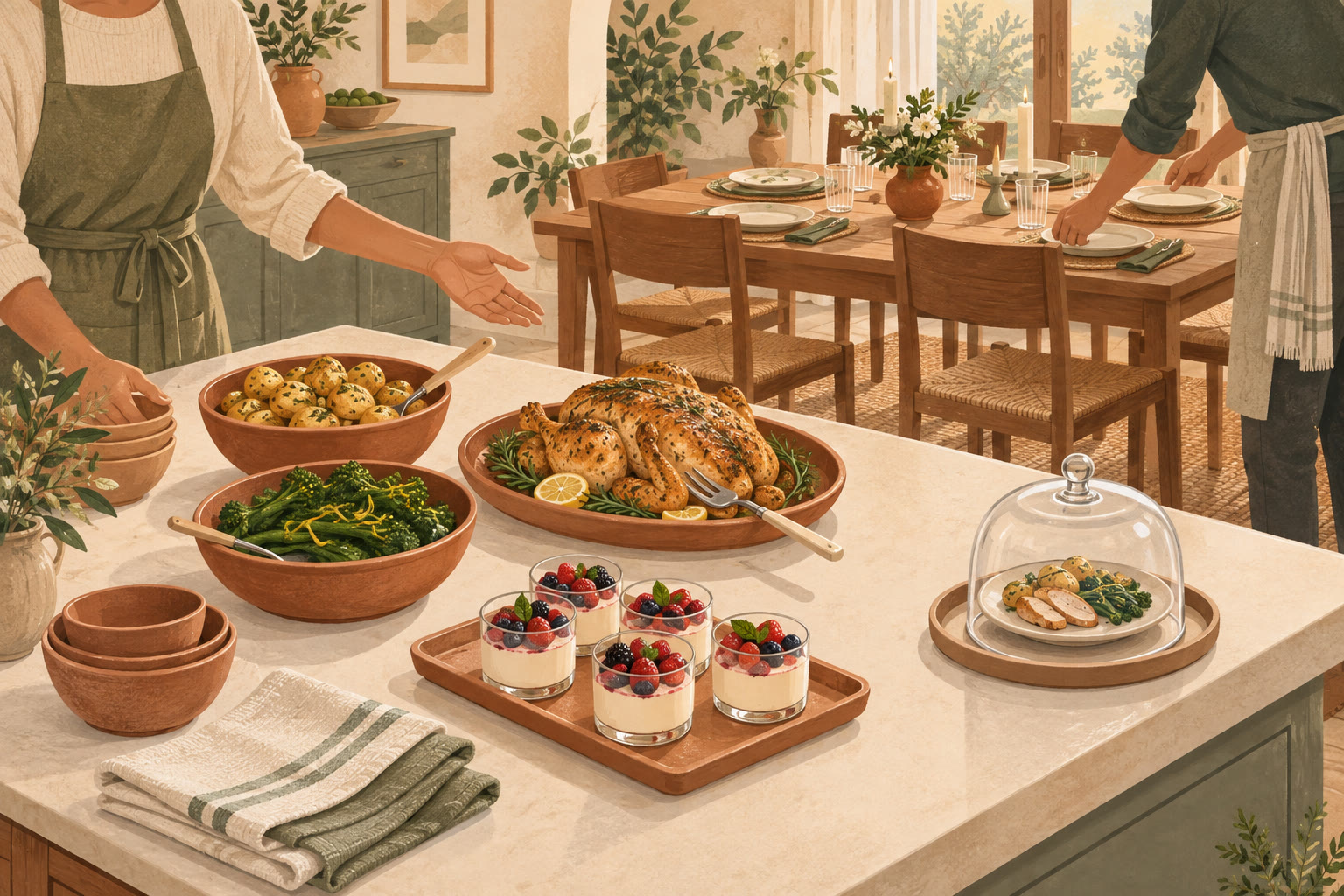
Planning a gluten-free family gathering means agreeing the menu, the ingredient checking and the kitchen arrangements with your guest before you shop, while there's still time to make changes. From there, build a simple menu around naturally gluten-free food, check every label and addition at the table, and keep the kitchen and serving arrangements organised so nothing gets mixed up.
There's usually room in the plan for generosity too, though an unidentified casserole needs rather more discussion. You don't need an enormous menu to make someone feel welcome; I'd put the effort into a manageable spread, clear ingredient information and a pudding that's part of the plan from the beginning.
What should you ask a gluten-free guest before planning the menu?
I’d speak privately to the guest, or the parent or carer responsible for a child’s food, before shopping. Ask about their gluten-free requirements, any other dietary needs and what they need you to know about preparation and serving. Don’t assume that knowing one person’s preferences means you know another’s.
A useful message would be: “I’m planning the food and would like to get it right. Can we talk through the ingredients and how I’ll prepare and serve everything?” That offers something concrete to discuss, without asking the guest to design the whole gathering.
If they prefer to bring some or all of their own food, I’d make that easy. Agree what fridge space, reheating arrangements and utensils they’ll need. Hospitality includes listening when someone tells you what they’re comfortable eating.
This is also when I’d settle contributions from the wider family. “Bring anything” leaves too much unresolved. Instead, give willing helpers a specific item agreed with the guest, and ask them to keep the packaging or provide the complete ingredients. A homemade dish needs a conversation about preparation as well as what went into it.
I’d keep those details in one place. A short note with the menu, agreed products and who’s bringing what is easier to follow than a family message thread that has wandered off into parking arrangements.
What should you cook for a gluten-free family gathering?
The tempting approach is to plan the usual feast and then find a gluten-free replacement for every part of it. I’d start with the meal itself instead: one main dish, a couple of sides and a dessert, all planned to be gluten-free.
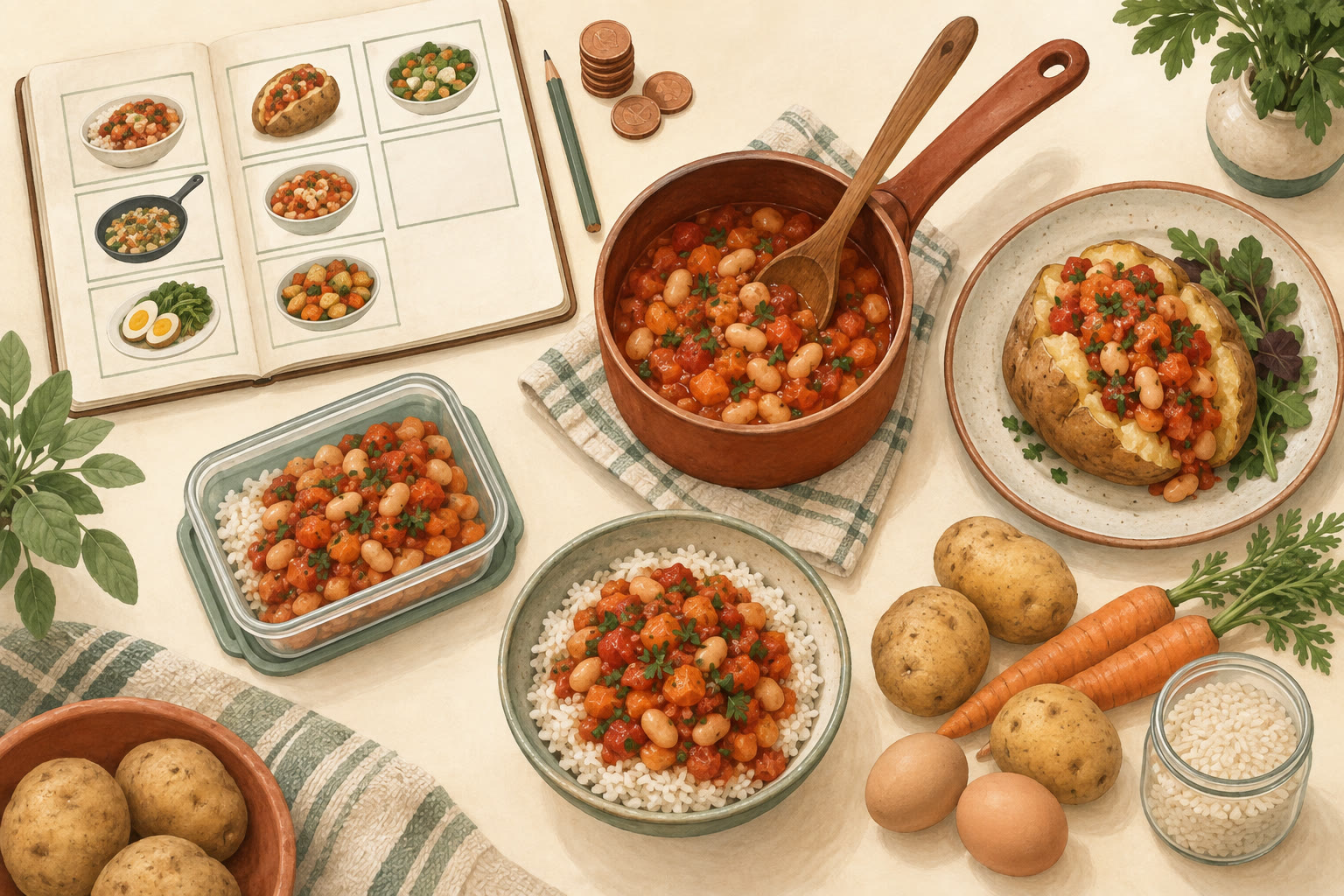
For example, I might build the menu around plain roast chicken or a bean and vegetable dish, with potatoes and vegetables alongside. Those are starting ideas, not a promise about a finished plate. Every added ingredient, seasoning, sauce and accompaniment still needs checking.
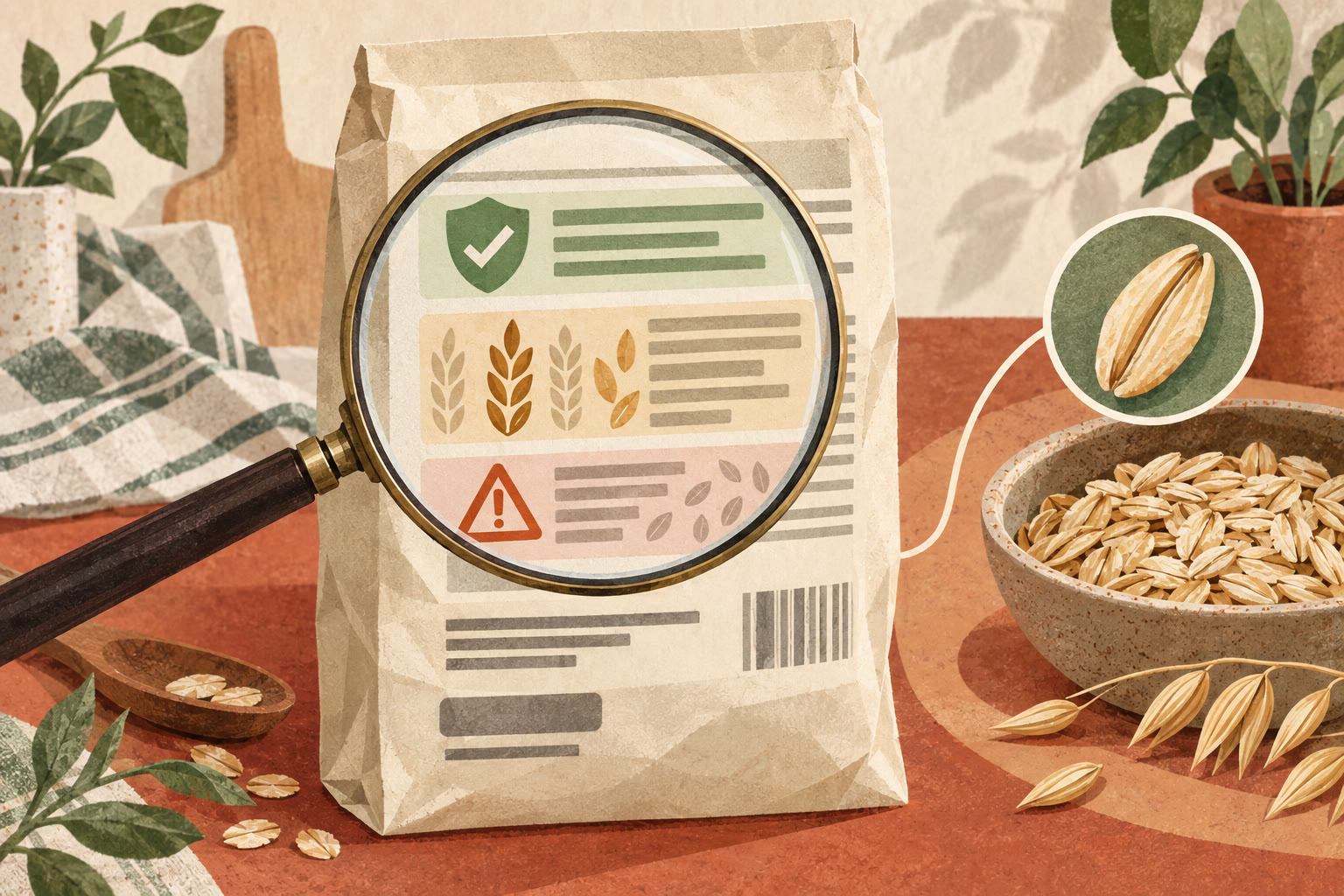
I wouldn’t guess about stock, gravy, marinades or dressings from the name on the front of a packet. Read the full current label, including allergen and precautionary information, and resolve anything unclear before using it. Keep the packaging available so your guest can see it too.
The misconception I’d gently push back on is that buying gluten-free bread sorts out the whole meal. Bread is only one part of the menu. The cooking ingredients, serving arrangements and things people add at the table need attention as well.
Dessert deserves the same thought. I’d rather offer a simple, agreed gluten-free pudding to everyone than unveil something elaborate and then hunt for a lonely piece of fruit. Check toppings and accompaniments along with the pudding itself.
Before committing to anything, I’d read through the preparation involved. Three dishes needing your full attention at the same moment can turn a perfectly sensible menu into a rather breathless afternoon. Choose a spread you have the time, equipment and space to manage.
How do you avoid cross-contamination at a family gathering?
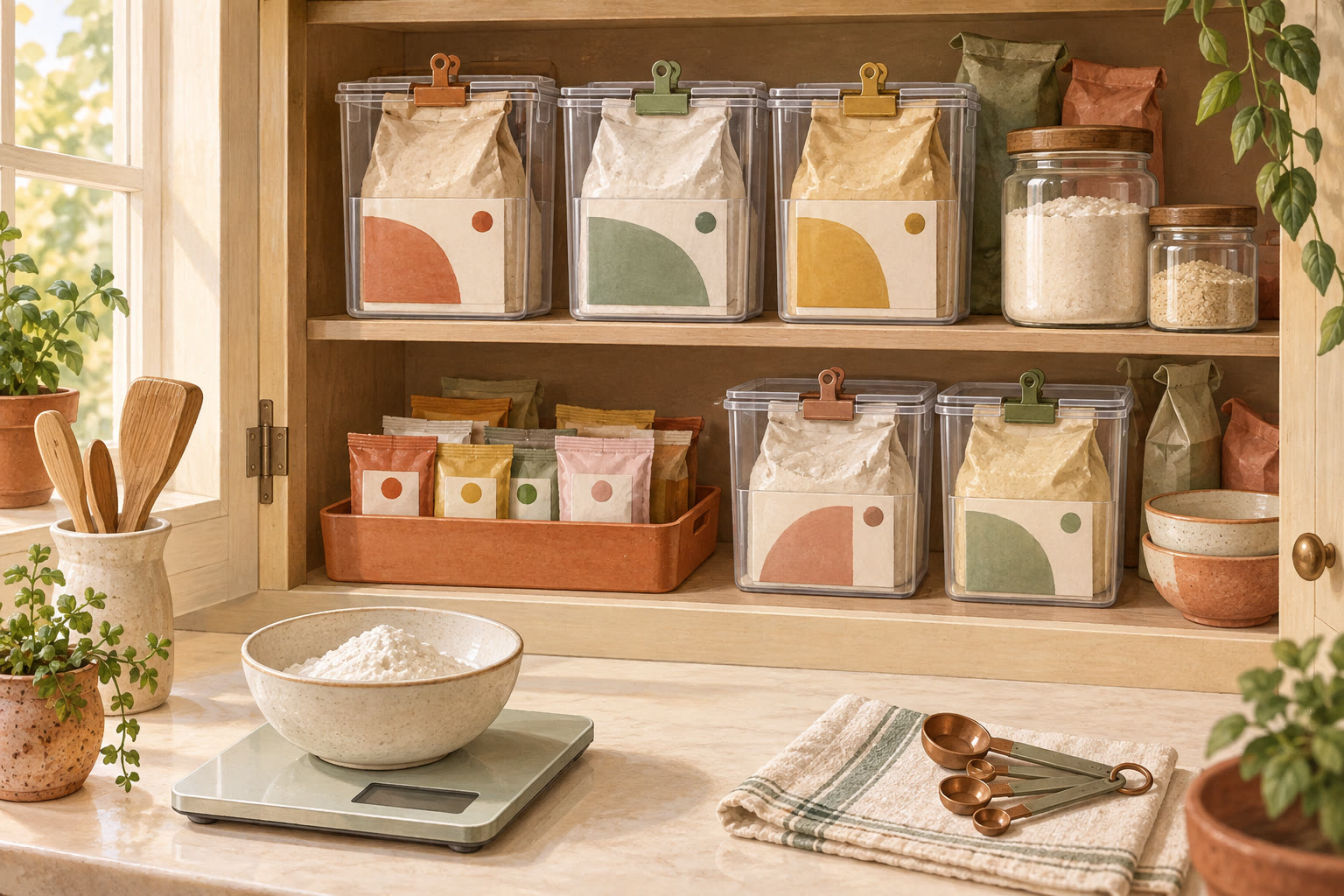
A gluten-free menu still needs careful handling. I’d talk through the kitchen set-up with the guest in advance, including clean preparation surfaces, clean equipment and keeping gluten-free food away from crumbs and gluten-containing food.
Then I’d make the practical arrangements obvious to anyone helping. Give each dish its own serving utensil, keep ingredient packaging together and decide where finished food will wait. A helper should be able to understand the plan without interrupting you every thirty seconds.
If I needed extra bowls for organising ingredients, I’d consider a Set of nesting mixing bowls. They’re useful for keeping prepared components separate and taking up less cupboard space when put away. They still need thorough cleaning, just like the equipment already in the kitchen.
If gluten-containing food will also be served, agree how it will be kept separate during preparation and at the table. I wouldn’t leave shared bread baskets, spreads or wandering serving spoons to chance. Labels can identify dishes, but they don’t prevent someone moving a utensil between them.
For a busy gathering, I’d offer to set aside an agreed portion before shared serving begins. Check that this suits your guest and keep their food protected. It’s much easier to organise beforehand than once everyone is passing bowls across the table.
Leave less to explain when everyone arrives
Before the doorbell starts, I’d check that the menu still matches the plan. Has someone substituted an ingredient? Has an unexpected dish arrived? Keep anything uncertain aside until it has been checked, rather than folding it into the agreed spread.
When the guest arrives, give them a quiet, clear explanation of the food and where the ingredient information is. They shouldn’t have to ask the whole room for permission to check a packet.
I’d also make sure anyone helping with children understands which food and utensils are for whom. That conversation belongs with the responsible adults, without turning a child’s meal into an announcement.
My final check would be ordinary hosting business: enough chairs, drinks within reach and a place for the coats. The food arrangements deserve care, but the person deserves a welcome beyond their dietary needs. Start with that early conversation, write down the agreed meal, and give yourself a plan you can comfortably follow.
#ad. This post contains Amazon affiliate links. As an Amazon Associate I earn from qualifying purchases.
Nora is our brand character. Health information is sourced separately and should support conversations with your care team, not replace them.