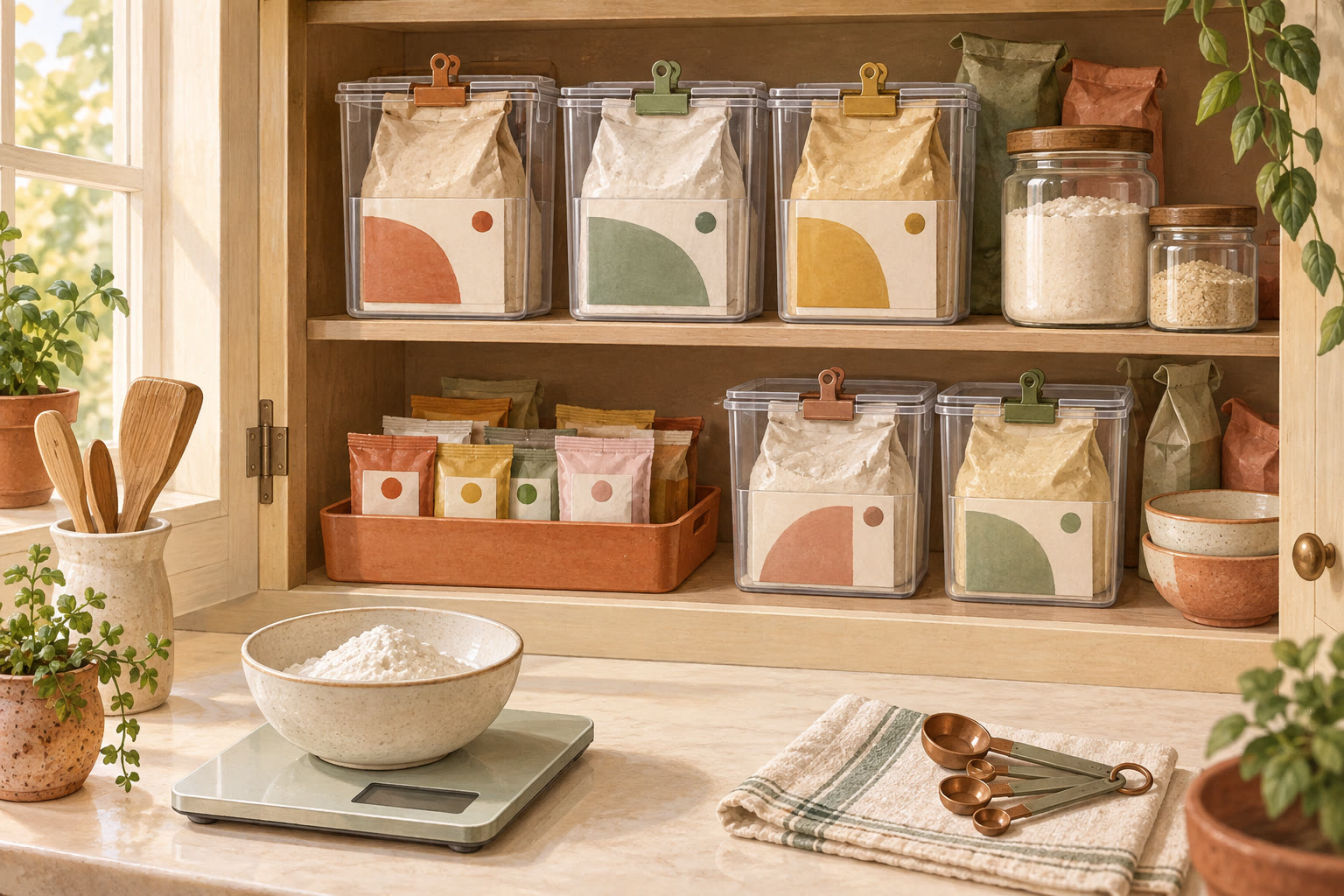
Keeping gluten-free baking ingredients organised starts with sorting what's already in the cupboard: read every label, group identical flours and blends together, and keep each packet's dates, storage instructions and allergen information attached to it. From there, either keep ingredients in their original packaging or decant them into containers that still carry the name, brand and dates from the label.
You don’t need to replace everything to get organised. I’d start with the ingredients you already have and give them a clear, manageable arrangement. Here’s how I’d approach it, whether you have a whole cupboard or one shelf doing a heroic amount of work.
1. How do you organise a gluten-free baking cupboard?
Start with one shelf or drawer, rather than emptying the entire kitchen. Put the ingredients somewhere clean and dry, keeping their packets with them. The aim is to finish a small job without turning the worktop into a flour-based obstacle course.
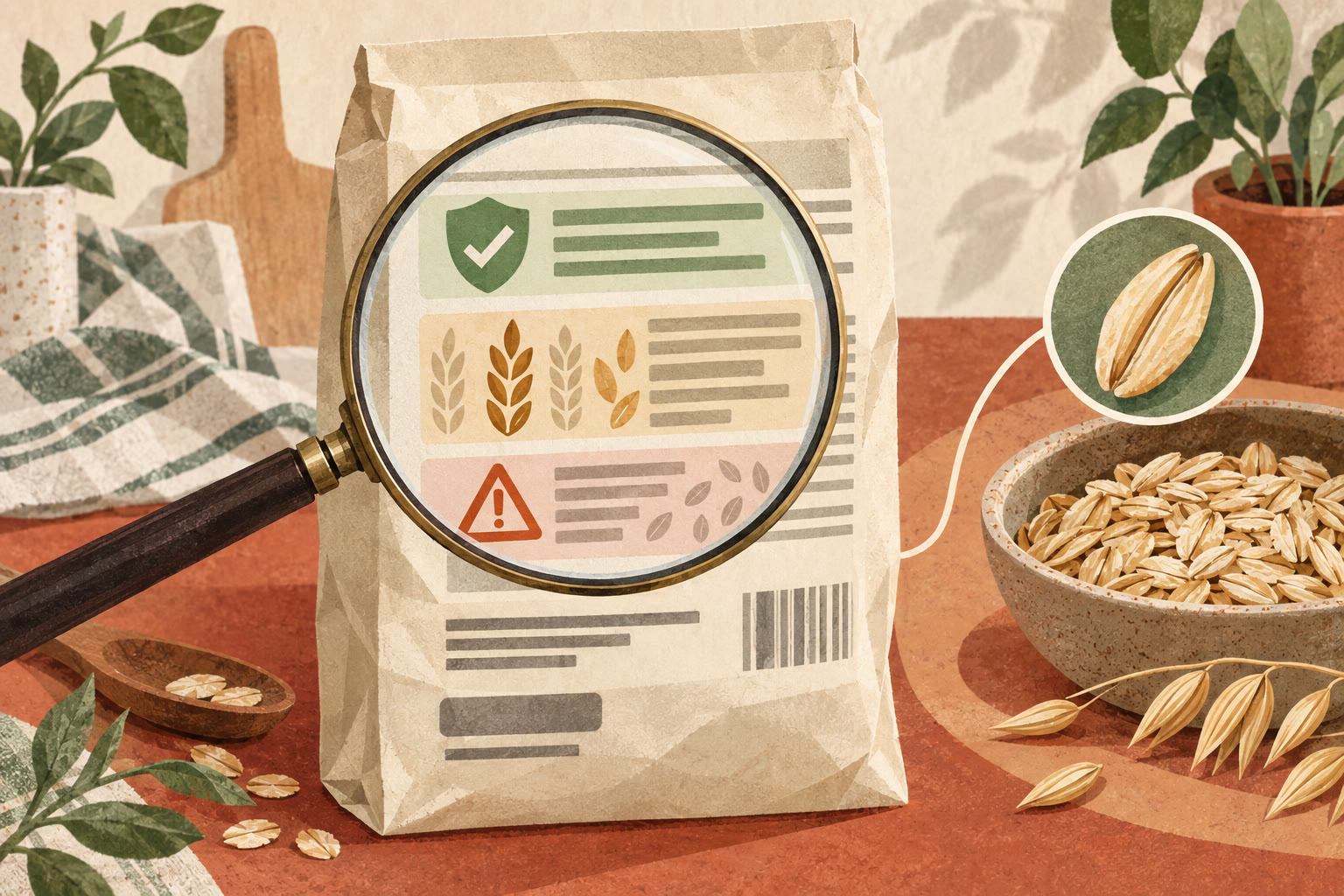
Read each label and group identical products together. Gluten-free plain flour, self-raising flour and bread flour blends deserve separate places. I’d keep different brands or blends distinguishable too, so a recipe’s ingredient list can be matched to the right packet.
This is also the moment to check the packaging for dates, storage instructions and any directions that apply after opening. Follow the product’s own guidance rather than giving every ingredient the same treatment. If something has lost its identifying information, don’t give it a confident new label based on appearance.
Make a short list of duplicates and ingredients you’d like to use soon. “Open plain flour” is more useful than a vague intention to bake more. You can look for a suitable recipe before another bag ends up in the shopping basket.
I’d keep that list small enough to read at a glance. An elaborate inventory that needs updating after every spoonful is another household task waiting to be abandoned.
2. How do you label gluten-free baking ingredients?
Decanting is optional. An original packet, properly closed and placed inside a suitable lidded container, can be easier to manage than transferring everything. It also keeps the ingredient list, allergen information and manufacturer’s instructions close at hand.
If you prefer to decant, use clean, dry containers intended for food and retain the original packaging information. A handwritten name on the front is useful, but it doesn’t replace everything printed on the bag.
I’d make the everyday label specific: “gluten-free self-raising flour” rather than “baking flour”, for example. Add the brand or blend name if you have several, along with the relevant date from the packet. An opening date can help you follow any instructions about use after opening.
Keep the full packet label with the container, or in an accessible folder with a clear matching reference. The important part is being able to connect the ingredient to its information without guessing. Check new packets as they arrive, rather than assuming a familiar name means the details are unchanged.
I’d also finish one batch before refilling its container. Constantly tipping a fresh bag over an older one makes it harder to keep track of dates and packet details. Once empty, clean and dry the container before using it again.
Choose label positions that suit the cupboard. If you look down into a drawer, put the name on the lid. If the container sits on a shelf, put it on the front. No one should need to lift out six tubs to locate the cornflour.
3. Where should you store gluten-free flour and baking ingredients?
Arrange ingredients around how you bake. I’d put the most frequently used flour blends in the easiest place to reach, with smaller baking ingredients together in a shallow tray. Spare unopened packets can sit behind their open equivalents, where the cupboard allows.
Small packets are the ones I’d give particular attention. A clearly labelled pot or tray can keep them upright and visible, rather than allowing them to disappear between larger bags. Leave enough room to read the names without unpacking the whole collection.
In a shared kitchen, clearly mark the gluten-free baking area and keep its ingredients closed and separate from gluten-containing ingredients. Make the arrangement understandable to everyone who puts shopping away or uses the cupboard. A colour sticker can help people find the right area, but keep the written product names visible too.
Keep measuring equipment clean, and avoid returning a used spoon to an ingredient packet. An organised shelf is useful only if the everyday handling makes sense as well.
Before starting a recipe, check that you have enough of each ingredient. A Digital kitchen scale for precise flour weighing lets you weigh the flour you have available rather than judging the amount through the side of a bag. It’s a practical check before committing the other ingredients.
4. Make the reset small enough to repeat
I’d build the upkeep around two moments: putting shopping away and finishing a bake. Neither needs to become a full cupboard inspection.
When shopping arrives, check the new packets, put duplicates behind the ones already open and add anything missing to your shopping list. After baking, close everything properly, return it to its place and note ingredients that are running low.
A small “use next” area can help, provided the products still meet their packet guidance. Treat it as a prompt for choosing your next bake, rather than a reason to squeeze an unsuitable ingredient into a recipe.
If the system starts feeling fiddly, simplify it. Fewer categories, clearer labels and a little space between packets are all sensible adjustments. The cupboard needs to work when you’re tired and putting things away, as well as when you’ve just arranged it.
I’d start today with the flour: identify each bag, keep its information attached and bring the open packets into view. That’s a useful improvement already, and you can leave the matching jars for another day.
#ad. This post contains Amazon affiliate links. As an Amazon Associate I earn from qualifying purchases.
Nora is our brand character. Health information is sourced separately and should support conversations with your care team, not replace them.