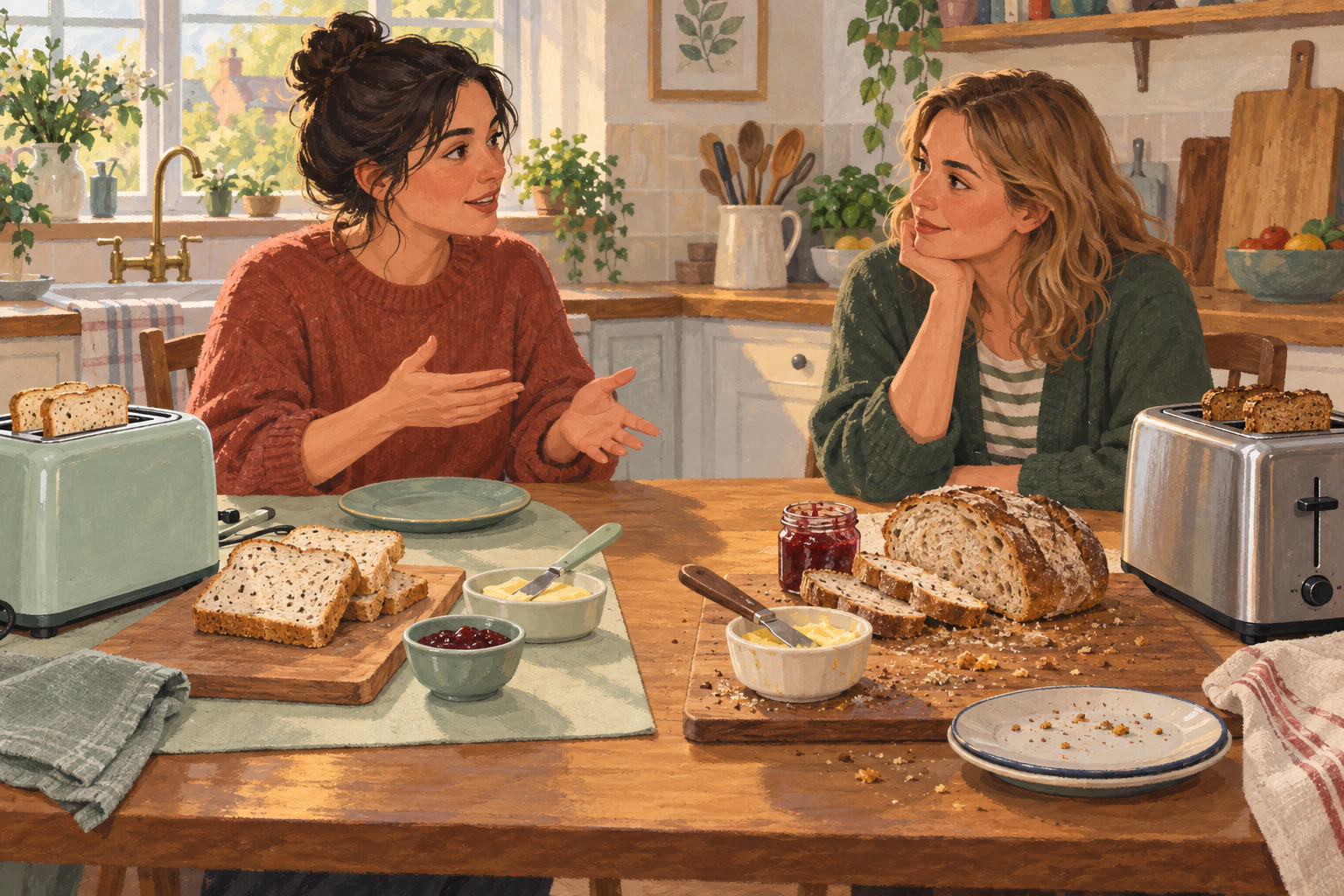
Tell your friend before the day, in a private message: say plainly that you have coeliac disease and need gluten-free food every time, then ask to talk through the menu and kitchen details, such as boards, toasters and shared spreads, before they plan the meal.
I want there to be room in that message for both things: being pleased to see your friends and being clear about what you need to eat. You shouldn't have to choose between sounding grateful and asking a question about the food.
I'd keep the conversation warm, specific and early. You don't need a perfect speech, just a few words that explain the requirement, followed by a plan you can both understand.
What should I say to a friend about having coeliac disease?
The starting point is the dietary guidance itself. The NHS guidance on coeliac disease treatment states that coeliac disease requires a lifelong gluten-free diet. Eating gluten causes symptoms and long-term damage to the gut, and even a small amount can cause unpleasant intestinal symptoms.
That's the reason to be clear with a friend. Gluten-free eating isn't something to put aside because somebody has made an effort with dinner. I wouldn't open with a long explanation of every possible complication, though. A short statement gives the conversation somewhere useful to begin.
You could say: “I'd love to come. I have coeliac disease, so I need to eat gluten-free all the time. Could we talk through the food before you plan everything?”
These are suggested words to adapt, rather than a script you have to perform. If your friend already knows about coeliac disease, you can skip the introduction and go straight to what needs arranging.
I'd also swap “Sorry to be difficult” for “Thanks for checking with me”. The first makes your needs sound like an inconvenience you've caused. The second recognises something helpful your friend is doing, without suggesting that the requirement is negotiable.
A private message before the day gives you both space to ask questions. It also means you aren't trying to explain everything while other people are waiting for their plates.
How do I explain cross-contamination to a friend cooking for me?
“Gluten-free” needs a little explanation beyond the ingredients. Coeliac UK's cross-contamination guidance explains that gluten-containing food can come into contact with gluten-free food through shared surfaces, pans, utensils, condiments and toasters.
I would translate that into ordinary kitchen questions, rather than leave your friend guessing what “cross-contamination” means. You might say: “Thanks for sorting the gluten-free bread. Could we check the board, toaster and butter as well? Crumbs from ordinary bread matter too.”
Coeliac UK recommends separate bread boards and either a toaster bag or a dedicated toaster for gluten-free bread. It also explains that shared butter, jam and spreads can pick up crumbs, so clean cutlery or separate products are needed to avoid contaminating them.
Those examples explain why “I'll just take the bread off” doesn't meet the need. Removing the bread doesn't address crumbs it may have left, or contact that has already happened through a bread board, toaster or shared spread.
A possible reply is: “Thank you for trying to sort it. Taking the bread off doesn't resolve the contact with gluten. Can we work out another option?”
There is useful reassurance in the guidance, too. Coeliac UK says that washing pots, pans and utensils properly with hot soapy water or in a dishwasher removes gluten. I would include that detail so the discussion doesn't become an assumption that every piece of kitchen equipment needs replacing.
You can share the guidance with a simple note: “This explains the kitchen details better than I can in a text.” That gives your friend something concrete to refer to, and you don't have to become the author of a food-safety manual before Saturday.
Agree a plan that leaves room for the friendship
Once you've explained the need, I'd move towards an arrangement. Otherwise, a well-meant conversation can end with “Don't worry, it'll be fine”, while neither of you knows what has actually been agreed.
Try: “Could you tell me what you're planning to make, and we can talk through the ingredients and preparation?” That gives your friend a clear next step. It also leaves room for them to say honestly if hosting food feels beyond what they can manage.
If you'd prefer to bring your own meal, you can suggest it without wrapping the offer in apologies: “I'd still really like to come. Would it work if I brought my food and we agreed how to handle it in the kitchen?”
Bringing food shouldn't have to be your automatic answer to every invitation. It's one possible arrangement, and the handling still needs discussing. Equally, you don't have to accept somebody else's cooking to demonstrate that you trust or appreciate them.
I like making space for plans that don't centre on a meal, too. A walk or an afternoon catching up can be the whole invitation. You can say: “Shall we make this one a walk instead? I'd love some proper time to chat.”
The point is to agree something specific, rather than leave either person quietly worrying about what will happen.
What do I say if a friend says a little gluten won't hurt?
If a friend says “Surely a little won't hurt”, I'd return to the guidance without getting pulled into a debate: “The NHS guidance is lifelong gluten-free eating, and even small amounts can cause symptoms. I can't make an exception for this meal.”
If they've already cooked, you can acknowledge their effort while declining: “I can see you've put thought into this, and I appreciate it. I can't eat it with those preparation questions unresolved.” Gratitude doesn't require you to say yes.
You also don't owe the table a detailed account of your symptoms. “I'd rather keep the health details private, but I'm happy to explain what I need around food” is enough.
Before your next invitation, I'd save one opening message and one boundary sentence in your phone. Give yourself words you can reach for when you're tired of explaining. Then leave some room in the evening for the reason you wanted to go: spending time with your friend.
Nora is our brand character. Health information is sourced separately and should support conversations with your care team, not replace them.