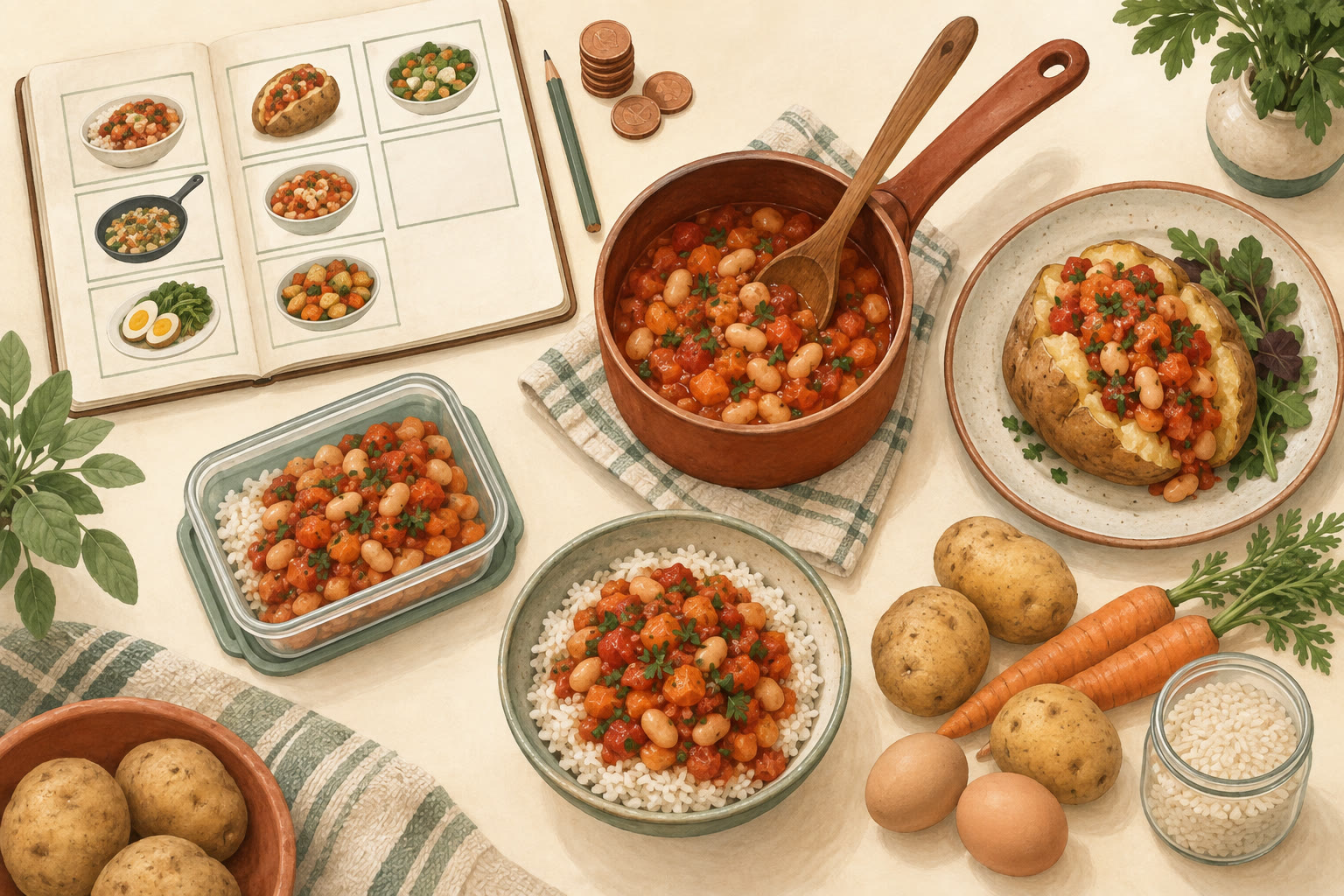
Budgeting for gluten-free everyday meals means building the week around a handful of dinners you already trust, rather than assuming every meal needs a specialist replacement product or a from-scratch project. A good starting point is three dinners you like, one easy fallback and a clear plan for lunches, then choosing ingredients that can do more than one job across the week.
A jacket potato with a filling you enjoy is dinner in its own right, without having to imitate anything.
Here's how I'd build a budget around that sort of everyday food, while leaving space for the convenience that makes a plan manageable.
How do you plan gluten-free meals on a budget?
Before writing a shopping list, I’d look at the diary and the food already in the kitchen. Those two things belong together. A bag of potatoes is useful; a plan to spend an hour cooking them on your busiest evening is less convincing.
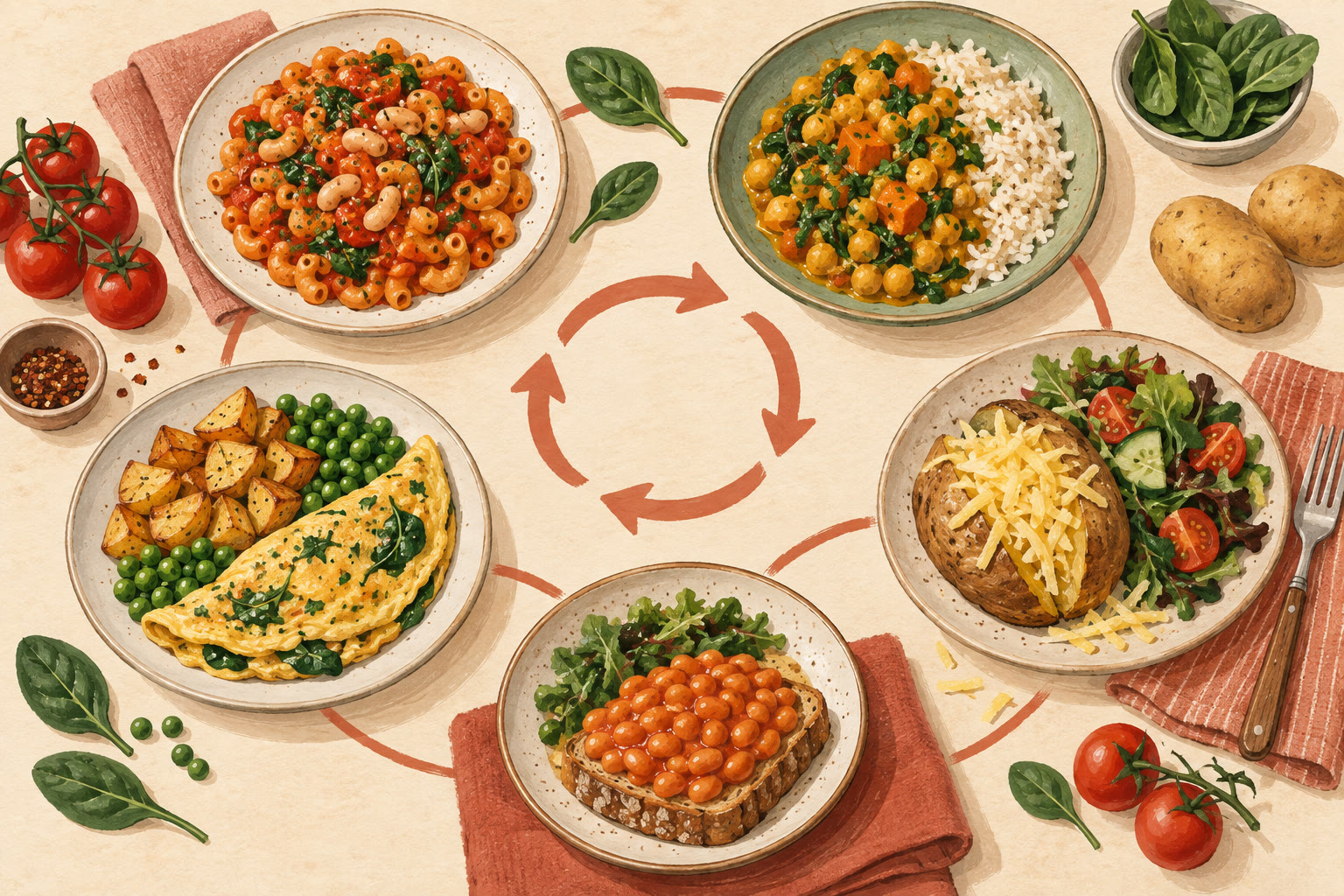
Choose a few familiar dinners and give each one a place. You might plan a potato meal, a rice dish, an egg-based dinner and a gluten-free pasta meal. These are starting points, so you can change the vegetables or protein without rewriting the whole week.
I’d also leave one evening flexible. That could mean using ingredients left from earlier meals, or having a simple cupboard dinner ready. A meal plan with every square filled can leave you buying more food while perfectly useful ingredients wait for their turn.
Include breakfast and lunch before calling the list finished. It’s easy to organise five dinners beautifully and then realise there’s nothing convenient for midday. If you want a dinner to provide another portion, plan the quantities for it rather than hoping something will be left.
My starting point would be three dinners you already like, one easy fallback and a clear plan for lunches.
Give ingredients more than one job
I’d look for overlap in the shopping list without making every dinner taste the same. Potatoes could become jackets on one evening and wedges alongside an omelette on another. Carrots might go into a tomato sauce and also provide something crunchy with lunch.
The useful question is: what happens to the rest of the packet? If a meal needs a small amount of an ingredient, give the remainder a job before buying it. Otherwise, a recipe that looks modest can leave behind several half-used extras.
For example, I’d consider a simple tomato and bean base, using ingredients suitable for your gluten-free diet. One meal could pair it with rice; another could use it as a jacket potato filling. Different accompaniments can give the same base a different place on the plate.
Frozen vegetables are another option to weigh up, especially when you only want a little at a time. Fresh, frozen and tinned ingredients can all have a place. I’d choose according to the meals planned, the space available and what will actually get eaten.
That applies to packet size too. Compare the unit prices shown on the shelf, then ask whether the larger pack is realistic for your household. A lower unit price doesn’t help your weekly budget if buying it leaves too little for the rest of the list.
Before paying, I’d check that each fresh ingredient has a meal attached to it.
Which gluten-free products are worth buying?
I wouldn’t tell you to abandon the bread you enjoy or make your own pasta to prove you’re budgeting properly. Familiar food and quick meals deserve space in the plan. The aim is to choose deliberately, without turning every shop into a project.
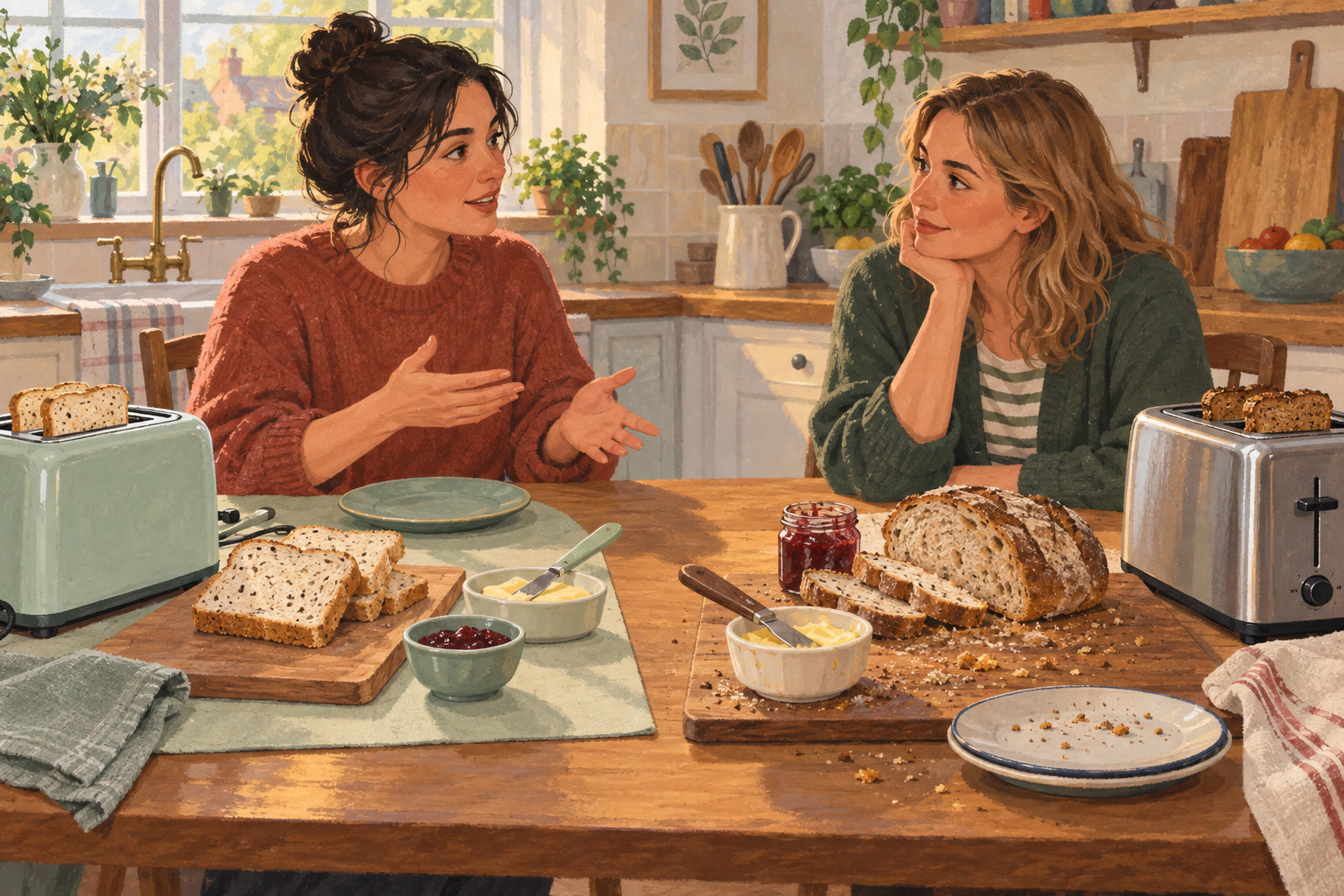
If toast is the breakfast you can manage before work, include it. If gluten-free pasta makes a reliable evening meal, give it a regular place. I’d be more cautious about buying several unfamiliar alternatives at once, particularly if nobody has decided when to eat them.
A short cupboard list can help here. Write down what you use regularly, then check what remains before shopping. An ingredient isn’t a staple just because a recipe says every kitchen should have it.
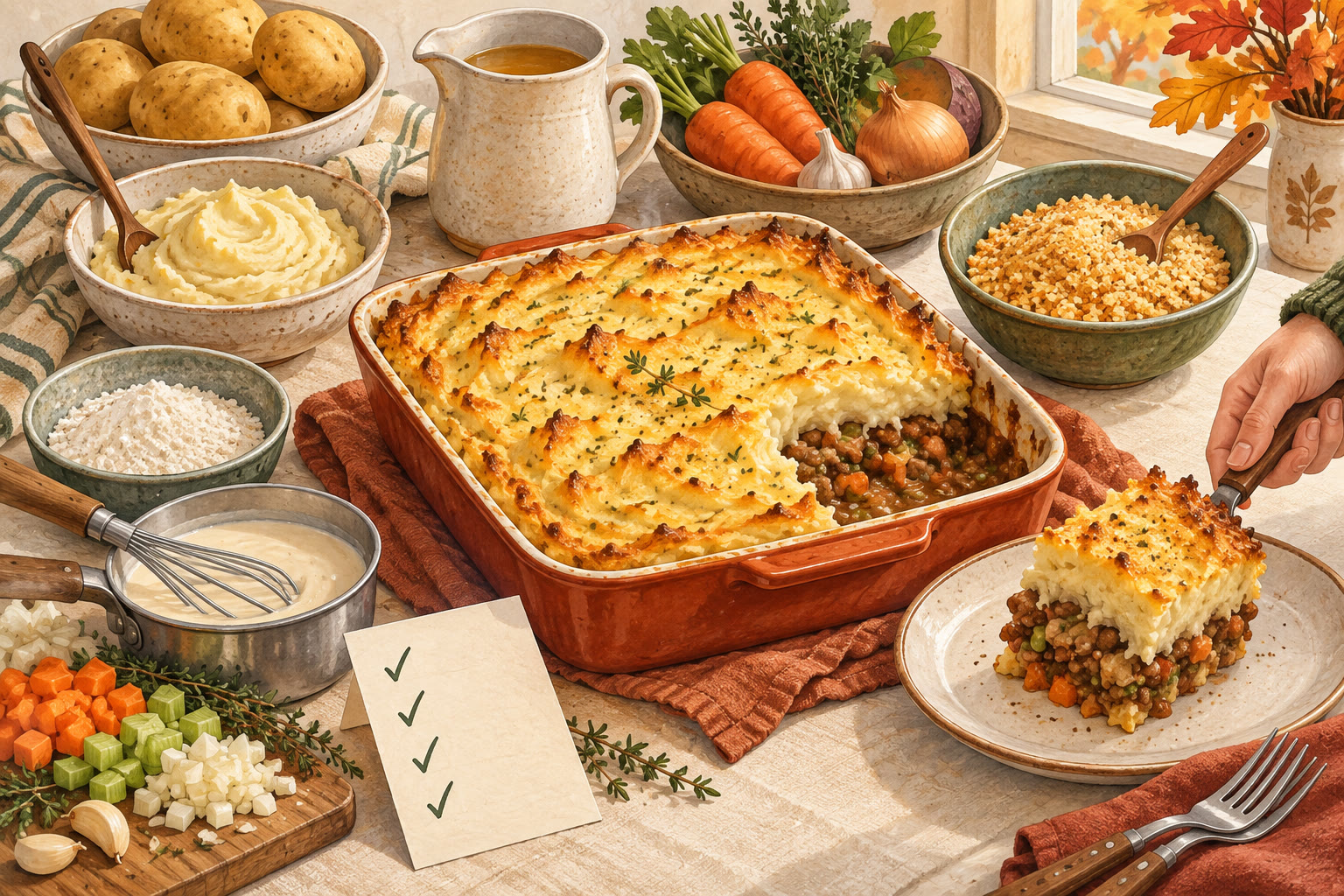
If flour regularly features in your meals, Gluten-free plain flour for everyday cooking is the sort of ingredient I’d consider for recipes that specifically call for it. Give it a purpose, such as a planned pancake meal, rather than buying another bag because gluten-free cooking seems to require one.
I’d keep the same rule for equipment: a budget meal plan shouldn’t arrive with its own shopping list of gadgets. Start with the pans and utensils you have, and choose meals that suit them.
What's an easy gluten-free meal for a tired evening?
A plan that depends on enthusiasm every evening asks quite a lot of a person. I’d reserve some of the food budget for a gluten-free fallback you can prepare with very little thought.
That might be eggs and potatoes, or gluten-free pasta with a suitable ready-made sauce. Choose something you genuinely want to eat. An emergency dinner nobody fancies has a habit of remaining an emergency dinner indefinitely.
Keep ingredient checks part of shopping, including when comparing a cheaper alternative or choosing a sauce, stock or seasoning. Budgeting shouldn’t depend on guessing whether a product is suitable for your gluten-free needs.
After the week, I’d make three quick notes: what you enjoyed, what went unused and which evening needed an easier meal. Those answers are more useful for the next list than an ambitious menu borrowed from somebody else’s life.
For your next shop, start with one small change: give an ingredient you already have a place in dinner. Then build the list around a few meals you trust. That’s a manageable beginning, and it doesn’t require becoming a different person by Monday.
#ad. This post contains Amazon affiliate links. As an Amazon Associate I earn from qualifying purchases.
Nora is our brand character. Health information is sourced separately and should support conversations with your care team, not replace them.