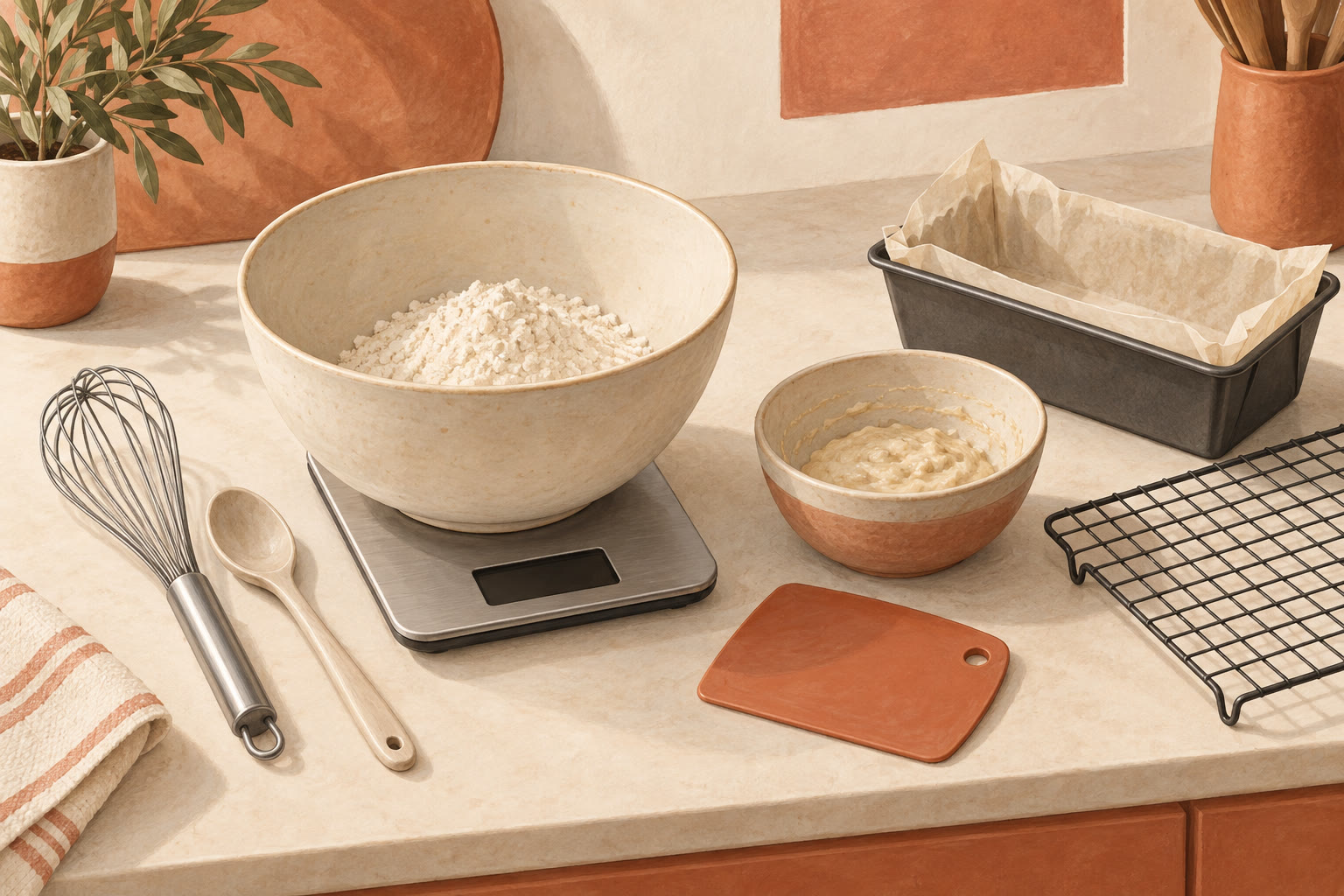
The basic gluten-free baking kit is short: digital scales, a mixing bowl, a whisk, a scraper, the tin your recipe specifies, and a wire cooling rack. Everything else, from proving baskets to stand mixers, is worth adding only once a recipe actually calls for it.
A cupboard full of specialist kit isn't a requirement for getting started. Equally, buying something because it says "bread" on the box doesn't tell you whether it suits the gluten-free loaf you have in mind.
Here's how I'd put together a useful kit, with room to add things when there's a reason for them.
What kitchen scales do you need for gluten-free baking?
Digital scales would be my first purchase if there weren’t already a suitable set in the kitchen. When a recipe gives flour in grams, scales let you follow that measurement directly. I’d look for a clear display, a grams setting and a zero function so you can weigh ingredients into a bowl.
The Digital kitchen scale for precise flour weighing is the one I’d consider here. Before choosing, I’d check that its weighing capacity includes the bowl as well as the ingredients. I’d also want to see the display with a large bowl sitting on top, without having to crouch beside the worktop.
A mixing bowl, spoon, whisk and flexible scraper make a sensible next group. Existing equipment may already cover this. If you’re choosing bowls, think about the largest mixture you’re likely to make and leave room to stir without sending flour over the rim.
For scraping batter from a bowl or moving a sticky mixture, I’d consider the Silicone dough scraper for wet gluten-free dough. Check the shape before buying: a hand-held scraper and a long-handled spatula do slightly different jobs. Choose the one that answers the task you keep struggling with.
I’d leave a sieve, extra measuring gadgets and matching utensil sets until a recipe calls for them. It’s very easy to buy six versions of “might come in handy”.
What tin do you need for gluten-free bread?
I’d choose my first few recipes before choosing tins. A loaf tin, round cake tin and flat baking tray aren’t interchangeable simply because the mixture fits inside. The recipe’s specified dimensions are the useful starting point.
For a loaf, check the tin’s measurements against the recipe rather than relying only on a capacity label such as “2lb”. If the recipe gives dimensions, compare those with the product details. That’s a more helpful shopping check than deciding a tin looks about right in a photograph.
A Loose-base loaf tin for gluten-free bread is worth considering when that construction suits your chosen recipe. I’d check how the base fits, the lining instructions and whether the manufacturer gives any restrictions on the mixtures it can hold. A removable base is a feature to assess, rather than a reason to buy on its own.
I’d also look closely at cleaning instructions and corners where mixture could collect. A tin that’s awkward to clean is likely to become the one you leave at the back of the cupboard.
A Wire cooling rack for bread and bakes would come before decorative tins on my list. Check that it can support your usual loaf or cake and that you have somewhere to put it. Follow the recipe’s instructions about when to remove the bake from its tin and how long to leave it cooling.
Do you need a stand mixer for gluten-free baking?
I wouldn’t buy a stand mixer just because gluten-free bread is on the menu. First, read the method. Does it ask for hand mixing, electric beaters or a particular mixer attachment? Gluten-free recipes vary, and a dough hook isn’t automatically the right tool for every mixture called dough.
If several recipes you want to repeat call for a mixer, then it becomes a more useful purchase to consider. I’d check the supplied attachments, bowl capacity, cleaning instructions and storage space. Think about whether you’ll be lifting it out for every bake or leaving it on the worktop.
The same recipe-first approach applies to proving baskets, bread lames, baking stones and Dutch ovens. Before buying any of them, I’d want to point to the step where I’ll use it. A loaf baked in a tin doesn’t create an automatic need for a basket and scoring blade.
An oven thermometer is another possible addition. If you want to compare the oven’s temperature with its dial setting, the Oven thermometer to check real oven temperature fits that job. Follow its positioning instructions, and don’t expect it to explain every disappointing bake. Ingredients, tin choice and method still deserve attention.
Plan for cleaning and cupboard space
In a kitchen where wheat flour is also used, I’d make cleaning and storage part of the equipment decision. Look at seams, mesh, handles and removable parts before buying. Can you reach the places where flour or crumbs collect, and do the cleaning instructions suit your kitchen?
If you’re baking for someone with coeliac disease, equipment choices also need to fit their cross-contamination precautions. A product’s “gluten-free” setting or baking label doesn’t answer questions about previous use or cleaning. This shopping guide isn’t a substitute for specific coeliac kitchen guidance.
My starting list would stay short: scales, a suitable bowl, basic mixing tools, the tin named in the recipe and a cooling rack. Check what you already have, choose one bake you’d like to make, then fill the actual gaps. I’d much rather give one useful tin cupboard space than buy a whole collection before knowing what I enjoy baking.
#ad. This post contains Amazon affiliate links. As an Amazon Associate I earn from qualifying purchases.
Nora is our brand character. Health information is sourced separately and should support conversations with your care team, not replace them.