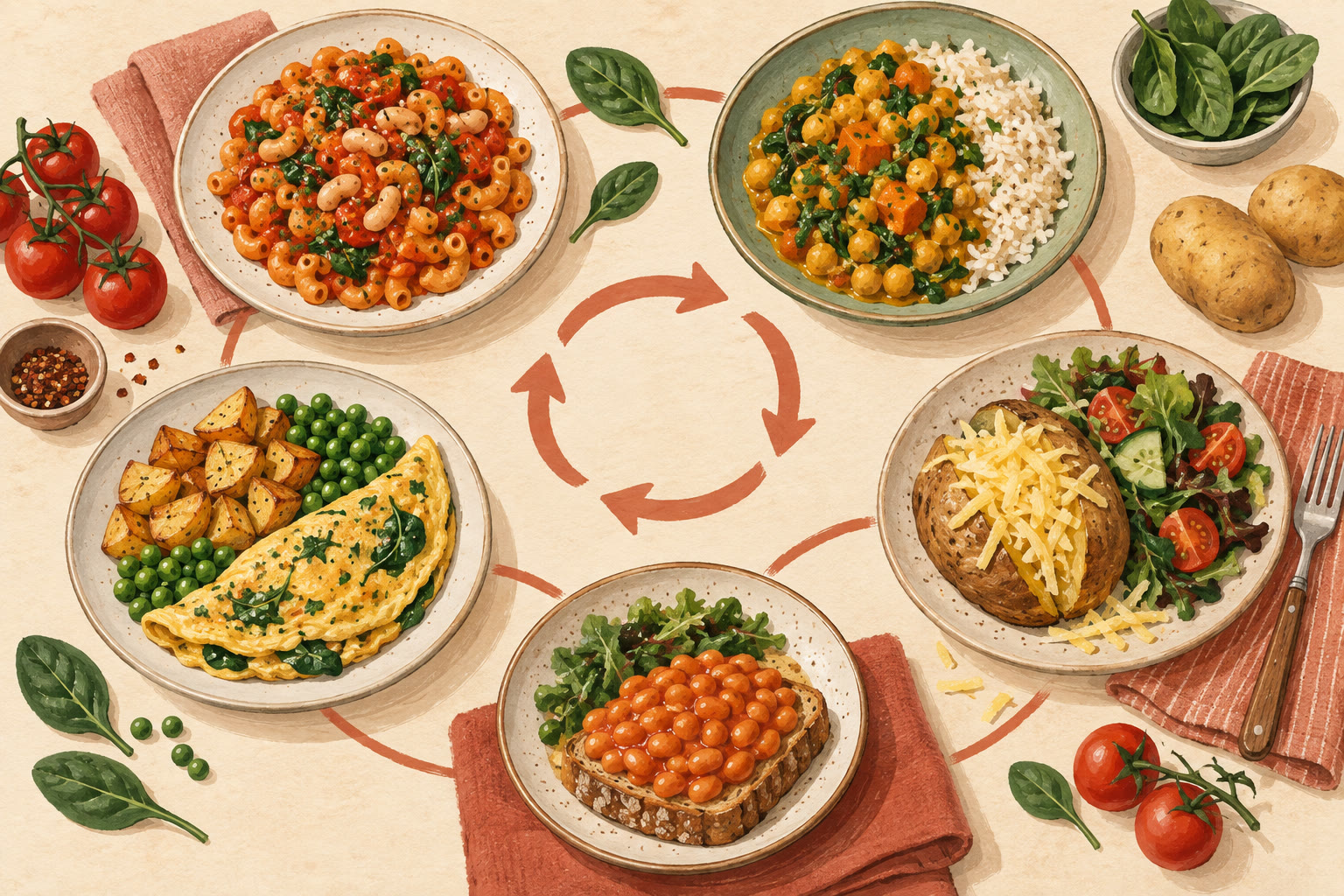
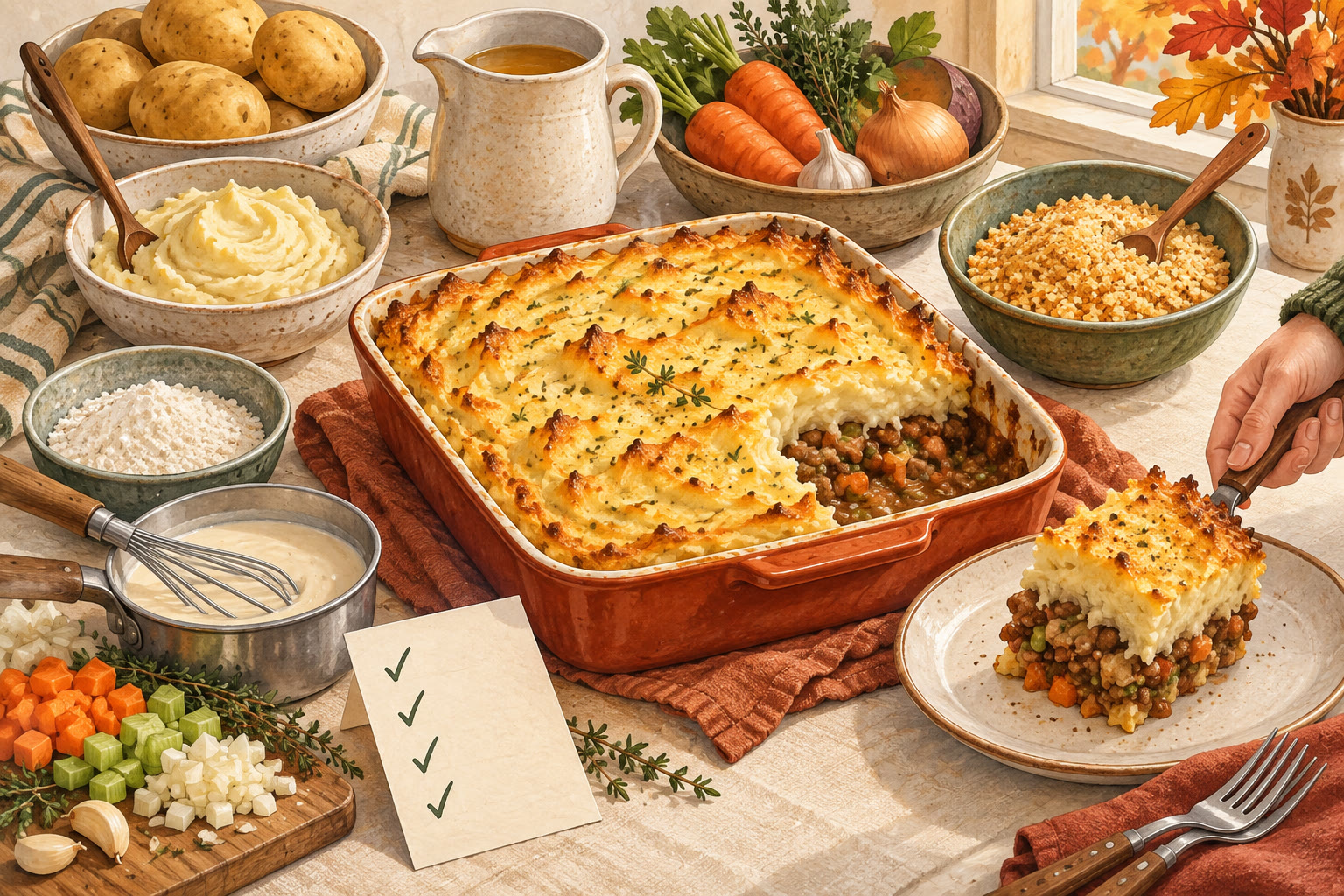
Adapting an autumn comfort meal to be gluten-free means keeping the part that makes it feel comforting, whether that’s the mash, the gravy or the crisp topping everyone hopes to get, and then working through the rest of the recipe: the stock, sauce, coating and any pastry, checking each one carries a genuine gluten-free label. Replacing the obvious bread or pastry is only part of the job.
For anyone adjusting family favourites for coeliac disease, I want a comforting dinner to feel manageable, with a clear plan before the pans come out.
Start with what makes the meal familiar
I’d give the dish a quick description before changing anything. A cottage pie might be all about a savoury filling under soft mash. A vegetable bake might depend on a creamy sauce and a golden top. That description helps you decide what matters, instead of treating every ingredient as something that needs a specialist replacement.
Then read the whole recipe, including the ingredients tucked into the method. Flour for dusting, a splash of sauce and crumbs scattered over the top are easy to miss when you’re concentrating on the main ingredient. Put every component on your checking list, even if the amount looks small.
There’s also room to simplify. If pastry is the part making dinner feel like a project, you could choose a potato topping and make a different version of the meal. I’d rather plan that choice from the beginning than discover halfway through that the recipe needs more adapting than expected.
Keep the rest of the plate in mind as well. The NHS guidance on coeliac disease says a gluten-free diet should still be healthy and balanced. Comfort meals can leave room for vegetables and variety. Think about what will sit alongside the main dish while you’re making the shopping list.
Which sauces and fillings contain gluten?
A potato topping doesn’t tell you whether the filling underneath is suitable. Check the labels on stock, gravy granules, sauces, seasoning mixes and prepared meat products. The NHS specifically includes certain sauces and some ready meals among foods that commonly contain gluten, so a familiar-looking dinner still needs that ingredient check.
If a sauce calls for flour, check the flour blend’s own packaging and ingredients list rather than assuming suitability from its product name. I’d look for a clear gluten-free claim and read the cooking guidance too. Choosing a suitable ingredient and working out how to use it are separate parts of the same job.
According to Coeliac UK’s explanation of labelling law, a “gluten free” label in the UK legally means the food contains 20 parts per million (ppm) or less of gluten. This Codex-based requirement has applied since January 2012. It gives that wording a defined meaning; an appealing name on a packet doesn’t do the same work.
For the cooking itself, I’d choose a sauce method written for the gluten-free thickener you intend to use. Don’t assume a different blend will need exactly the same quantity or treatment as the flour in the original recipe. Read its instructions before adding it, and decide how you’ll bring the filling and sauce together before starting.
That small pause is useful with a cupboard full of almost-finished packets. Make the ingredient decisions first, while you can still change the plan without a pan of onions waiting for you.
What can I use instead of breadcrumbs for a gluten-free topping?
A comforting meal often has more than one texture: soft filling beneath a crisp topping, or smooth soup with something substantial alongside it. I’d decide which contrast you want before choosing the replacement. Otherwise, it’s easy to spend all your attention on what’s been removed and forget what you wanted dinner to feel like.
For a breadcrumb topping, choose breadcrumbs carrying a genuine “gluten free” label and check the packaging for “may contain” cross-contact warnings. There’s no need to make a particular brand the centre of the meal. The claim on the actual packet matters more than a description attached to a shopping listing.
Coeliac UK’s food-label guidance explains that “may contain wheat”, or a similar warning, indicates the manufacturer has judged there to be an unavoidable risk of gluten cross-contamination during production. It deserves attention alongside the ingredients list, rather than being skipped as small print.
If you’d prefer a potato topping, make that a deliberate choice for the dish. Mash and sliced potatoes offer different finishes, so choose a recipe with the topping you actually want. The same goes for a soup accompaniment: decide whether you’re after crunch, something for dipping, or simply a more substantial bowl.
I don’t think every autumn meal needs to recreate an earlier version down to the last crumb. A clear idea of the finished plate gives you something more useful to aim for than an exact imitation.
Do you need to check gluten-free labels every time?
I’d keep a short adaptation note beside a favourite recipe: which ingredients need checking, what method the sauce uses and which topping you’ve chosen. That saves you having to rethink the whole dinner next time. Keep it as a cooking reminder, though, rather than a permanent verdict on a product.
Coeliac UK advises reading the label every time you buy a product because recipes and manufacturing processes can change without warning. Even the stock you recognise needs another look. Familiar packaging is handy for finding something on the shelf, but it can’t replace reading what’s on it.
Its guidance also explains that UK and EU labelling law requires cereals containing gluten to be emphasised in the ingredients list, even when only a tiny amount is present. Give yourself time to read the full list and any cross-contact warning before the ingredient goes into dinner.
For your next autumn meal, I’d choose one familiar favourite and work through its filling, sauce and topping. Write down the changes before you shop. You’ll have a clearer route to the comforting plate you wanted, with fewer decisions left for that hungry stretch just before dinner.
Nora is our brand character. Health information is sourced separately and should support conversations with your care team, not replace them.