A gluten-free shopping list that helps cut food waste starts with what's already in your fridge and cupboards, not what looks tempting on the shelf. Check what you have first, then build around it: give each fresh ingredient a place in the week, write clear quantities and gluten-free details, and let the list change when plans do.
For gluten-free shopping, I want a list that does more than remind you to buy bread. It should make the quantities clear, keep the right products on your radar and give fresh ingredients somewhere to go. Preferably without turning Sunday evening into an unpaid admin shift.
You don't need a different dinner planned for every night to reduce waste. I'd rather build a few meals around shared ingredients, then leave enough space for changed plans and evenings when cooking feels like quite enough already.
How do I check what I already have before shopping?
Before adding anything to buy, make a short note headed “Already here”. Check the fridge, freezer and cupboards, including opened packets. You’re looking for food that can shape the next few meals, rather than compiling a full inventory of every spice jar.
Be specific where it matters. “Some pasta” leaves you guessing in the supermarket. “Enough gluten-free pasta for one dinner” tells you something useful. Likewise, knowing you have two potatoes is more helpful than remembering a bag somewhere in the kitchen.
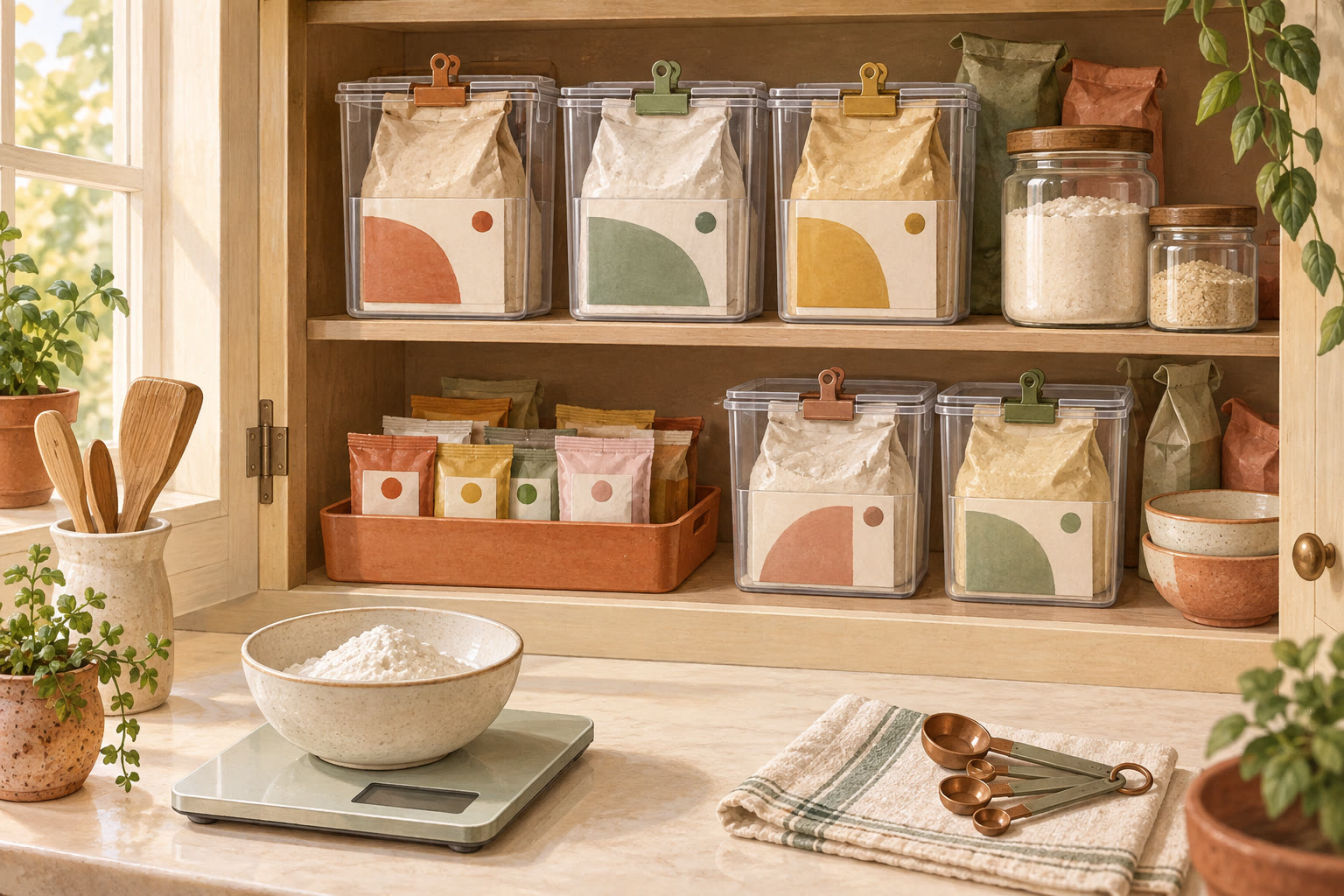
If an opened packet is difficult to judge, weighing what remains can help. A Digital kitchen scale for precise flour weighing can weigh dry pasta or rice as well as flour, making it easier to work out whether you need another packet. There’s no need to buy equipment if you already have something suitable.
Next, pick out ingredients that need a plan soon, taking account of their dates and storage instructions. I’d put those at the top of the note. An opened ingredient with no intended meal is easy to overlook when the new shopping arrives.
Keep this check manageable. A handful of useful notes is enough to start writing a better list.
Give each fresh ingredient a place in the week
I’d choose the first meal around something on that “Already here” list. Then I’d look for another meal that can use some of the same ingredients. Think of it like booking seats: before buying a whole bag of something, check how much of it has a place.
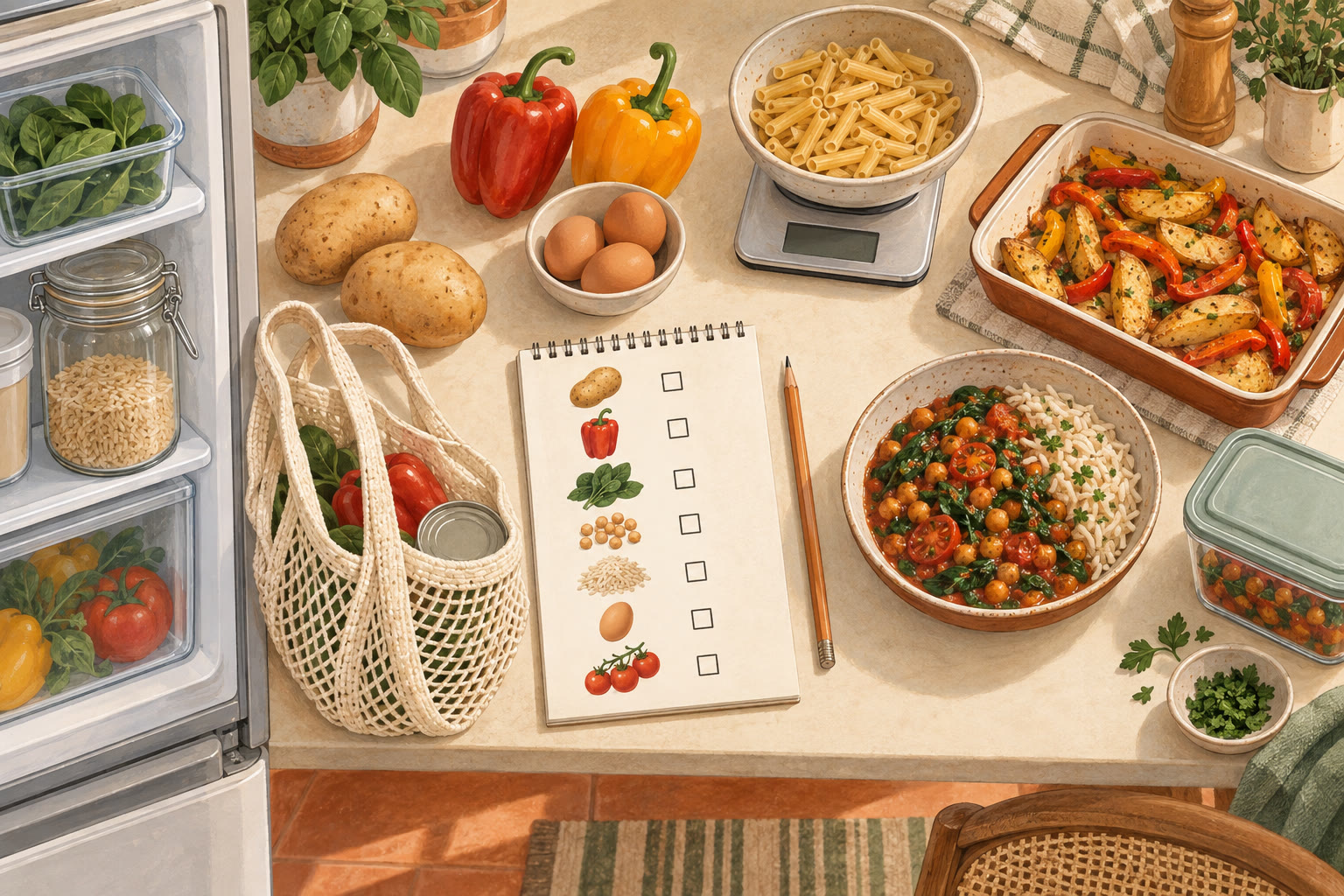
For example, peppers could go into a potato traybake and a chickpea tomato sauce served with rice. Spinach could join the sauce and an omelette. These are meal ideas, so the quantities should follow how many people you’re feeding and how much they usually eat.
The important part is giving the remainder a purpose before buying it. “Spinach for Tuesday’s sauce and Thursday’s omelette” is a plan. “Spinach because I should eat more greens” leaves rather a lot for Thursday’s tired self to sort out.
I’d also count the meals you actually expect to eat at home. Include lunches if you’re buying for them, and leave out evenings when you already have other arrangements. Seven days on a calendar don’t automatically mean seven dinners to shop for.
Leave one meal flexible, too. That might mean choosing between an omelette and a baked potato depending on what remains. Keep a suitable gluten-free cupboard or freezer option in mind for weeks when there isn’t enough left to build a meal.
Before moving on, check that each fresh ingredient has a use and that your plan fits the week you’re likely to have.
What should a gluten-free shopping list include?
Now write the shopping list itself. I’d use three details: what to buy, how much is needed and what it’s for. You can subtract what you already have before anything reaches the basket.
A small example might read:
Peppers: two, for the traybake and chickpea sauce.
Potatoes: four needed for the planned meals, two already here, so buy two.
Eggs: check what remains before buying for the omelette.
Gluten-free pasta: enough for the planned number of portions, after checking the opened packet.
Rice: already have enough, leave off the buying list.
Those amounts are examples, not portion rules. Adjust them to your household. The useful bit is making the decision while you can still see your cupboards.
Keep “gluten-free” written beside products where that requirement could otherwise get lost, especially if someone else is doing the shopping. Pasta, bread, flour and any specific prepared ingredients deserve a clear description. A vague request for “the usual” isn’t much help when the usual is unavailable.
I’d also add a simple substitution note where needed: “If unavailable, leave it and we’ll change the meal.” That gives the shopper a clear option without making an unsuitable replacement feel necessary.
How do you keep a shopping list flexible to cut food waste?
A larger pack only fits the plan if you have a use for the extra. Before choosing it, decide whether the remainder belongs in another meal or can be frozen according to the product instructions. If neither fits, a smaller quantity may suit your week better.
The same goes for offers. I’d pause over anything that adds a fresh ingredient without adding a realistic meal. A bargain still needs somewhere to go once it gets home.
If plans change, move the ingredients as well as the meal. Look at what needs attention before automatically postponing everything until next week. Follow the relevant storage and date instructions rather than treating the original meal plan as a promise.
Before your next shop, note anything left unused and adjust one quantity. Perhaps you need fewer potatoes, a smaller bag of leaves or fewer ambitious dinners. I’d call that useful information, not a failed week. Start the next list there.
#ad. This post contains Amazon affiliate links. As an Amazon Associate I earn from qualifying purchases.
Nora is our brand character. Health information is sourced separately and should support conversations with your care team, not replace them.