A recipe described as “quick” can still mean two pans, a chopping board and ten ingredients. A useful fallback dinner fits the amount of effort you actually have available.
Make three columns
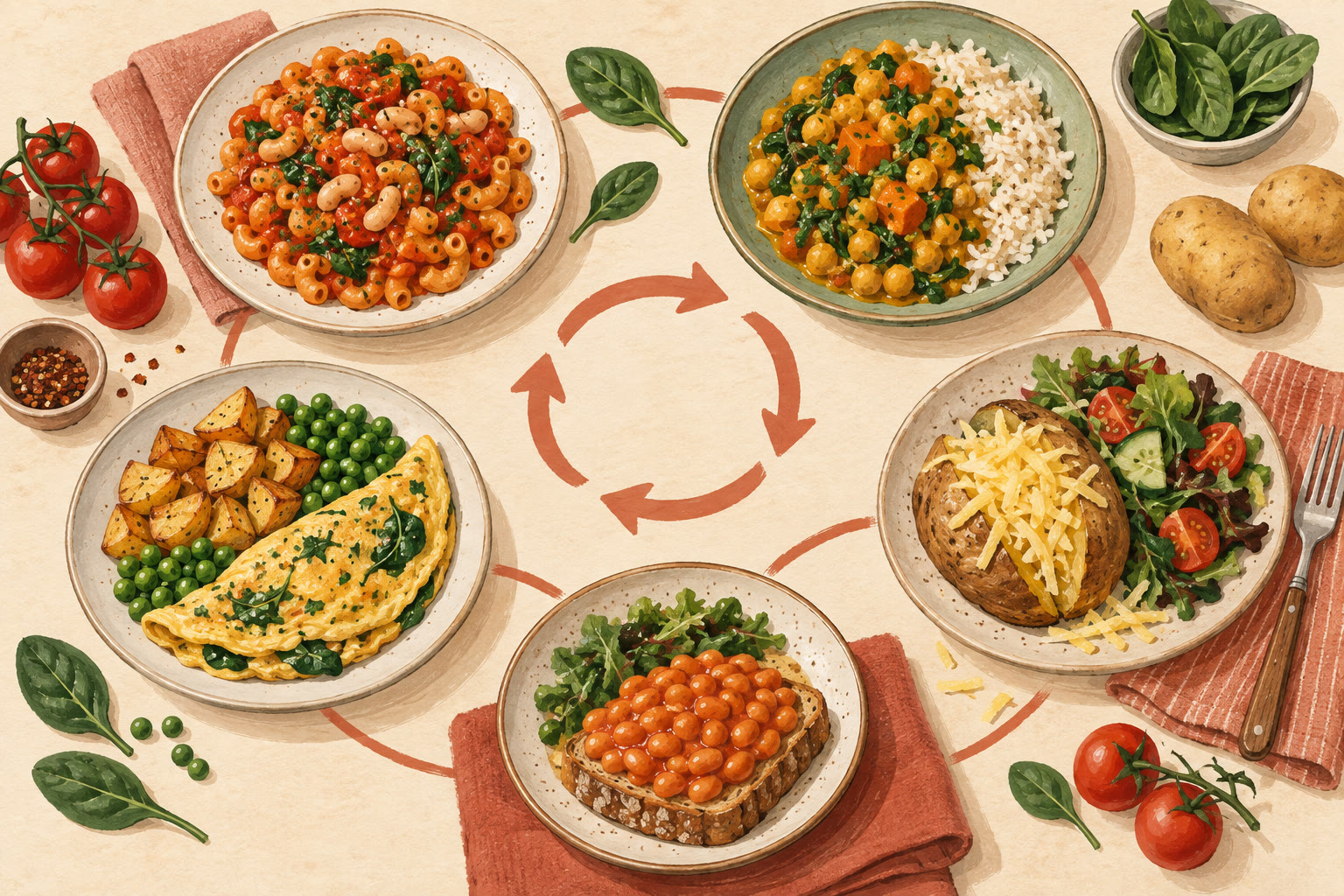
Label them “assemble”, “one pan” and “oven does the work”. Put a few familiar meals in each. This is an effort list rather than a ranking: an oven meal may take longer but ask less of you while it cooks.
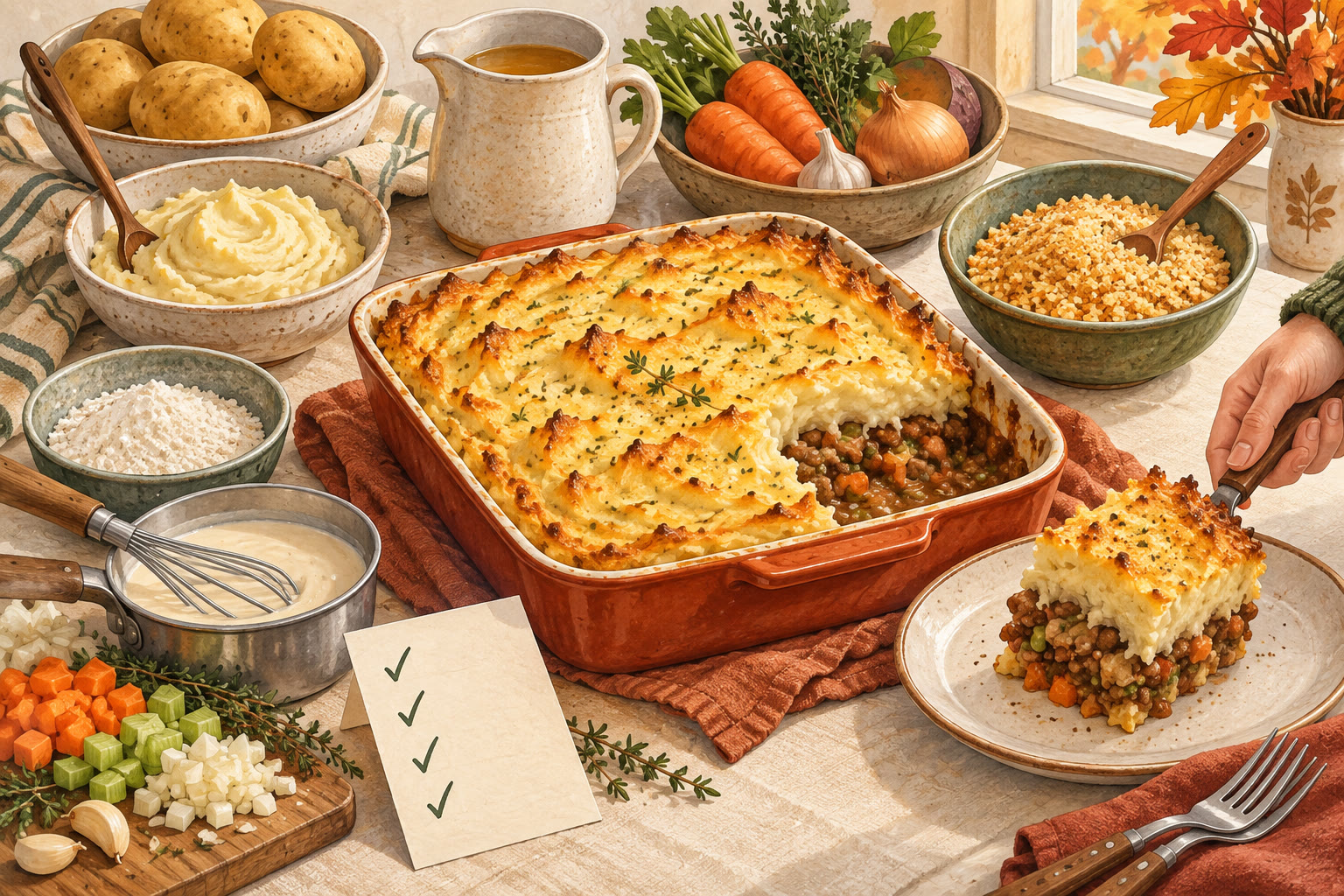
A filled jacket potato belongs in the oven column. A portion of sauce you have already prepared may belong in the one-pan column when you make fresh pasta. Write the little extra tasks beside each meal so they do not become a surprise.
Include the clearing up
Count the equipment as well as the minutes. If a meal needs a blender, think about whether you want to wash it afterwards. There is nothing wrong with choosing the meal that leaves one saucepan and two plates.
Keep the ingredients identifiable
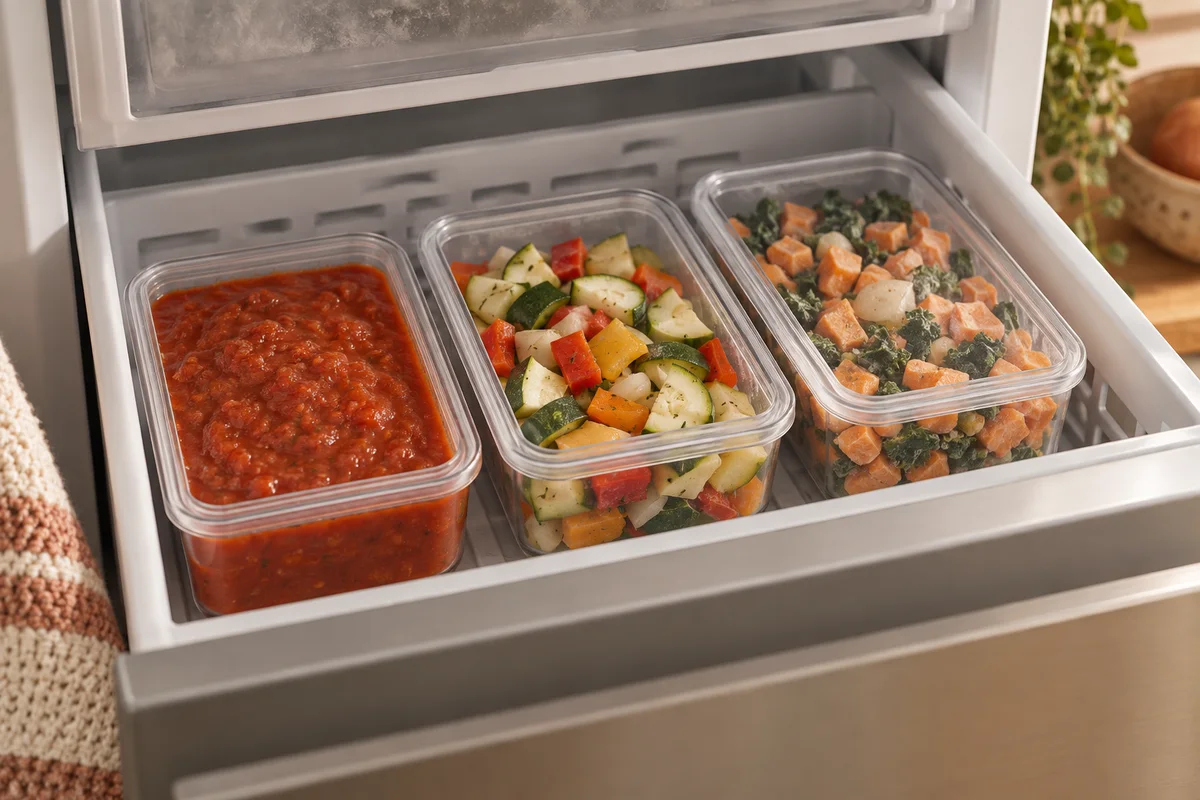
A labelled container is easier to choose than a mystery portion at the back of a shelf. Write down the name and date when storing food and follow appropriate food-safety guidance. For any packaged shortcuts, check current ingredient and allergen information rather than assuming convenience products are interchangeable.
Choose a default
Pick one dinner from the list before you need it. Put its ingredients on the next shop and put the list somewhere visible. The point is to reduce the number of decisions at the end of the day.
If low energy is new, persistent or worrying, speak to your healthcare professional. This article is about organising meals; it is not advice on treating fatigue or meeting individual nutritional needs.
Two kinds of backup
One option is a meal you have already cooked and stored appropriately. Another is a small set of ingredients you can turn into dinner. A list can hold both: a labelled portion to reheat according to its instructions, or gluten-free pasta with a sauce you can prepare.
Freezer space and budgets vary. Begin with what you can store and use, rather than buying a large reserve you cannot manage. A cupboard list can be just as useful for someone without a freezer.
Replace what you use
When a backup saves an evening, add it to the shopping list. A short note on the cupboard door can keep the routine going without an elaborate system. For stored food, use the relevant recipe and Food Standards Agency storage guidance; a meal being in the freezer does not remove the need for safe defrosting and cooking.
Start with ideas such as jacket potato, three-bean chilli or bolognese. Keep any untested storage variations marked as development work.
Nora is our brand character. Health information is sourced separately and should support conversations with your care team, not replace them.