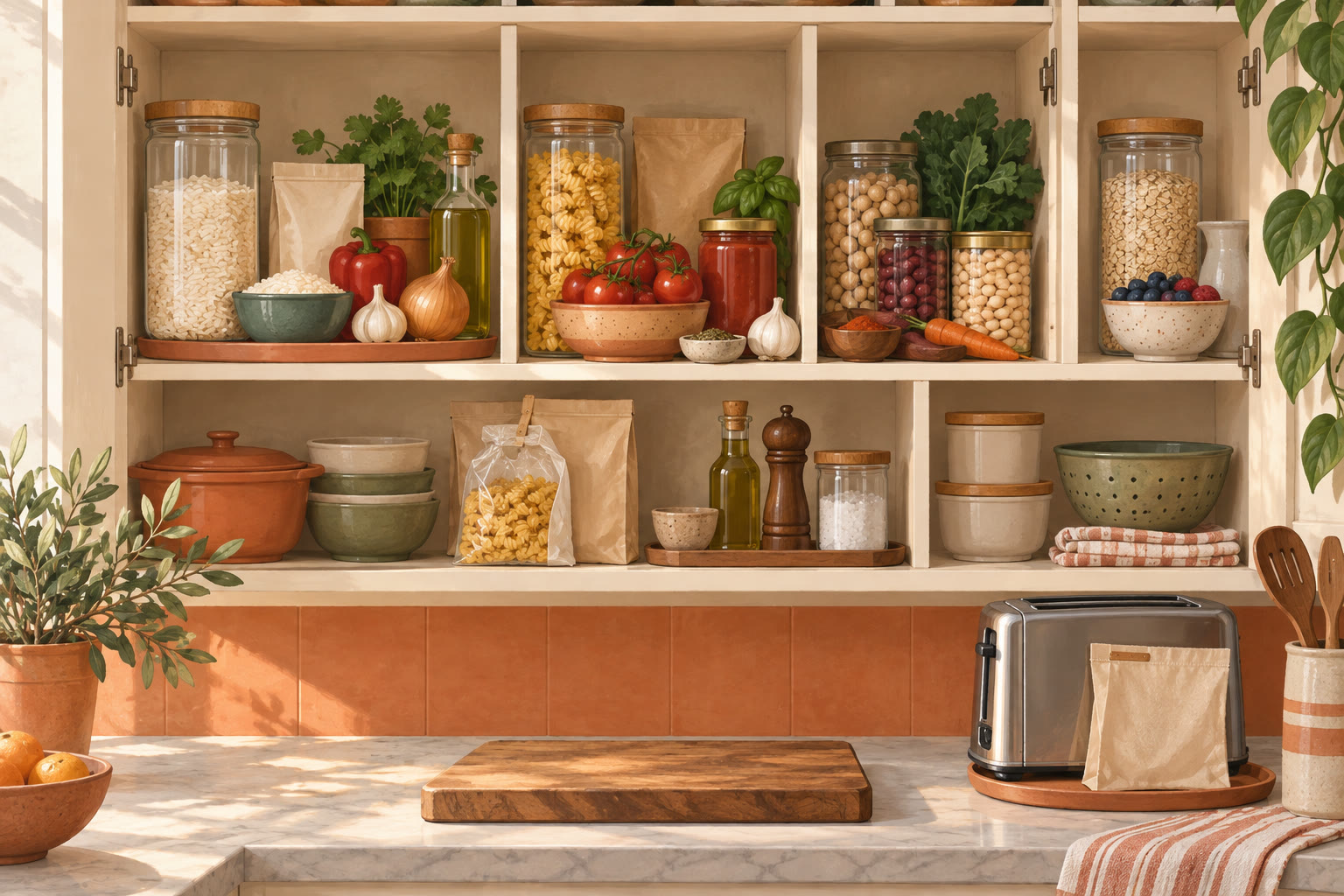
A practical gluten-free cupboard starts small: three dinners you're happy to repeat, plus an easy breakfast and lunch, with their cupboard ingredients written down before you shop. Check the label on everything as it comes in, since recipes and manufacturing processes can change without warning, and give the food a clear place if you share a kitchen with others.
You don't need to plan every meal you might ever cook. A few familiar options, clear packaging and a sensible place for opened packets give you something useful to work with. The cupboard can grow when your cooking needs it to.
My approach is to work backwards from meals, build label checks into the routine and make the arrangement understandable to everyone using the kitchen. Matching jars are entirely optional. Knowing what's in them matters rather more.
What should go in a gluten-free cupboard first?
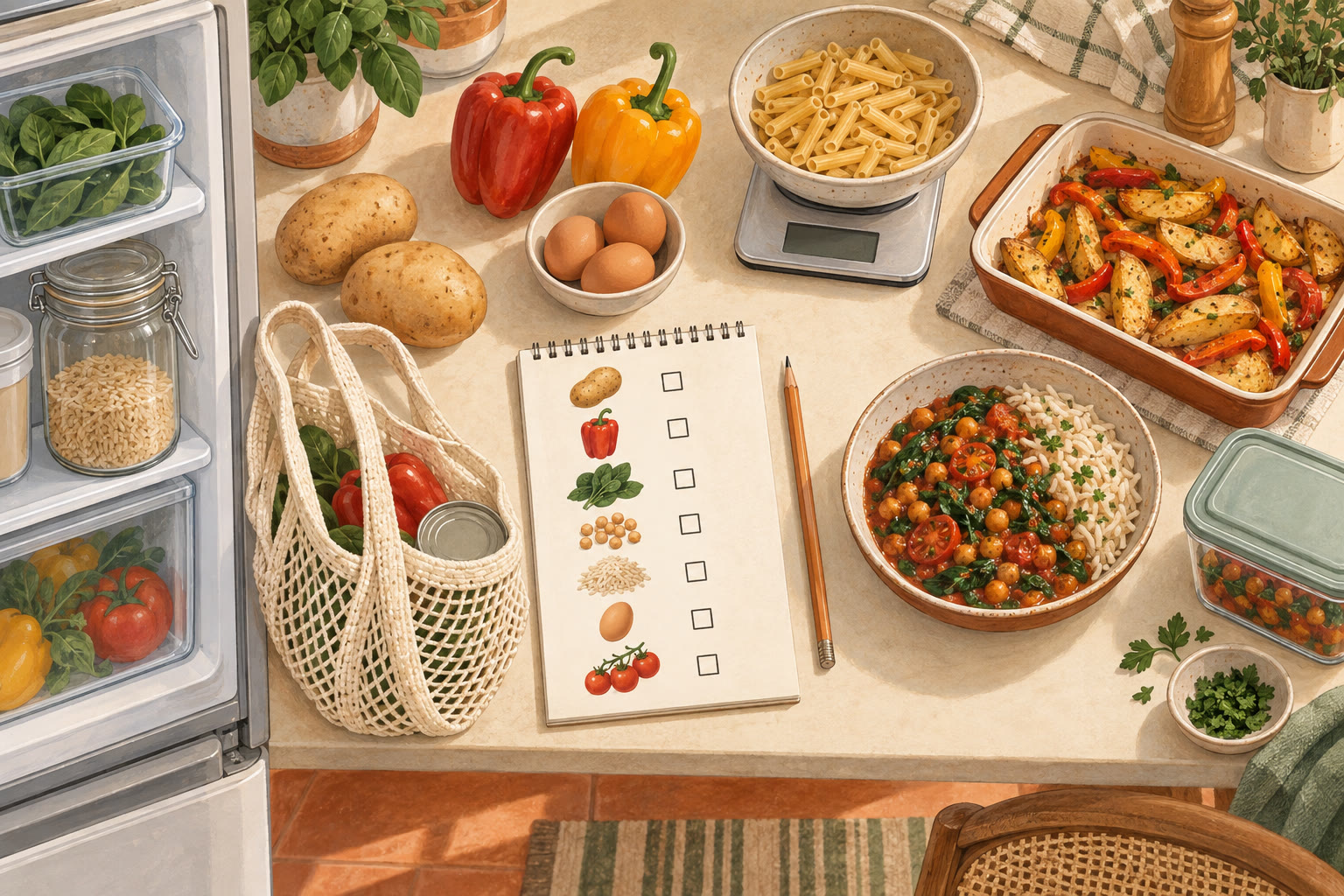
I’d begin with three dinners you’re happy to repeat, plus a breakfast and an easy lunch. Write down their cupboard ingredients before making a shopping list. That gives each item a purpose, rather than leaving you with an impressive collection of packets and no particular supper.
For example, you might plan a rice dish, gluten-free pasta with a tomato sauce, and a bean dish. Treat these as meal ideas, with each packaged ingredient checked for suitability. A familiar food name isn’t a substitute for reading the actual packet.
Look for overlap in your plan. If two dinners use the same ingredient, that earns it a useful place on the shelf. If something appears in one ambitious recipe you’re unlikely to make soon, I’d leave it on the list for another week.
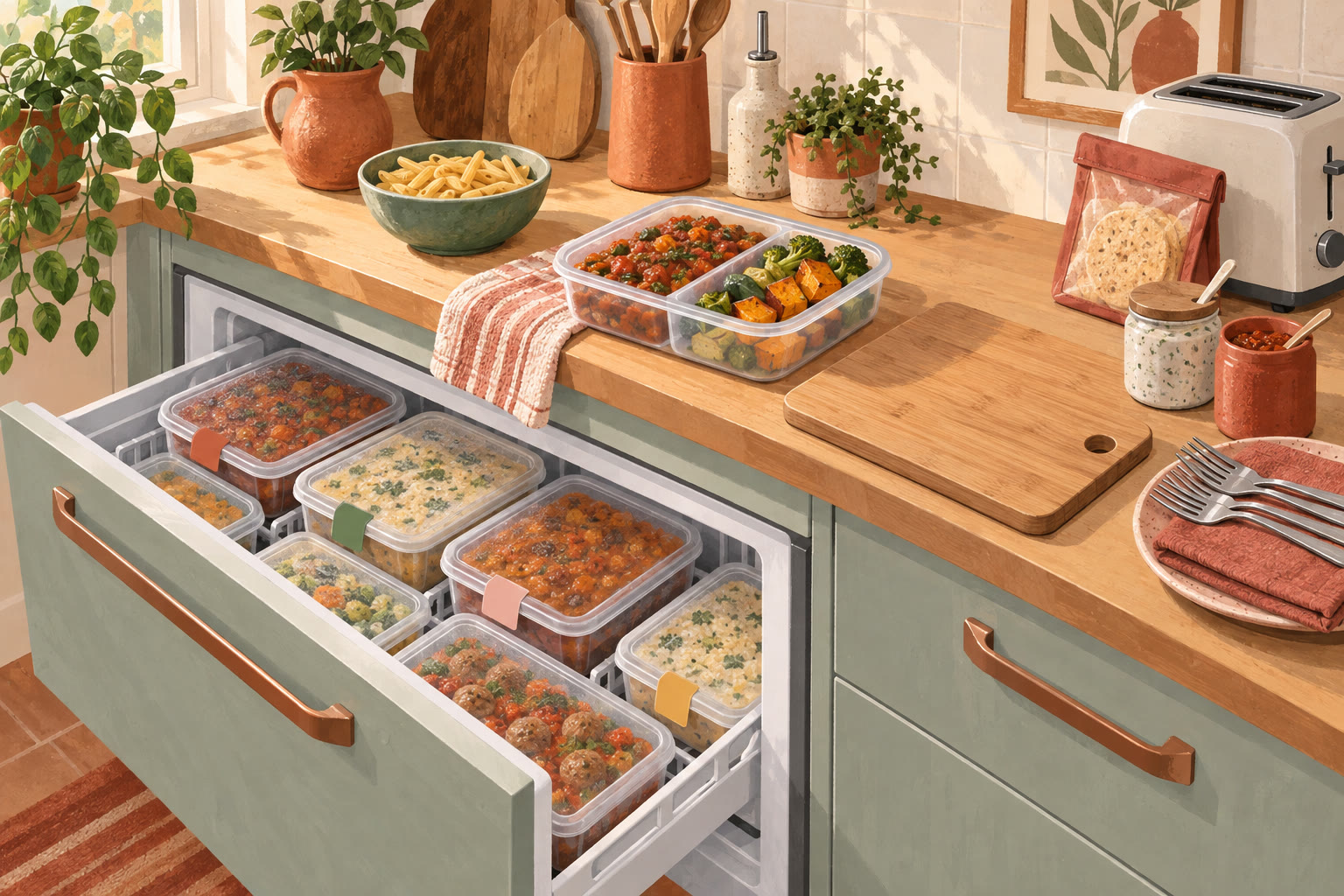
I’d also give one meal the job of being your low-effort option. Choose something with a short ingredient list and a method you can comfortably manage when you’re tired. Keep its cupboard ingredients together, and note any fresh or chilled ingredients it needs.
Baking can have its own small corner if you bake regularly. Otherwise, I’d wait until you’ve chosen a particular gluten-free recipe before collecting ingredients. There’s no need to furnish the cupboard for an imaginary version of yourself who makes biscuits every Wednesday.
Before shopping, check what you already have against the meals you’ve written down. Keep anything whose suitability needs clarification out of the ready-to-use group. You can resolve that question without letting the packet quietly become part of dinner.
Do you need to check gluten-free labels every time?
The habit I’d build first is checking the label whenever something comes into the kitchen. Coeliac UK advises reading it every time because recipes and manufacturing processes can change without warning. Remembering that a previous packet was suitable doesn’t replace checking this one.
Coeliac UK explains that gluten-containing cereals must be emphasised in the ingredients list, for example in bold. It names wheat, rye, barley, oats, spelt and Khorasan wheat, marketed as Kamut, and says even a tiny amount must be listed.
I’d give that check proper attention before putting food away. Read the ingredients and any precautionary allergen wording, rather than relying on the front of the packet. If you’re interrupted halfway through, leave it somewhere that reminds you the check still needs finishing.
“May contain” wording needs attention too. Coeliac UK says these statements are voluntary and must not be misleading, ambiguous or confusing. If a product’s suitability is unclear, its advice is to contact the manufacturer directly for clarification. I wouldn’t guess just to get the shopping unpacked.
Oats deserve a separate pause. Coeliac UK explains that standard oats are often produced alongside wheat, barley and rye and can become contaminated with those grains. “100% oats”, “pure oats” and “organic” don’t, by themselves, mean gluten-free.
According to Coeliac UK, oats and oat products may only be labelled gluten-free if they test at 20 parts per million of gluten or less. A very small number of people with coeliac disease may still be sensitive to gluten-free oat products. If symptoms continue, its advice is to review their use with a health professional.
How do you organise a shared kitchen for gluten-free food?
I’d give gluten-free food an obvious home, particularly if other people use the cupboard. That might be one shelf or a clearly labelled section. The aim is for someone making lunch to understand the arrangement without needing a guided tour.
Keep packaging where you can read it. If you prefer decanting, I’d retain the original label with the food so the ingredients, allergen information and instructions remain available. A jar labelled “flour” doesn’t tell another person enough about what you’ve put inside.
Shared spreads need a plan beyond shelf labels. Coeliac UK suggests separate butter, jam and other condiments to avoid breadcrumb contamination, or at least using clean cutlery each time. I’d agree the household approach explicitly, rather than hoping everyone interprets a labelled lid in the same way.
The bread area matters too. Coeliac UK suggests separate bread boards for gluten-free and gluten-containing bread, plus toaster bags or a separate toaster for gluten-free bread. Consider those arrangements alongside the cupboard, so the food has a clear route from packet to plate.
Cleaning doesn’t require a complicated new system. Coeliac UK says standard washing-up liquid or a dishwasher will remove gluten from utensils and surfaces, and separate cleaning cloths or sponges aren’t required. I’d put the effort into clear habits everyone can follow.
Keep the cupboard useful as the week changes
I’d finish with a short note inside the door: the meals this cupboard supports and anything that needs replacing. Put opened packets where they’re easy to see, with their labels readable, and check the relevant storage instructions and dates.
Before the next shop, look at what remains. Did an ingredient have a useful job, or was it bought for a plan that never happened? Adjust the next list around the answer. There’s no obligation to keep replenishing something simply because it once seemed essential.
Start today with one shelf and three dinners. Check the packets, give them a clear place and write down the gaps. That’s the kind of gluten-free cupboard I’d aim for: one you can open when you’re hungry and know where to begin.
Nora is our brand character. Health information is sourced separately and should support conversations with your care team, not replace them.