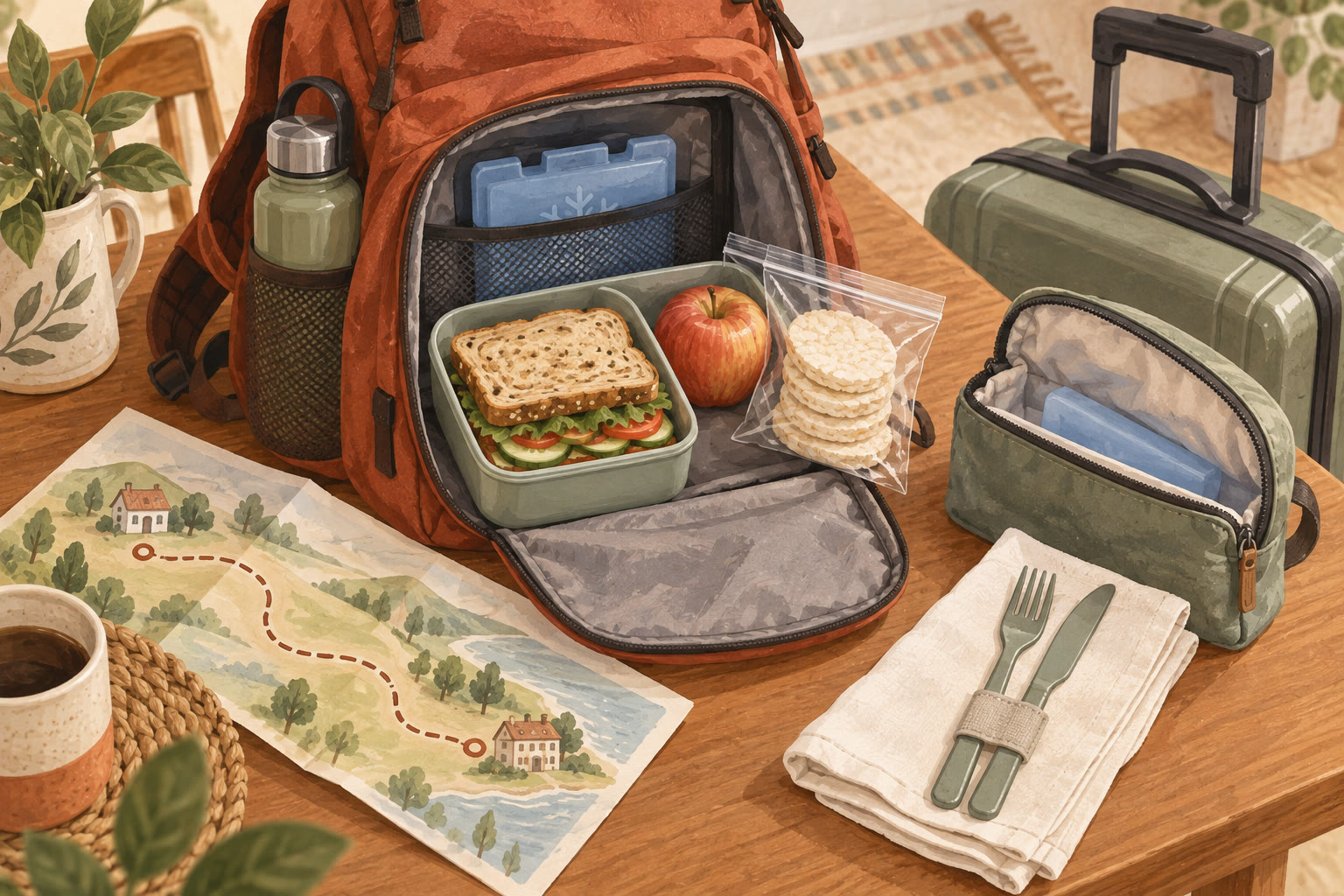
Preparing for travel with gluten-free food comes down to three things: food for the journey itself, a backup in case plans change, and a clear idea of where your first meal after arrival will come from. I don’t think it should mean packing half the kitchen, just enough structure to make the day easier, without turning your holiday into a catering assignment.
If you’re travelling with coeliac disease, this is also a chance to put your questions in writing before you arrive. A promising menu can help you find somewhere to enquire, but I wouldn’t use it as the whole answer.
What should I eat on the journey and after I arrive?
I’d write down the trip in ordinary chunks: leaving home, travelling, waiting, arriving and eating. Beside each one, note whether you’ll need food and where you expect it to come from. Include the journey home, which deserves more thought than whatever happens to be left in the bag.
The useful question is whether your plan depends on everything running on time. If lunch relies on a short connection, or dinner means reaching a shop before it closes, I’d give that part a backup. You don’t need a second itinerary, just another workable option.
For the outward journey, I’d choose a meal you already know how to prepare and pack, using ingredients you’ve checked. A familiar gluten-free sandwich or another straightforward packed meal can be easier to organise than something new with six separate pots.
Then consider arrival. Will you have somewhere to prepare food? Is there a fridge you can use? Can the accommodation answer questions about breakfast? I’d settle the first evening and following morning before spending much time choosing restaurants for later in the trip.
My starting point would be one planned journey meal and one clear arrival plan. Once those are written down, the rest feels less like a series of unanswered questions.
What gluten-free food should I pack for travel?
I’d divide the food into what you intend to eat and what you’re carrying as a backup. That helps avoid the classic packing mismatch: plenty of little snacks, but nothing you would call lunch.
Think about the practical bits as well as the ingredients. Does anything need a spoon, opening tool, draining or reheating? Will you have somewhere comfortable to eat it? A meal that requires a kitchen isn’t much help when your available workspace is your lap.
For a cupboard backup, plain crackers are one option to consider. If you’re comparing Gluten-free plain crackers to test, check the current pack information and choose something suitable for your needs. I’d try an unfamiliar product before making it a main part of the journey food plan. This is a packing suggestion, not a taste-test recommendation.
Keep packaged backups in their original wrappers where practical, so their ingredient and storage information stays with them. For anything that needs chilling, follow its storage instructions and work out how you’ll maintain those conditions for the journey. If that isn’t workable, choose a different option.
I’d put the food you’ll need first somewhere easy to reach, with any cutlery and a few napkins. The emergency snack earns its place by being available, which is difficult if it’s buried beneath your shoes.
Before an international trip or flight, check the relevant official guidance on carrying food, destination entry restrictions and airport security requirements. Make that check before choosing what to pack, particularly if your plan involves chilled items or cooling packs.
What questions should I ask about gluten-free food before travelling?
A broad question such as “Do you do gluten-free food?” is a starting point. I’d follow it with questions about the actual meal and how it would be prepared, especially when enquiring for someone with coeliac disease.
You could write: “I need gluten-free food suitable for someone with coeliac disease. Which meals could you provide, and how do you manage cross-contact during preparation and serving?” That gives the person replying something specific to address.
For breakfast, ask about the items you’d want to eat and the equipment used to prepare them. For self-catering accommodation, ask what cooking facilities are available rather than assuming that “kitchenette” means everything you need. A kettle and a full kitchen lead to rather different dinner plans.
I’d keep replies with the booking details, then confirm the arrangements with staff when ordering or arriving. An earlier email is useful context for that conversation, rather than a reason to skip it.
If you’ll need to explain your requirements in another language, arrange a reliable translation before departure. I’d keep it available offline alongside accommodation details and any food arrangements. That’s one less thing to organise while hungry and trying to find a signal.
Make the final check small enough to finish
The evening before departure, I’d check the food, its storage arrangements and the bag it’s going in. Then I’d look at the first planned meal after arrival and confirm that the details are easy to find.
Leave a little room to bring food back or pick up something suitable during the trip. You don’t have to solve every meal before leaving, but knowing which meals are arranged and which still need attention is useful.
My aim would be to reach departure day with fewer decisions waiting. Start with the next journey meal, sort a practical backup and save the questions you need answered. Once that’s done, you can give the food plan a rest and get on with looking forward to going away.
#ad. This post contains Amazon affiliate links. As an Amazon Associate I earn from qualifying purchases.
Nora is our brand character. Health information is sourced separately and should support conversations with your care team, not replace them.