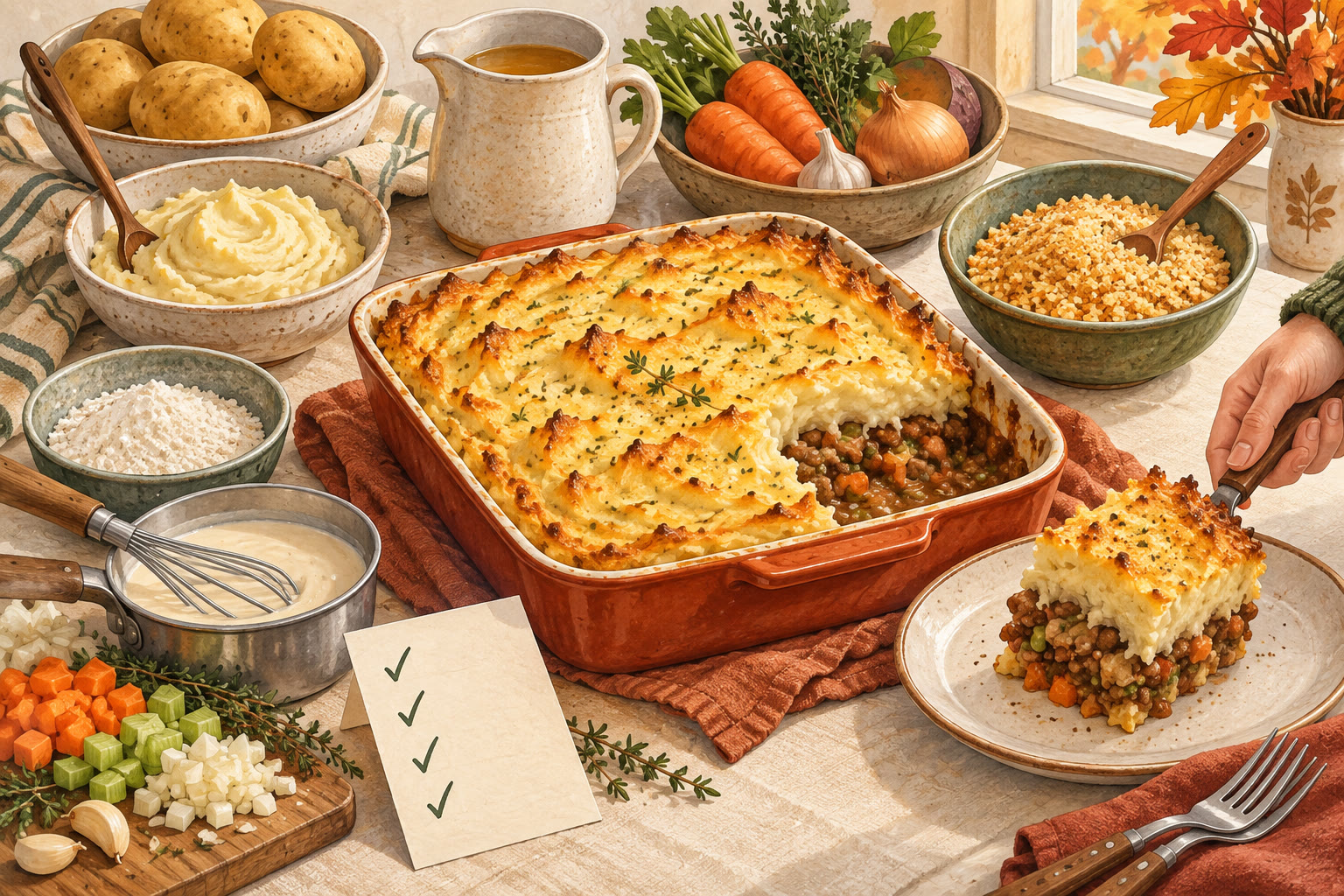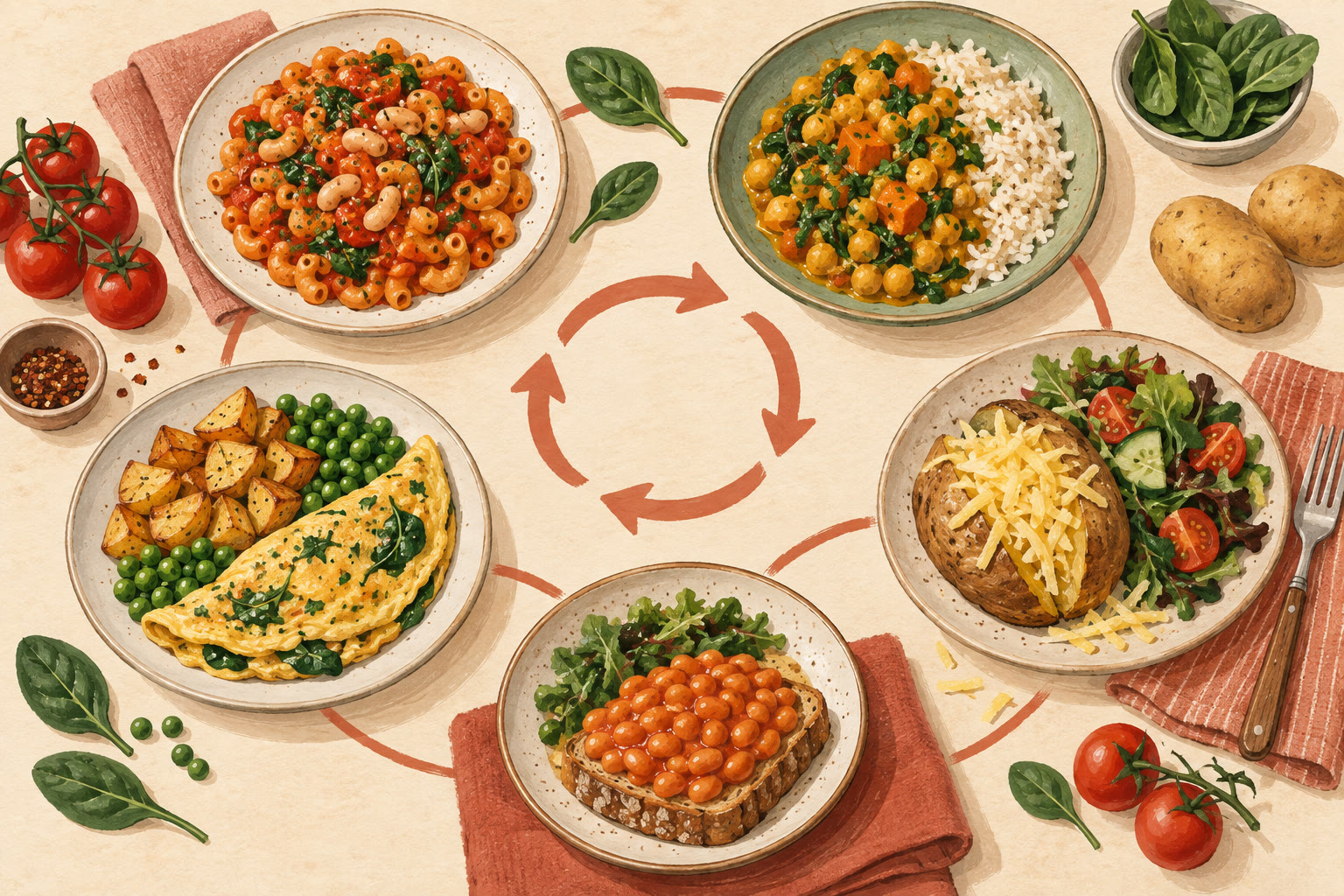
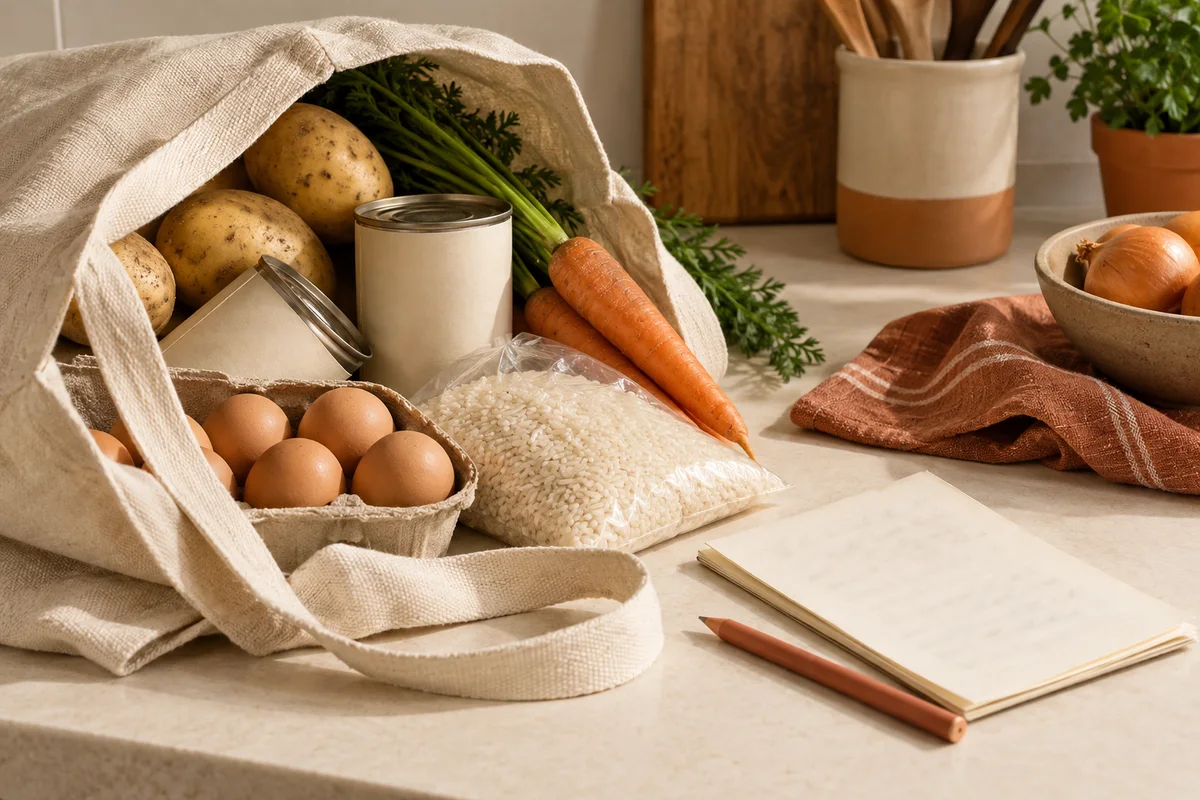
Three familiar dinners make a better starting list than a trolley full of products you have never cooked with. Write down the meals first, then work backwards to the ingredients.
Sort by meal, then by shelf
Start with breakfast, lunch and a handful of dinners. Add the things that make those meals work: oil, seasonings, sauces and something for the days when the original plan changes. Then group the ingredients by the part of the shop where you will find them.
Keep checking the actual pack
Coeliac UK recommends checking the latest product label, even when using its Food and Drink Guide. The guide and digital tools can help you investigate suitability, but an old list is not a permanent promise about a product. Read about the Food and Drink Guide.
Its gluten-free checklist also distinguishes foods that naturally contain no gluten from processed versions needing further checks. For products without a gluten-free claim, its guidance advises against consuming an item carrying a precautionary warning for cereals containing gluten. Open Coeliac UK’s gluten-free checklist.
Keep useful details, not blanket claims
In your own list, record the product name and pack size so somebody shopping for you can find the same thing. Add “check current label” rather than writing “always safe”. A photograph can help identify a product, but it does not replace reading the pack in front of you.
Buy for the week you are actually having
If the week is busy, keep the cooking projects for another time. Buy the ingredients for meals you expect to make, leave room for a change of plan and check what is already in the cupboard before ordering more.
Product-specific uncertainty belongs with the manufacturer, Coeliac UK or your dietitian. We have not added brand endorsements or affiliate links to this starting list.
The whole shop, not just one aisle
A free-from section can help you find substitutes, but your list can also include ordinary ingredients from elsewhere in the shop. Start with the meal, then identify the exact products it requires. A product’s position on the shelf is not a suitability check.
Check the particular packet, including relevant precautionary information, even when another flavour or pack from the same range has worked before. For current product help, use Coeliac UK’s food information. Keep nutrition comparisons separate from gluten checks: a suitable product still has its own nutritional composition.
Put the missing pieces on the list
If you choose a main meal, make sure you have what you want alongside it. A dinner offer is less useful when none of the available sides work for you. Having a planned alternative means you can leave the offer and still know what you are cooking.
Try the tuna pasta bake as a cupboard-based development idea, or make a backup dinner list around the food you already keep.
Nora is our brand character. Health information is sourced separately and should support conversations with your care team, not replace them.